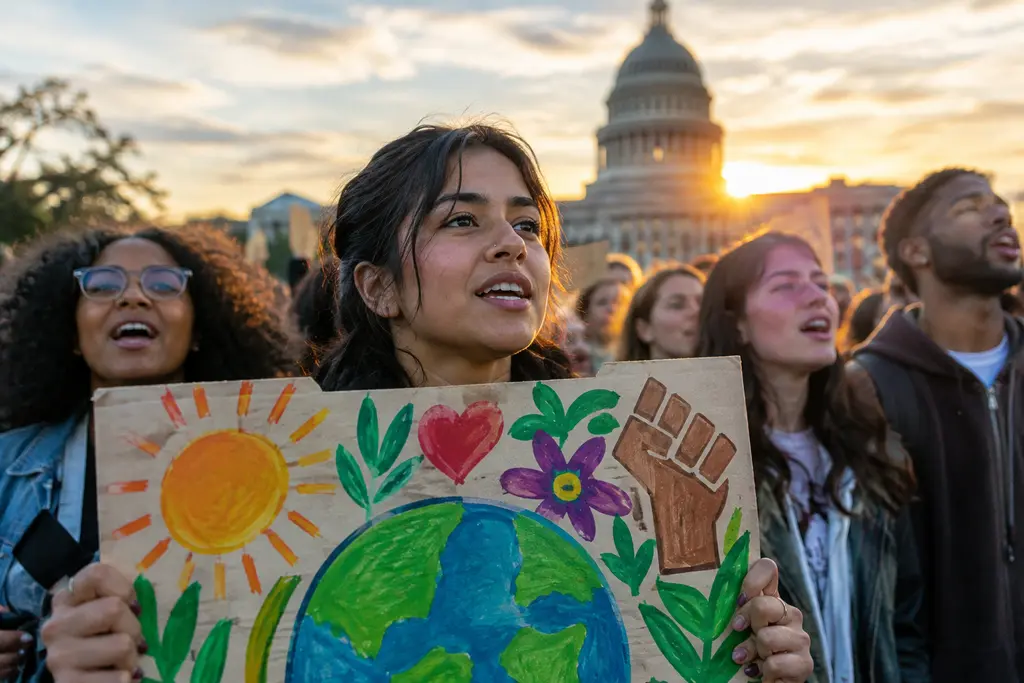
Florida HB3 Advocacy has shifted from a debate over platform design and parental authority into a practical test for youth organizers, civic groups, and digital campaign teams. Florida’s HB 3, enacted as Chapter No. 2024-42 after Governor Ron DeSantis signed it on March 25, 2024, took effect on January 1, 2025, according to the Florida House bill record. As of October 31, 2026, the policy question is no longer only whether the law should exist; it is how advocacy work adapts when minors’ account access, parental consent, and platform verification duties change the channels that young people use to speak, listen, and organize.
Florida HB3 Advocacy After The Access Rules
Florida HB3 Advocacy And The Court Posture
The research record for this case study says industry groups, including NetChoice and the Computer & Communications Industry Association, challenged the law on First Amendment grounds. It also reports that a preliminary injunction was granted in March 2025 but stayed, and that on October 14, 2026, the 11th U.S. Circuit Court of Appeals reversed the injunction after finding the law likely constitutional under intermediate scrutiny. The cited court opinion is not included among the official source links available here, so that litigation description should be treated as a status report from the research file rather than legal advice.
For campaign planners, the immediate consequence is operational. A law that restricts account holding for some minors can affect audience building, peer-to-peer outreach, rapid response work, and youth-led issue campaigns. Florida HB3 Advocacy now has to account for the difference between a young person viewing public material and holding an account that allows posting, commenting, private messaging, or group participation. That distinction matters because many grassroots tactics depend on identity, reply chains, and networked participation rather than one-way publication.
Account Holding Is The Central Design Choice
The research notes state that HB 3 prohibits minors under 14 from becoming social media account holders and permits 14- and 15-year-olds to hold accounts only with parental consent. That structure does not treat all minors alike. It creates one rule for children under 14, another for ages 14 and 15, and a different position for users 16 and older. Supporters cited in the research argue that this is a targeted account-access model rather than a general ban on seeing all online information. Critics cited in the same research warn that limits on account access can still reduce youth access to information, peer support, and public expression.
From a social-movement perspective, the narrowness of the legal mechanism does not make its effects narrow. Account status can determine whether a young person can join a campaign group, create a post about a school issue, send a direct message to a youth organizer, or receive notices through a platform-based community. Advocacy groups that work with minors need to separate public education, volunteer coordination, direct action planning, and peer support into channels that match the legal and consent environment.
How The Statute Defines Covered Platforms
Feature Tests Shape The Scope
The Florida Senate staff summary describes HB 3 as applying to social media platforms meeting several criteria: users may upload or view the activity of other users; at least 10% of daily active users are younger than 16 and spend two or more hours per day on the platform; the platform uses algorithms to curate content; and it includes specified addictive features such as infinite scrolling, autoplay, or push notifications, according to the Senate bill summary. The same summary states that violations are enforceable under the Florida Deceptive and Unfair Trade Practices Act, with civil penalties of up to $50,000 per violation, and that minors may sue for up to $10,000 in damages.
This definition is relevant to advocacy because it does not simply name particular companies. It uses user demographics, time spent, algorithmic curation, and product features. That means campaign teams cannot assume that a familiar social app is covered or excluded without reviewing whether the statutory criteria apply. For youth organizations, the safer communications practice is to map which tools are used for public posts, private groups, event coordination, fundraising, and youth leadership work, then ask whether minors’ participation depends on account holding.
Age Verification Becomes A Campaign Issue
The research notes say platforms must adopt age-verification systems, including anonymous third-party verification methods, under state regulations. Even without assessing any specific vendor or technical method, the policy implication is clear: identity and age signals may become part of the access process for minors. That can change how youth-serving campaigns think about privacy, data minimization, and consent records.
Advocacy organizations are not the regulated platforms in every case, but they may still feel the effect. If a youth climate group, school-safety campaign, health-information network, or civic education project relies on covered platforms, its younger audience may become harder to reach through ordinary follower lists. Campaigns may need non-platform channels for public information, such as websites, email lists with appropriate consent procedures, text programs where lawful, community meetings, school partnerships, and parent-facing explainers. For a related site in the same network, The Parative Project offers another point of reference for civic communication questions.
Why Youth Campaigns Face A Different Organizing Problem

Participation Is More Than Exposure
Florida HB3 Advocacy should be analyzed through the difference between exposure to information and participation in a movement. A minor who can read a public page but cannot create or maintain an account may still see some campaign messages. Yet that minor may have fewer ways to ask questions, share personal experience, recruit peers, or take part in member-led planning. Social movements often grow through low-friction actions: reposting, commenting, joining a group chat, responding to a poll, or attending an online meeting promoted through a platform feed. Restrictions on account holding can raise the effort required for those first steps.
The research file includes estimates from a Florida State University analysis suggesting that about 2 million Floridians ages 8 to 15 could fall under HB 3 restrictions and that roughly 950,187 children in that range might lose account access if parental consent is not granted or if the age bar applies. Those are estimates, not confirmed post-enforcement outcomes. They are still useful for planning because they indicate the possible scale of affected youth communication.
- Youth campaigns may need consent-aware intake paths for 14- and 15-year-olds.
- Organizations may need separate routes for public education, member participation, and private support.
- Campaign measurement may undercount minors if platform account access declines.
- Peer-led outreach may move toward offline settings, websites, email, or parent-mediated channels.
Speech Concerns Remain Part Of The Case Study
The research notes identify a clear split in public argument. Supporters describe HB 3 as a child-safety and parental-rights measure aimed at products with addictive features. Critics, including civil liberties advocates cited in the research, argue that the law risks limiting youth access to information and speech. Both claims should be reported with care. The official bill materials confirm the statutory structure and enforcement mechanisms; broader claims about mental-health benefits, speech harms, or circumvention require evidence over time.
One unresolved question is how minors respond in practice. Critics cited in the research suggest some young users may misstate their age or use parents’ accounts. That is plausible as a concern, but the research supplied here does not provide confirmed post-enforcement data showing how often it occurred after January 1, 2025. Campaigns should avoid building strategy on assumptions about evasion. A more defensible approach is to design lawful, youth-protective channels that do not depend on a minor misrepresenting account eligibility.
This is also where youth advocacy groups should be cautious about data collection. If an organization responds to access limits by collecting more information directly from minors, it may create new privacy and consent duties. The better question is not only how to replace lost social media reach, but how to do so with less personal data where possible. For more specific organizing implications after the October 2026 legal development, see this related analysis of Florida youth advocacy under HB 3.
What Florida HB3 Advocacy Means For Youth Organizing
A Practical Test For Digital Campaign Strategy
Florida HB3 Advocacy is now a case study in how law can reshape the practical channels of grassroots politics without directly regulating every campaign message. The statute’s account-access rules, platform criteria, parental-consent model, and enforcement provisions create a new communications setting for any group trying to reach minors in Florida. The confirmed legal materials support a cautious reading: HB 3 is an enacted state law with defined age thresholds and platform tests, while the longer-term effects on youth participation, health information access, and movement growth remain unresolved.
For digital campaign teams, the most defensible response is not to abandon youth communication or to assume that every social platform is unusable. It is to audit audience age, platform dependence, consent practices, private-message workflows, and data retention. Groups should identify which activities require account holding and which can be moved to public web pages, in-person organizing, school-safe programs, parent-facing resources, or other channels that do not place minors in uncertain access positions.
The Florida case also shows why youth-centered movements need policy literacy. A campaign that understands the difference between enacted rules, stayed injunctions, appellate rulings, platform compliance choices, and unresolved empirical claims will communicate more accurately with families and young supporters. That accuracy is itself part of advocacy. It helps organizers avoid overstating harms, understating legal duties, or asking minors to participate through channels that may no longer be available to them under HB 3.