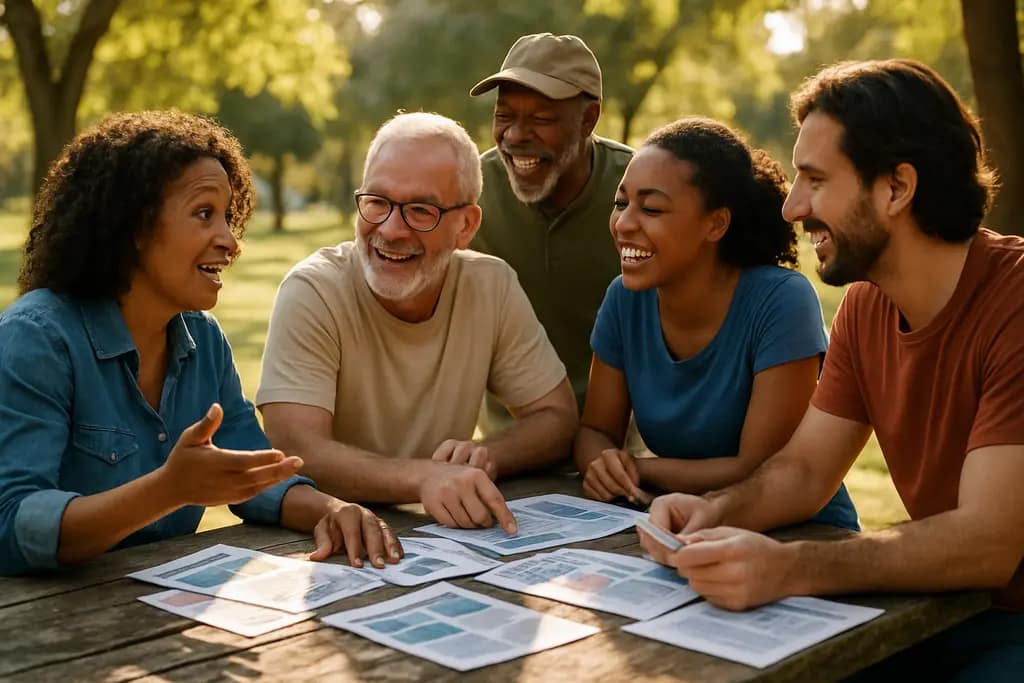
The Vote Safe Project has been reported as a community-facing effort to place trained local messengers near polling sites before the November 3, 2026, U.S. midterm elections. The engagement challenge is not only to recruit volunteers, but to set clear roles, keep public claims grounded in verified information, and use social media advocacy to reinforce calm, lawful participation. Because election-related activity carries legal and institutional sensitivity, the safest strategy is to separate confirmed plans from open questions and to avoid overstating what volunteers can do.
What The Vote Safe Project Has Confirmed
Reported Launch, States, And Timing
According to reporting published on September 2, 2026, the Washington Post said the initiative planned to station trained community members, including faith leaders, teachers, veterans, and firefighters, at polling sites in heavily minority precincts in Michigan, Ohio, Georgia, and North Carolina. The report described those states as competitive Senate states and said the effort was designed to begin during early voting and continue through Election Day on November 3, 2026.
That timeline has practical consequences for mobilization. A program that starts during early voting cannot rely on a single-day volunteer surge. It needs a schedule for recruitment, training, confirmation, reminder messages, and incident reporting before the first early-voting shifts begin. It also needs replacement volunteers for people who become unavailable, since public-facing work near polling locations can be stressful and time bound.
Confirmed Aims And Unresolved Details
The confirmed public description centers on voter confidence, legal-rights awareness, and trained presence near polling places. The reporting says volunteers would receive training on what is lawful and what is not, including how to recognize potential intimidation. The same reporting does not, based on the provided research, specify the full training curriculum, the number of volunteers, the complete precinct list, or the chain of command for field decisions. Those gaps should be treated as unresolved, not filled with assumptions.
For the Vote Safe Project, that distinction should shape public communication. Volunteers and partner groups can say what has been reported: that trained community members are expected to support voters in selected states during the voting window. They should be cautious about promising legal protection, security outcomes, or guaranteed coverage at every site unless project organizers have publicly confirmed those details.
Community Engagement Strategies With Clear Guardrails
Vote Safe Project Volunteer Roles
A strong volunteer model begins with narrow role definitions. One set of volunteers can serve as greeters and wayfinders, helping voters locate official polling-place entrances, disability-access routes, or posted election notices. Another set can serve as documentation volunteers, recording time, place, and observable facts when a concern is raised. A third set can handle communication with designated coordinators, rather than asking every volunteer to interpret election rules in real time.
This is where training should be practical rather than rhetorical. Volunteers need to know the difference between offering general, nonpartisan support and interfering with election administration. They also need a channel for questions that they cannot answer. The related discussion of civic coordination with DOJ poll monitors is relevant because it treats documentation, verified reports, and lawful complaint channels as separate tasks. That separation reduces confusion and helps protect the credibility of the work.
Trusted Messengers And Local Institutions
The trusted-messenger strategy is strongest when it reflects existing community relationships. A firefighter, pastor, teacher, veteran, clinic worker, or neighborhood nonprofit staff member may already be known to voters in ways that a national campaign figure is not. That familiarity can reduce anxiety at the point of voting, especially where voters have past experience with long lines, language barriers, transportation barriers, or distrust of institutions.
Still, trusted status is not automatic. It should be earned through consistency, nonpartisan conduct, and factual restraint. A local messenger who shares unverified warnings online can weaken the same confidence that a poll-site presence is meant to build. Volunteer briefings should include a simple standard: if a claim cannot be tied to an official election source, a project coordinator, or a verified report, it should not be repeated as fact.
- Assign shifts across early voting and November 3, 2026, rather than concentrating all recruitment on Election Day.
- Match volunteers to roles such as greeting, documentation, language support, transportation coordination, and escalation contacts.
- Use local community leaders where they are already trusted, while keeping all voter-contact messages nonpartisan.
- Track unresolved questions separately from confirmed facts so social posts and field scripts do not overclaim.
Digital Advocacy That Supports Field Volunteers

Social Media As A Verification Tool
The Vote Safe Project can use social platforms to mobilize volunteers, but the more important function may be verification discipline. Posts should point voters toward official election offices for polling-place details, registration status, identification rules where applicable, and voting hours. Project accounts can explain volunteer roles, share training deadlines, and remind voters that election workers and official notices remain the authoritative source for voting procedures.
Sterling Frost’s engagement approach favors volunteer mobilization through social media advocacy, but an election setting requires restraint. Digital posts should reduce uncertainty, not heighten it. That means avoiding dramatic claims about threats unless they are verified through a defined reporting process. It also means avoiding photos or descriptions that could identify private voters without consent. The goal is community support built on trust, not attention gained through alarm.
Funding Early Enough To Build Capacity
Volunteer programs need time before they can be visible at polling sites. In April 2024, the Associated Press reported that funders, including the Tides Foundation, were working to move election-related grants to local nonprofits earlier so those groups could conduct phone, in-person, and online voter contact before election deadlines arrived. That funding lesson applies directly to 2026 engagement: late money can pay for some activity, but early support gives local groups time to train, schedule, translate, and test communication systems.
Digital advocacy also benefits from earlier preparation. Volunteer teams can draft message banks, language-access posts, shift reminders, and escalation scripts before the voting period begins. They can also test whether messages are reaching the intended local audience. Related civic media projects, including a related site in the same network, The Parative Project, show why networked public-interest communication often depends on clarity, repetition, and trust rather than a single large announcement.
Vote Safe Project Engagement Choices Before November 3
Measuring Participation Without Overstating Impact
The Vote Safe Project should measure what it can document: volunteer sign-ups, completed trainings, covered shifts, languages available, voter questions referred to official sources, and incident reports escalated through the project’s chosen process. Those measures do not prove turnout effects by themselves, but they can show whether the engagement operation was organized and present where it said it would be.
Impact claims should be cautious. If a nonprofit partner later studies turnout among contacted voters, that analysis should describe the method, comparison group, dates, and limits. Until then, organizers can responsibly say that their strategy is designed to support voter confidence and access during early voting and on November 3, 2026. They should not claim that any single tactic will prevent intimidation, change turnout levels, or resolve all barriers in the targeted precincts.
Practical Criteria For A Credible Plan
A credible engagement plan has three tests. First, voters should know where to find official information. Second, volunteers should know exactly what their role permits and where their role ends. Third, public communication should distinguish confirmed facts from reports, concerns, and unanswered questions. Meeting those tests would not remove every risk, but it would make the work easier to evaluate and harder to misrepresent.
For community partners, the strongest contribution may be steady preparation: recruit people who are already trusted locally, train them before early voting starts, assign them to limited roles, and use social media to direct people toward verified information. If the project follows that model, it can foster community support while respecting the authority of election administrators and the legal boundaries that govern activity around polling places.