
Election misinformation became a formal cybersecurity concern for the Democratic National Committee in the closing days before the November 3, 2026 midterm elections. On October 26, 2026, AP reported that the DNC’s Association of State Democratic Committees had created a “first-of-its-kind” cybersecurity unit staffed by former FBI and CIA officials to monitor and report online misinformation, including artificial intelligence deepfakes, as part of a wider election protection effort AP reported.
The timing matters. Election Day has now passed. As of November 5, 2026, the available research does not provide final results, certification status, or a public accounting of how many reports the unit generated. What is confirmed is narrower: the unit was created before the midterms, Jane Kleeb, vice chair of the DNC, confirmed its formation in the AP report, and the effort was described as part of coordination with state Democratic parties, congressional leaders, and democracy-protection groups.
What The DNC Election Misinformation Unit Did
Election Misinformation Scope And Limits
The confirmed task of the new unit was monitoring and reporting online misinformation. The reporting described AI deepfakes as a specific concern, which fits a broader shift in campaign communication: false or manipulated content can now move quickly across social platforms, video channels, private groups, and influencer networks before campaigns, newsrooms, or election offices respond.
Still, the public record in the supplied research leaves several details unresolved. AP did not specify the size of the unit’s staff. It did not publish a list of platforms watched, internal thresholds for escalation, or examples of specific posts the unit reported. That absence is not proof that such protocols did not exist; it means readers should avoid treating the unit as more expansive or more successful than the available reporting supports.
Why AI Deepfakes Changed The Reporting Task
AI deepfakes matter because they can imitate voice, face, setting, or timing in ways that may confuse users during high-pressure civic moments. A misleading video posted near voting deadlines can demand a different response than an ordinary claim made weeks earlier. The relevant question is not only whether content is false, but whether it is plausible enough, timely enough, and widely shared enough to affect voters’ understanding of procedures or public events.
For campaigns and advocacy groups, this creates a tension. Fast rebuttals can reduce harm, but rushed public claims can spread a rumor further or accuse ordinary users of bad faith without proof. A cautious monitoring program needs evidence logs, time stamps, platform links, copies of disputed media, and a clear separation between confirmed manipulation, disputed interpretation, satire, and unverified allegations.
How Monitoring Fits Election Protection Work
Volunteer Observation And Online Reporting
The DNC effort was not described as a stand-alone project. The AP report connected it to a wider election protection strategy that included traditional poll observers, volunteers, rapid-response coordination, and reporting protocols for spikes in false narratives. Jane Kleeb said the effort would work with state Democratic parties, congressional leaders, and democracy-protection groups to deploy tens of thousands of observers.
That pairing of digital monitoring and in-person observation reflects how election narratives now form. A local incident, even if minor or misunderstood, can be recorded, clipped, captioned, reposted, and reframed across national channels within minutes. The first public description may shape later belief, even after officials clarify the facts. For grassroots organizers, election misinformation monitoring is less about policing every post than identifying which claims could mislead people about voting, counting, or the legitimacy of outcomes.
Federal Monitoring Is Separate From Party Activity
The DNC unit should not be confused with federal election monitoring. On November 3, 2026, the Department of Justice announced that it would monitor elections in all 50 states for the first time, with roughly 1,000 federal monitors deployed as part of its stated election monitoring work DOJ announced. That was a government action, not a party operation.
The distinction is central for public trust. Party committees have political interests, even when their stated work concerns accuracy or voter protection. Federal agencies have legal mandates and public accountability duties, though their actions can still be scrutinized. Civic groups, campaigns, and journalists should identify which institution is acting, what authority it claims, and what evidence it provides before presenting a report as verified.
Social Media Advocacy Lessons For Grassroots Groups
Verification Before Amplification
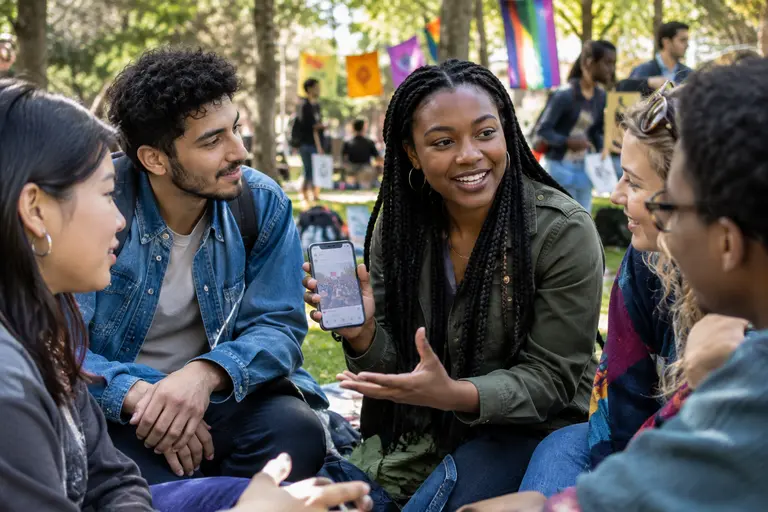
Grassroots campaigns can draw practical lessons from the DNC model without copying it wholesale. Most local groups do not have access to former intelligence officials or national party infrastructure. They can still build disciplined workflows: assign monitors, preserve original links, check official election information, avoid quote-posting false claims in ways that reward engagement, and keep a written record of what was verified and what remained uncertain.
One useful rule is to treat screenshots as leads, not proof. Screenshots can be edited, stripped of context, or detached from their original timing. A responsible volunteer team should look for the original post, the account history, the time of publication, and whether an election office or credible newsroom has addressed the claim. Related planning around access and public trust is discussed in this site’s analysis of digital inclusion and election integrity. For broader civic information, related public-interest coverage can also be found at Earth Times, which sits in the same publishing network.
Reporting Protocols And Public Trust
Monitoring does not mean every questionable claim deserves a public response. Some falsehoods remain low-reach until public figures amplify them. Other claims may be spreading in closed spaces where direct correction is difficult. A careful response protocol should ask who is affected, whether the claim concerns voting procedures or outcomes, whether officials have issued guidance, and whether public correction could reduce or increase exposure.
For social media advocacy teams, the goal should be accuracy, not volume. A short post linking to an election office can be more useful than a heated thread. A private report to a platform may be more appropriate than a public accusation.
What Election Misinformation Monitoring Requires
Institutional Boundaries After November 3
After the November 3, 2026 midterm elections, the main challenge shifted from pre-election preparation to post-election interpretation. The research supplied for this article does not confirm final outcomes, the number of reports filed by the DNC unit, or whether any specific deepfake incident was formally attributed to the unit’s monitoring. Those points should remain open unless supported by later records.
The most credible election misinformation work is narrow, documented, and institution-aware. It separates party claims from official election administration, confirmed facts from allegations, and technical detection from public persuasion. For digital campaigners, the lesson is not that every movement needs a cybersecurity unit. It is that advocacy teams need clear roles, careful evidence handling, and restraint when civic trust is under pressure.