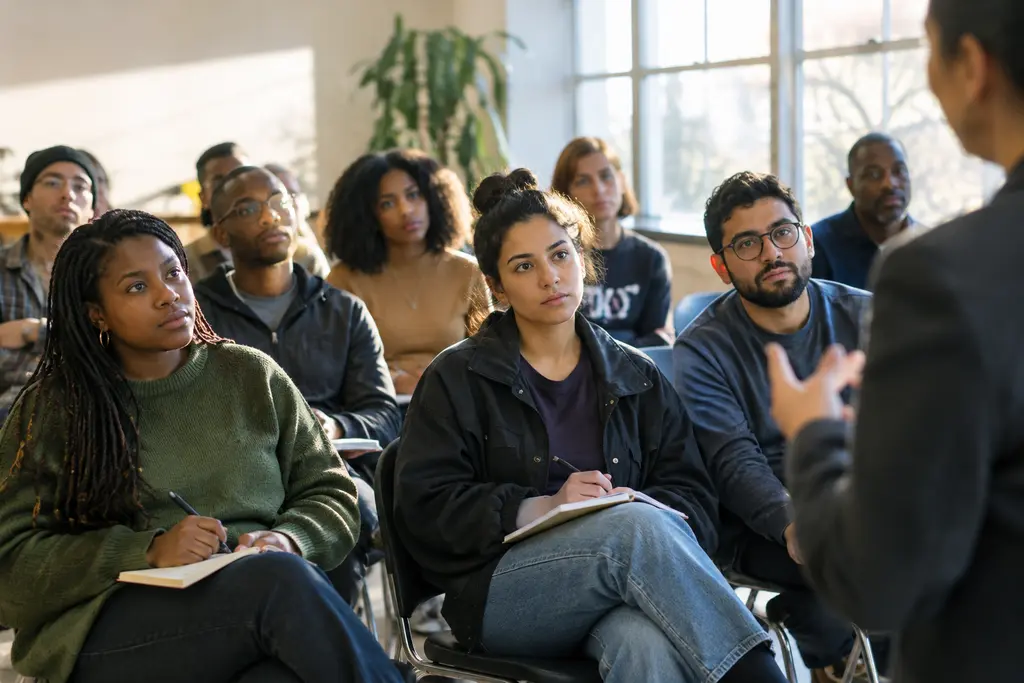
Poll Watcher Training became a higher-stakes volunteer issue during the 2026 election cycle because groups were preparing observers while also responding to concerns about federal oversight, state rules, and possible confusion at polling places. The confirmed record in the materials available here supports several cautious practices: train under state law, separate observation from interference, use written credentials, practice realistic scenarios, account for accessibility, and route concerns through established reporting channels rather than direct confrontation.
The subject requires care. A poll watcher is not a poll worker, an election judge, a law-enforcement officer, or a free-standing investigator. Duties and limits vary by state. The guidance below does not offer legal advice, and it should not be read as a substitute for state or county election instructions. It is an evidence-based review of practices supported by the cited official materials and by initiatives described in the research record.
Why Legal Boundaries Come First
Volunteer observers need a precise account of what they may do before they learn how to document what they see. Texas offers a useful official example. The Texas Secretary of State states that poll watchers must complete the Secretary of State’s training program and present a certificate of completion to the presiding judge at the polling place, according to VoteTexas poll watcher rules. That fact supports a broader training principle: appointing groups should not treat enthusiasm, prior campaign experience, or online briefings as enough when a state requires a specific credential.
Poll Watcher Training Starts With State Rules
Effective Poll Watcher Training should begin with the jurisdiction’s own definitions, appointment process, credential requirements, and limits on conduct. The Texas example is not a national rule; it is a state-specific requirement. That distinction matters because a training deck copied across state lines can mislead volunteers if it fails to identify what is mandatory in one place but absent or different in another. Trainers should mark each rule as state law, county procedure, organizational policy, or general conduct expectation.
Credentials Reduce Ambiguity Without Expanding Authority
Badges and certificates can reduce confusion, but they do not create powers beyond the law. A credential should help election officials confirm who a watcher is, who appointed that person, and whether required training was completed. It should not imply control over voters, poll workers, voting equipment, or the polling place. In practice, the safest training language is plain: the watcher observes, records permitted observations, and reports concerns through the designated channel. Any wider claim should be checked against the state rulebook before it is taught.
Scenario Practice And Accessibility In Volunteer Programs
The Election Assistance Commission’s February 2025 report on election worker recruitment, training, retention, and evaluation describes practical training models that can inform observer preparation, even though poll workers and poll watchers have different roles. The report says Fulton County, Georgia, has used a “Poll Worker University” with a fully equipped polling-location kiosk so workers can practice voting-machine and polling-place procedures before Election Day, according to the EAC training report. The transferable lesson is not that watchers should handle equipment; they should not do so unless the law permits it. The lesson is that scenario-based instruction helps volunteers understand the environment before tensions rise.
Mock Exercises Give Volunteers A Safer Rehearsal
Poll Watcher Training can use mock polling-place situations to teach restraint. A trainer can present a long line, a voter asking a watcher for help, a watcher seeing something that appears irregular, or an observer hearing a rumor about federal presence nearby. The correct answer should rarely be immediate confrontation. A more reliable pattern is to note the time, location, people involved by role rather than personal speculation, and the specific rule that may be implicated, then contact the assigned lead or election official as directed by law and training.
Accessibility Training Belongs In Observer Preparation
The same EAC report describes accessibility-related training materials in Utah and Florida, including videos featuring older and disabled voters. That fact points to a gap in many observer programs. Watchers may be trained to look for procedural problems but not trained to recognize lawful assistance, accessibility accommodations, or voter-support practices. Without that context, a volunteer could misread a protected accommodation as suspicious. Training should explain that access support for disabled, older, or language-limited voters may be part of lawful election administration, depending on the jurisdiction and circumstances.
- Confirm the watcher’s role and credential requirements before deployment.
- Use mock scenarios to practice calm observation and escalation.
- Teach the difference between voter assistance, poll-worker duties, and watcher limits.
- Provide written reporting steps, including who receives urgent concerns.
- Review accessibility examples so volunteers do not misclassify lawful support.
Reporting Channels Under Federal Oversight Concerns
Federal oversight concerns changed the tone of some 2026 volunteer planning, but training should separate confirmed rules from uncertain claims. The materials provided for this article refer to tabletop exercises involving worst-case scenarios, including possible federal agents at polling places, and to hotline-based reporting. Those accounts should be treated as descriptions of training scenarios unless verified by official records or direct documentation. For additional insights and related discussions in our network, please see The US Report for comprehensive analysis.
Separate Confirmed Rules From Unconfirmed Claims
Poll Watcher Training also needs a rumor-control component. A volunteer who hears that federal personnel are present, that a polling place has changed procedures, or that a machine has failed should be trained to ask what is known, what is observed directly, and what has only been relayed by another person. Confirmed observations can be reported with time, place, and context. Unconfirmed claims should be labeled as unconfirmed. That discipline protects voters, poll workers, and the observer program itself.
Keep Documentation Calm And Routed
Documentation should be factual and limited. A useful observer note records what happened, where it happened, when it happened, and which rule or instruction may be relevant. It should avoid assigning motive, naming private voters unnecessarily, or posting partial claims on social media before verification. Readers comparing institutional coverage of civic administration across the same publishing network can also follow related reporting at The US Report.
Poll Watcher Training After November 3, 2026
After the November 3, 2026 election, the training question is no longer how to prepare for that specific voting day. It is how groups should evaluate what worked, what confused volunteers, and what should change before the next cycle. The strongest Poll Watcher Training programs will be the ones that keep partisan or advocacy goals separate from lawful observer conduct. They will also preserve records carefully: attendance logs, credential checks, scenario materials, hotline protocols, and post-election feedback can help identify whether volunteers understood their limits.
A Practical Standard For Future Programs
A defensible standard is simple: train from official rules first, practice real situations second, and report through assigned channels third. Where federal oversight concerns arise, trainers should not dramatize uncertainty or ask volunteers to act outside their role. They should explain what is confirmed, what is unresolved, and who has authority to respond. That approach protects voters and poll workers while allowing lawful observation to serve its proper function: public accountability without interference.