
In today’s world, facts alone don’t grab our attention. Our brains crave stories, not data dumps.
Studies show we remember stories 22 times better than facts. Many campaigns fail by treating us like machines, not feeling beings.
Take Apple’s 1984 commercial as an example. They didn’t focus on computer specs. They sold a dream of breaking free from the norm. This shows the power of a good story.
Activist storytelling is not just about feelings. It’s a battle for our attention. If you don’t use stories, you’re at a disadvantage.
Power of Narrative in Activism
Ever wonder why some social movements stick while others fade? It’s not about who shouts loudest. It’s about who tells the best story. The most effective activism creates experiences that stay with you, like a catchy song.
I learned this truth working with a humanitarian organization. We were stuck selling misery until we changed. Instead of numbers, we showed children choosing sponsors through personal stories. This led to a 25% increase in market share and 30% revenue growth.
Why did this approach work? We stopped selling poverty and started selling possibility. This is the magic of narrative – turning abstract issues into emotional experiences. It’s the difference between data and a polar bear on melting ice. One makes you think; the other makes you feel.
Campaign narratives are like emotional translators. They turn complex issues into human experiences that move people. This isn’t manipulation; it’s a way to communicate better. When Maria Alonso’s organization used this approach, they found stories build trust and loyalty.
“Activism without narrative is just shouting into the void – it’s the difference between presenting climate change data and showing a polar bear on melting ice.”
The magic happens when people become part of the story. That sponsored child isn’t just a statistic; they’re a character in a story of change. This emotional investment turns passive observers into active supporters who don’t just donate but become evangelists for your cause.
Effective campaign narratives follow three simple rules:
- Make it personal (abstract issues become individual stories)
- Make it emotional (facts tell, stories sell)
- Make it participatory (audiences become co-creators)
The organizations that master this narrative framework don’t just raise funds; they build movements. They know in the attention economy, the best story wins. And in activism, the best stories aren’t just heard; they’re felt, shared, and lived.
Elements of a Good Story
Think you’ve mastered storytelling just because you binge-watched Stranger Things? Think again. The character-conflict-resolution triad is key, not just a dusty theory. It turns casual viewers into committed digital advocates.
This framework works like psychological judo. It uses your audience’s emotions to make them active, not just passive. Let’s explore why these three elements are essential for digital advocacy.

Characters
Forget about mascots and spokesmodels. In digital advocacy, characters are emotional bridges. They represent your audience’s hopes and frustrations.
Remember Dunkin’s Ben Affleck drive-through surprise? It wasn’t just celebrity marketing. It was storytelling that made millions feel like they were sharing coffee with a friend.
In advocacy campaigns, your characters should reflect your audience’s:
- Daily struggles and pain points
- Aspirations for change
- Shared values and experiences
The right character makes your cause relatable, not just recognizable.
Conflict
Conflict isn’t about drama—it’s about finding the right moments to advocate. It’s the “why now” of your story.
Take Sleep Number’s campaign about couples’ different sleeping preferences. They didn’t invent mattress drama—they highlighted a real issue that millions face every night.
Effective conflict in digital advocacy:
- Mirrors your audience’s actual struggles
- Creates emotional investment in resolution
- Establishes urgency without manipulation
The best conflicts feel familiar, not fabricated.
Resolution
Here’s where you transform from storyteller to solution-provider. Resolution isn’t just wrapping up a story—it’s providing a clear path from problem to action.
T-Mobile’s internet outage ad nailed this. They didn’t just complain about spotty service—they presented their solution as the obvious answer.
In digital advocacy, your resolution must:
- Offer tangible steps forward
- Make action feel achievable
- Connect directly to your call-to-action
A strong resolution turns emotional investment into actual participation. It’s the difference between making people care and making them act.
When these three elements work together, they create unstoppable momentum. The characters create connection, the conflict creates urgency, and the resolution creates action—the holy trinity of effective digital advocacy.
Visual vs. Written Storytelling
Let’s end the debate once and for all. Visual and verbal storytelling are not enemies, but allies. Studies show 65% of us learn better through images. So, an 800-word text might be hard for many to understand.
Visual stories speak directly to our emotions. Think of those powerful New York Times photos from Afghanistan. They told more truth than many words could.
Apple’s “Shot on iPhone” campaign shows images can tell big stories without words. Those baby pictures spoke of hope and connection without needing captions.
Written stories are far from dead. HubSpot’s ads show how clever writing can make even tech interesting. The right words can add depth and meaning to images.
It’s time to see visual and written stories as partners. Visuals draw us in, while words add depth. Images stir emotions, and text guides us to act.
| Medium | Strengths | Best For | Limitations |
|---|---|---|---|
| Visual Storytelling | Instant emotional impact, universal comprehension, high shareability | Social media campaigns, protest imagery, awareness building | Limited nuance, requires cultural context, can be misinterpreted |
| Written Storytelling | Detailed analysis, complex arguments, precise messaging | Policy documents, detailed calls to action, educational content | Requires time investment, language barriers, lower engagement rates |
| Combined Approach | Maximum impact, caters to all learning styles, multi-platform adaptability | Comprehensive campaigns, movement building, lasting change | Higher production costs, requires coordination, more complex execution |
The best campaigns use both visuals and text. They grab our attention with images and guide us with words. It’s about combining forces for the strongest story.
Your goal? Stop seeing visual and written stories as opposites. Instead, think about how they can work together. This collaboration is key to making a lasting impact.
User-Generated Stories
If you’re holding onto your campaign narrative too tightly, you’re missing out. User-generated stories are like giving the microphone to the audience. It’s not about losing control, but gaining trust.
Think about it: do you trust corporate mission statements more than a real customer’s Instagram story? Exactly.
Lume’s story about a young girl with a rare disorder is a perfect example. It wasn’t just corporate storytelling. It was real, human, and impactful.
Lego’s magazine is another great example. It lets children become content creators, alongside professional designs. This way, the focus shifts from what Lego does to what the community can create.
The most powerful stories come from your audience, not just about them. It’s the difference between saying “we help people” and showing how you’ve helped them.
This approach builds trust through authenticity. Your branded content might look great, but user content is more believable. It’s like the difference between a scripted speech and a heartfelt confession.
User-generated content is not just a trend. It’s the future of genuine connection. It turns your campaign narrative from a monologue to a dialogue.
Platforms for Distribution
You’ve created a great story, but it’s stuck online? That’s not how digital advocacy works. Getting your story out there is key, not just an extra step.
Coca-Cola grew by using many platforms, not just one. They went from 4 to 26 brand platforms in 35 countries. Your cause needs a similar plan.
Each platform has its own way of speaking. TikTok is all about quick, emotional moments. LinkedIn wants professional insights with a story twist. Instagram is all about visuals that stop people from scrolling.
Think of platforms as different instruments in an orchestra. YouTube is like the cello – deep and emotional. Twitter is the percussion – fast and rhythmic. Podcasts are like the woodwinds – friendly and building a mood.
Your distribution strategy needs three key things:
- Platform intelligence: Know each channel’s native language
- Content adaptation: Change it without losing the core message
- Timing mastery: Release when people are most likely to listen
I’ve seen amazing stories fail on small blogs while simple ones went viral. The difference? Smart distribution. The right story on the right platform at the right time is magic.
Your digital advocacy shouldn’t shout the same message everywhere. It should whisper differently on each platform, keeping the story consistent. That’s how movements start to move.
Remember: distribution isn’t about being everywhere. It’s about being strategically everywhere. Your audience is spread out – your job is to find them and speak their language.
Real-World Impact Stories
Let’s be honest: nothing kills activist storytelling faster than empty claims. You can’t just say you’re changing the world without proof. Real-world impact stories are your proof, showing you’re making a difference.
Nike’s “Breaking2” documentary is a great example. They didn’t just say their shoes were fast. They showed three athletes trying to break the two-hour marathon barrier. Over 500 million viewers saw it happen live. That’s not marketing – that’s proof.
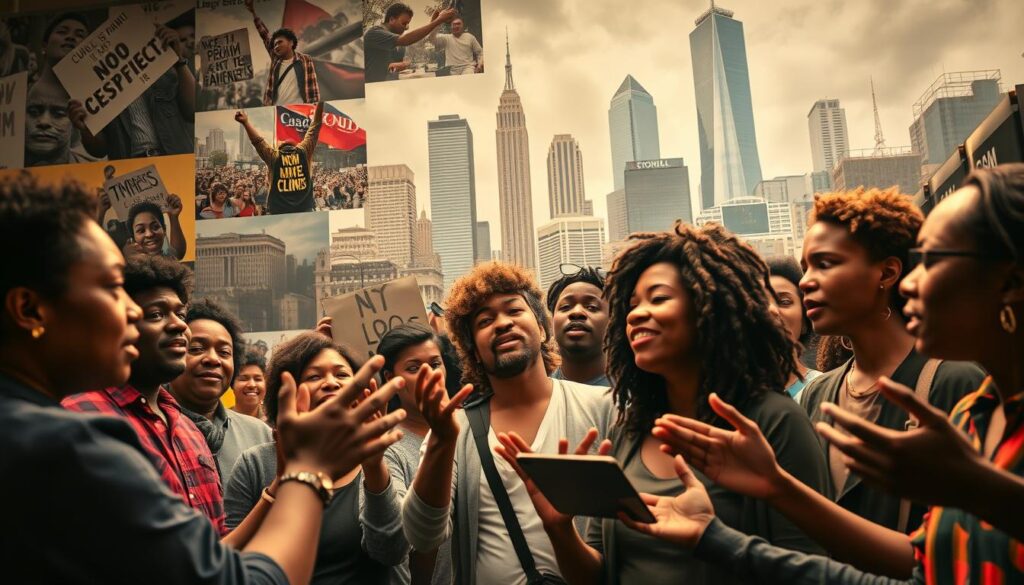
Warby Parker shows how to do it right. They didn’t just talk about their donation program. They made videos that showed their whole process. This transparency became their story.
Working with Starbucks in 18 countries, we found something important. Corporate messages fail, but community stories succeed. When we shared local baristas’ stories, engagement went up. The story became real.
This builds narrative credibility. It’s like showing your math homework. It’s the difference between saying you’re a chef and actually cooking a perfect soufflé. Your audience needs to see the results, not just hear about them.
The most powerful stories don’t tell you what changed – they show you who was changed.
Effective activist storytelling follows three simple rules:
- Show the process, not just the outcome
- Feature real people, not abstract concepts
- Provide measurable results, not vague promises
Your impact stories should answer the “so what?” question before anyone asks. When your narrative includes real evidence – like documentary footage or customer testimonials – you’re not just telling a story. You’re building a case.
This approach works in all industries. Nonprofits can show how they’ve helped people. Tech companies can share user success stories. Even local businesses can highlight their community impact. The medium changes, but the principle remains: proof beats promise every time.
Remember: in the court of public opinion, real-world evidence is your star witness. Make sure your activist storytelling puts it on the stand.
Tips & Ethics
Before you become like Don Draper, think about your campaign’s story. Ethics in storytelling are key, not just rules. They help move people, not just manipulate them. I’ve seen campaigns fail because of fake emotions, not bad data.
Being real isn’t just a feel-good idea. It’s something you can measure. Today’s people can spot fake stuff like bloodhounds.
- Know your audience better than they know themselves. Starbucks didn’t just sell coffee. They sold community stories to each neighborhood.
- Maintain message clarity without dumbing down complexity. Your audience isn’t dumb. They’re just busy.
- Balance emotional appeal with factual integrity. Tears might get shares, but truth builds trust.
- Make visual and verbal elements enhance truth, not hide it. Pretty lies are just as bad.
The best campaign stories are the most honest ones. Why? Because today’s people want to be moved truthfully. They’re not searching for heroes. They want to see real humans.
Remember, ethical storytelling isn’t about playing it safe. It’s about being smart with the only thing that matters online – real human connection. Your audience isn’t just a group to reach. They’re your partners in the story.
So, before you create your next big campaign, ask yourself: Is this story true, or just easy? Your answer could decide if you make a splash or a lasting mark.
Conclusion
We’ve reached the end of our journey. Here, all the storytelling techniques come together. Effective digital advocacy isn’t about flooding people with data. It’s about sharing human experiences wrapped in facts.
When statistics meet personal stories, magic happens. This turns passive viewers into active supporters. It’s the shift from showing a spreadsheet to inviting people into a journey they care about.
Using real stories is often better than making new ones. Why not use existing emotional content? This idea is explored in transforming activism through storytelling. The best digital advocacy makes people feel before they think.
Your campaign needs a change, not more info. Stop telling people what to think. Start showing them why they should care. That’s how you build a movement.