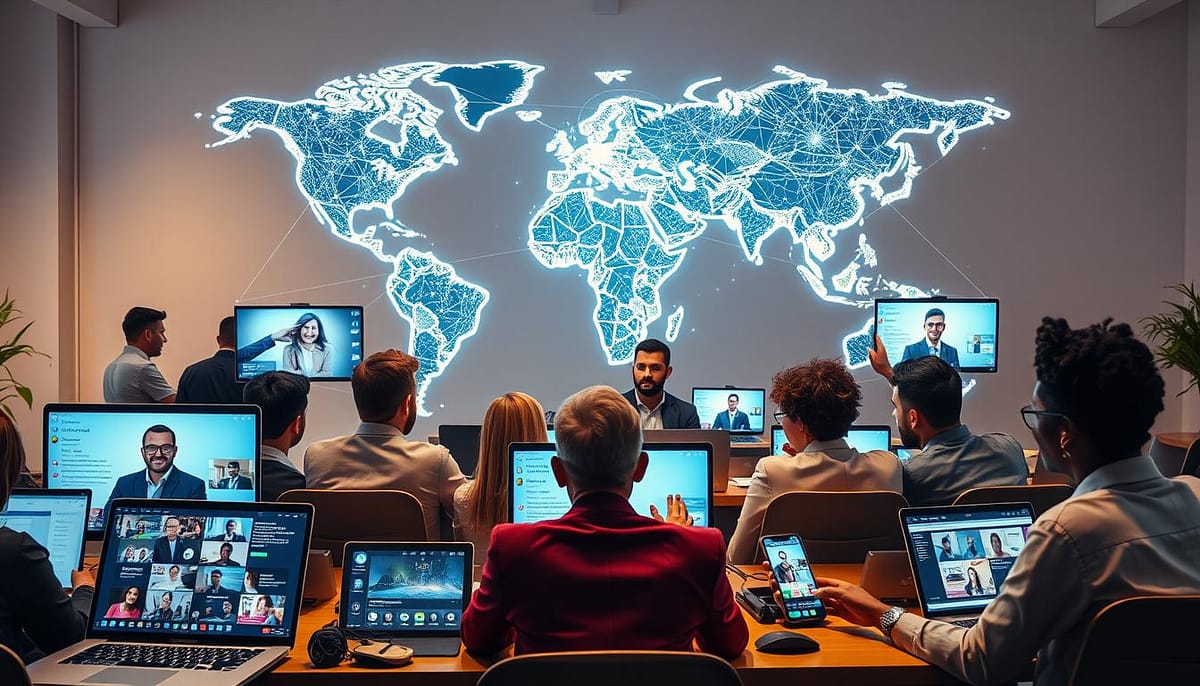
Remember the thrill of passing a secret note in class? Today, we use digital tools for activism. A tweet can start a revolution, and encrypted chats plan actions. This is digital activism, using tech for change.
Think of it as the new activist’s toolkit. Twitter and Instagram are more than apps. They’re the global public square. They spread messages across the world in seconds.
But the real work happens in secret. Apps like Signal and Telegram are the strategy room. They plan actions without being seen. Blogs and media outlets create important counter-narratives.
Then, there’s the logistics. Forget bake sales. Crowdfunding platforms like GoFundMe are the modern hub. They turn sympathy into real help almost instantly.
We have the megaphone, the war room, the press, and the bank—all digital. The question is, are we using these tools wisely or just making noise?
Examples of Cross-Border Movements
What do a shoe protest in Tokyo and a police brutality outcry in Lagos have in common? A digital thread of solidarity. This isn’t just theory; it’s the messy, inspiring reality of modern activism. Movements today don’t ask for permission to go viral. They simply do.
Take #BlackLivesMatter. Born from a hashtag in the U.S., it didn’t stay there. It became a template. Suddenly, protests in London, Berlin, and Sydney weren’t just “inspired by”—they were part of it. The digital tools were simple: Twitter to organize, Instagram to humanize the struggle, Facebook to fundraise. The result was a shared, transnational identity that police batons and national borders couldn’t contain. The personal is political, yes. But now, thanks to these online alliances, the personal is also global.
Then there’s #EndSARS. Nigerian youth, facing down a notoriously brutal police unit, turned to Twitter as their megaphone. They broadcast live footage, shared victim stories, and coordinated protests. The world watched in real-time. International celebrities amplified their calls. The government, suddenly under a global spotlight, was forced to disband the unit—at least on paper. This wasn’t a local news story. It was a global livestream of resistance, proving that a movement’s power is now measured by its network, not just its numbers.

Other movements highlight more niche, cultural battles that found global resonance. Japan’s #KuToo movement started with a simple online petition against mandatory high heels for women in the workplace. It tapped into a universal frustration with sexist dress codes, gathering steam far beyond Japan. Brazil’s #EleNão campaign used social media to mobilize millions against a presidential candidate, showing how a localized political hashtag can shape international discourse.
Let’s look at the broader ecosystem. #ExtinctionRebellion (UK) exports civil disobedience tactics via downloadable toolkits. #MyDressMyChoice (Kenya) fights “miniskirt attacks” with viral videos that demand global attention. #FeesMustFall (South Africa) and #FixTheCountry (Ghana) use digital platforms to turn national education and governance crises into subjects of international solidarity. Each is a unique node, but they’re all connected in a sprawling, digital nervous system.
The table below breaks down how these movements leveraged digital tools to build their online alliances and cross borders.
| Movement | Origin | Core Digital Tool | Key Demand | Global Impact |
|---|---|---|---|---|
| #BlackLivesMatter | United States | Twitter / Instagram | Racial Justice & Police Accountability | Worldwide protests, policy debates, corporate statements |
| #EndSARS | Nigeria | Twitter (Live Video/Threads) | Disbandment of SARS Police Unit | International media coverage, celebrity endorsements, government action |
| #KuToo | Japan | Online Petitions (Change.org) | End Mandatory High Heels at Work | Global conversation on gendered workplace norms |
| #EleNão | Brazil | Facebook / WhatsApp | Opposition to a Presidential Candidate | Influenced diaspora voting, international political analysis |
| #FixTheCountry | Ghana | Twitter / Hashtag Campaigns | Governance & Economic Reform | Pan-African solidarity, sustained online pressure on leaders |
So, what’s the common thread? It’s the deliberate construction of a shared story. A protester in São Paulo and an office worker in Tokyo can feel like they’re in the same fight because the digital space makes their grievances legible to each other. This creation of a transnational identity is the real magic. It turns local anger into a global force.
Of course, this digital solidarity faces hurdles, like the complex cross-border data flows that can help or hinder a movement’s spread. But the lesson is clear. The most potent online alliances today don’t just share information; they share a sense of fate. And that’s a connection no firewall can completely block.
Language & Cultural Hurdles
Movement sharing across borders is more about understanding privilege and access than just translation. We dream of solidarity in a single click. But, the reality is complex, like trying to fit a square peg into a round hole.
The biggest barrier isn’t language—it’s access to technology. The “Digital Divide” is real, separating those with fast internet from those who can’t afford it. Organizing online can leave out those most affected by issues, creating a coalition of the connected, not the committed.
Intersectionality is more than a buzzword; it’s essential. It shows how race, gender, class, and sexuality affect our experiences. A climate march by the affluent might alienate low-income communities fighting local polluters. Our frameworks don’t always match.
Superficial inclusion is a danger. We often design movements that require privilege to participate. Can you afford to take a day off to protest? Do you have enough data for that livestream? This isn’t an oversight; it’s a design flaw that mirrors the inequalities we fight.

Our digital spaces are also filled with toxic elements. Misinformation spreads quickly, and trolls exploit cultural differences to divide us. These differences can turn into unbridgeable gaps. Our diversity, which should be our strength, is seen as a weakness.
So, what’s the solution? It’s not about finding a universal language. It’s about building a coalition that values difference. We need to decentralize leadership, trust local knowledge, and design tactics that work in different contexts. The real work of movement sharing starts with the hard conversations about who we might be excluding. For more on this, check out our guide on building coalition campaigns across digital platforms.
Sharing Tactics
Forget the hashtags for a moment. The heart of any modern movement is a set of jobs that turn outrage into action. Having a million followers means nothing without a shared plan. Effective global activism works like a startup, with each part knowing its role.
So, what’s in the playbook? It’s like six key departments in the corporation of dissent.
1. The Storytellers (Shaping Public Opinion)
This is about telling stories that change minds. It’s not just a viral video; it’s live-streams from protests. It’s memes that change debates. Digital tools help spread these stories fast, making them hard to ignore.
But, are we aiming for a viral hit or a lasting story? The goal is to create a story that sticks long after the news cycle ends.
2. The Quartermasters (Planning & Coordinating)
This is the behind-the-scenes work. It includes shared calendars, Google Docs for planning, and encrypted groups for safe talks. This shows a digital movement is serious. It turns a crowd into a well-organized action with clear roles.
3. The Mobilizers (Rallying the Troops)
Online petitions and emails are like knocking on doors. Tools like event RSVPs show who’s really coming. This job turns sympathy into action. It’s the click that leads to a march.
Real-time responses turn situations into mobilization chances in hours.
4. The Community Builders (Forging Identity)
A forum or Discord server is more than a chat room. It’s where shared identity grows. Inside jokes and playlists create a sense of community. It’s where the “why” we fight gets reinforced every day.
5. The Bankers (Transferring Resources)
Modern cross-border organizing uses Venmo and GoFundMe. Crowdfunding funds everything from banners to servers. It turns a graphic designer in Berlin into an asset for a campaign in Buenos Aires.
This creates a decentralized network that’s hard to shut down.
6. The Interveners (Direct Action)
This is the bold end. It includes DDoS attacks and hackers exposing data. It’s hacktivism. It’s risky and often controversial, but it’s a powerful message.
Sharing these tactics globally makes a movement powerful and efficient. A tactic that works in Seoul can be used in São Paulo in days. But, does this sharing build lasting movements or just flash mobs with a conscience?
Lessons for Collaboration
When the trending hashtag cools and the algorithm moves on, what’s left of your movement? Our digital strategies must outlast the news cycle. The most lasting online alliances are built on structure, not just outrage.
We learned the hard way about surveillance and burnout. A strong security culture is essential. It’s smarter to design for activist fatigue before it happens, not after.
True power comes from working together. Imagine building translocal solidarity economies—networks that share resources and support across borders. The digital divide is real, so digital literacy is key.
These lasting online alliances follow a good collaborative framework. The principles for planning a COIL module—clear roles, shared goals, equitable tasks—are a blueprint for lasting groups. It’s about distributive leadership, a horizontal rhizome instead of a single stem.
Technology connects, but it doesn’t unite. That takes shared purpose and adaptive strategy. The final lesson is simple: build networks offline that are as resilient as your profile picture is fierce.