
SAFE for Kids Advocacy in New York has shifted from a legislative campaign to a public-education and accountability effort. The confirmed policy record is now clearer: New York’s SAFE for Kids Act was signed in June 2024, final rules were released on July 28, 2026, and covered platforms must comply within 180 days of that date, according to the New York Attorney General’s office and Governor Kathy Hochul’s office in their final rules announcement. The rules require platforms to disable algorithmic feeds described by the state as addictive and overnight push notifications for users under 18 unless verifiable parental consent is obtained.
For youth advocates and volunteer organizers, the task is not to overstate what the law can do. The Act creates enforceable duties for covered platforms, but its real-world effect will depend on implementation, user experience, agency enforcement, and public understanding. That makes mobilization less about slogans and more about accuracy, consent, and careful explanation.
What SAFE for Kids Advocacy Can Confirm
The first organizing principle is factual discipline. Volunteers should be trained to separate enacted requirements from preferred policy goals. The confirmed final rules address algorithmic feeds, overnight notifications, age assurance, and parental consent. They do not, by themselves, settle every policy debate about social media, mental health, privacy, speech, or youth autonomy.
SAFE for Kids Advocacy And Comment Periods
Rulemaking gave civil society a formal channel for input. The research record states that youth, parents, researchers, and advocacy organizations had opportunities to comment during the state process, including a 60-day public comment period tied to proposed rules. For SAFE for Kids Advocacy, that model matters because it shows young people that policy participation is not limited to public rallies or social posts. Written comments, listening sessions, testimony preparation, and peer education can all become volunteer assignments.
Campaign leaders should explain the difference between a comment that becomes part of an administrative record and a general awareness post. Both can have civic value, but they are not the same activity. A comment should identify the rule, state the writer’s experience or evidence, and avoid claims that cannot be supported. A social post can help recruit volunteers or explain deadlines, but it should not imply that a platform has violated a rule unless an agency has made that finding.
Why The Data Should Be Used Carefully
New York City’s 2024 Family Mental Health Survey provides a local data point that can help advocates frame concern without exaggeration. In the survey tables, 46.10% of children ages 5 to 17 were reported as spending “too much” time on social media, while 51.70% were reported as “just right” and 2.30% as “not enough,” according to the city’s 2024 data tables. That finding supports a measured message: many families report concern about time spent online, but the data do not show that every young person has the same experience.
Ethical youth mobilization should avoid turning mental health data into a blunt campaign device. Volunteers can say that public health and family survey data show substantial concern. They should not diagnose peers, claim a single cause for anxiety or depression, or pressure young people to disclose private experiences. The stronger advocacy practice is to pair policy education with opt-in storytelling and clear privacy boundaries.
Youth Mobilization Built On Consent And Care
Effective youth organizing in response to the Act should start with the same value the rule emphasizes: consent. If a campaign asks minors to join a text list, appear in a video, speak at an event, or share a personal account, organizers need clear permission practices and age-appropriate explanations. A campaign that promotes safer digital systems weakens its own credibility if it collects youth data casually.
Recruitment Without Pressure
Recruitment can be active without being coercive. Schools, youth councils, libraries, parent associations, and community groups can host short policy briefings that invite participation but do not frame nonparticipation as apathy. Young people may support online safety goals while disagreeing on age checks, parental consent, or platform design. A credible volunteer program should make room for that disagreement.
One practical approach is to offer roles with different levels of exposure. Some young volunteers may want to speak publicly. Others may prefer research, note-taking, translation, outreach to peers, or reviewing educational materials for clarity. This distinction matters in campaigns involving minors because public visibility can create risks that adults may underestimate.
Training Youth To Read Policy Claims
Digital campaigns often compress law into simplified graphics. That can help with reach, but it also creates room for error. Youth volunteers should be trained to ask five basic questions before sharing a claim: Is the rule final or proposed? Which office issued it? What date applies? Who must comply? What remains unresolved?
This discipline also helps youth compare New York’s law with other online safety efforts. For readers tracking related state-level debates, our prior analysis of youth digital advocacy discusses similar duties around privacy defaults, youth participation, and enforcement timelines. Readers can also explore further insights and perspectives through related discussions at CA Views, a site within the same network.
Volunteer Roles For The 180-Day Compliance Window
The 180-day compliance period after July 28, 2026 gives advocacy groups a defined organizing calendar. Volunteers do not need to act as regulators. They can help communities understand what the state says the rules require, what users may see on platforms, and where official information can be found.
Public Education Teams
Public education teams can prepare explainers for parents, caregivers, and youth. These materials should define algorithmic feeds, overnight push notifications, verifiable parental consent, and age assurance in plain language. They should avoid telling families that a particular product is safe or unsafe unless that claim is based on a confirmed public finding.
Translation and accessibility work can be valuable here. New York’s youth population includes families with different language needs and different levels of trust in government or technology companies. Volunteer groups can review whether materials use plain wording, avoid shame-based messaging, and clearly state that the rules apply to covered platforms rather than to every online service.
Implementation Watch Teams
Implementation watch teams can document public changes made by platforms after the rules take effect, but they should use careful language. A volunteer may observe that an app changed a notification setting or consent screen. That is not the same as proving compliance or noncompliance. Campaign materials should distinguish user observations from official agency determinations.
This is especially important for youth-led campaigns, where screenshots and short videos can spread quickly. Organizers should set review procedures before posting examples. A safer practice is to remove usernames, avoid showing private messages, and describe the observation without accusing a company of unlawful conduct unless an official source has already made that statement.
Ethical Messaging In Schools And Community Spaces
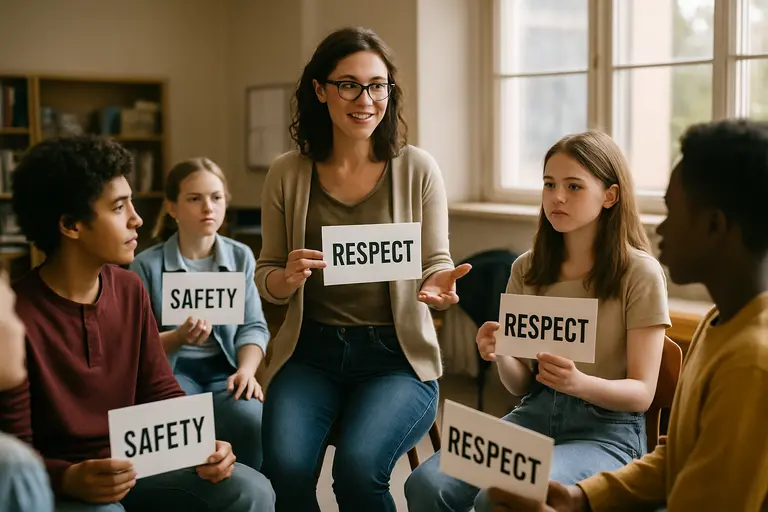
Schools and community organizations can support youth participation, but they should avoid using students as symbolic proof for adult policy preferences. The strongest youth engagement comes when young people help shape questions, materials, and meeting formats. The weaker version asks them to repeat adult-written lines.
Storytelling With Boundaries
Personal stories can make policy concrete, but they can also expose young people to unwanted attention. Volunteer coordinators should offer options: anonymous written reflections, group statements, private listening sessions, or public testimony. No youth participant should be asked to disclose mental health history, family conflict, or platform use patterns as a condition of involvement.
Consent should be renewable, not one-time. A young person who agrees to speak at a small meeting may not agree to have that clip posted online. Campaigns should make the difference clear in advance and keep records of permissions in a limited, secure way.
Nonpartisan Civic Framing
The SAFE for Kids Act sits in a broader debate about youth well-being, parental authority, privacy, platform accountability, and free expression. Advocacy groups may have strong positions, but youth training should present the law as a public policy measure rather than as a partisan identity test. That approach is more durable and more respectful of young participants who may hold mixed views.
Volunteer scripts can say what is confirmed: the rules were finalized on July 28, 2026; they require covered platforms to disable specified features for minors unless verifiable parental consent is obtained; and platforms have 180 days to comply. Scripts should also say what is not confirmed: how every platform will design its consent process, how users will experience those changes, and how enforcement patterns will develop after the compliance period.
SAFE for Kids Advocacy After The Rules
The next phase of SAFE for Kids Advocacy should be judged by whether it helps young people participate with accuracy and agency. A strong campaign will recruit youth volunteers, but it will also protect their privacy, give them meaningful roles, and correct unsupported claims quickly.
For organizations, the practical path is narrow but workable. Build a fact sheet from official sources. Train volunteers to distinguish law, rule, opinion, and observation. Create youth roles that do not require public exposure. Treat data about social media and mental health with care. Track the 180-day platform compliance period without acting as though public observation is the same as official enforcement.
That kind of mobilization may be slower than a viral campaign, but it is better suited to a policy area involving minors, health concerns, family consent, and state enforcement. New York’s final rules have given advocates a clear date and a defined set of platform duties. The civic test now is whether youth engagement can remain accurate, consent-based, and useful after the headline moment has passed.