Online platforms have changed how groups advocate for change and get support. This new world offers great reach but also brings legal challenges. Leaders must know where free speech stops and illegal actions start.
Modern movements show great power by spreading messages fast. But they can be weak when faced with legal issues or actions by platforms. It’s key to understand these challenges for lasting advocacy.
Knowing the law is vital for effective strategy. It turns legal limits into tools for real action. This knowledge helps avoid risks and keeps campaigns honest.
Grasping the limits of free speech, data use, and platform rules shows a group’s skill. It shows they can handle both fans and critics well. This is the heart of following Digital Activism Law.
Learning online advocacy rules lets leaders use digital tools wisely. It keeps their efforts safe from legal trouble while avoiding harmful speech. Finding this balance is key for lasting success and influence.
Why legal literacy matters for digital campaigns
Legal knowledge is key for digital campaigns, not just for defense. It boosts their impact and helps them last longer. In Digital Activism Law, knowing the law is essential for lasting advocacy. Campaigns that understand the law can turn weaknesses into strengths.
Digital campaigns have three main areas: narrative, disruptive, and electoral. The narrative is about telling the story and setting public opinion. Legal mistakes can ruin this. If a campaign is accused of breaking the law, the focus shifts from the issue to the legal issue.
This can lose public support and distract from the main goal. Disruptive capacity is about challenging the status quo and making change. If actions seem illegal, authorities can stop the campaign. This weakens the movement and can stop it cold.
Electoral capacity is about winning over people and policymakers. Being seen as lawless hurts credibility. This can make it hard to get support from government, media, and others. It limits a campaign’s reach and power.
Knowing platform policies is also vital. Platforms have rules that can get a campaign kicked off. Breaking these rules can lose a campaign’s main way to talk to supporters.
Building strong internal structures is key for modern movements. This idea is explored in research on digital organizing. Legal compliance is a core part of this. It’s not a limit but a key to lasting strength.
Aligning goals with legal rules is essential. Successful movements plan for this from the start. This way, they avoid last-minute scrambles and keep their integrity. It lets them focus on strategy, not just following rules.
Campaigns can learn from successful international campaigns. These campaigns see legal review as part of their strategy. They handle different laws and platforms with confidence.
Legal literacy in digital activism is about managing risks and making the most of opportunities. It keeps a campaign’s story safe from scandals. It protects its ability to disrupt and persuade. It builds the strength needed for a movement to last and grow.
Free Expression vs. Unlawful Speech (Incitement, Threats, Harassment)
Digital organizers need to know when free speech stops and illegal speech starts. This is key to understanding speech rights in advocacy. Campaigns that get this right can speak powerfully and avoid legal trouble.
Opponents might use harsh words online to attack a movement. Knowing the legal limits helps campaigns stay strong and honest.
The First Amendment protects a lot of political speech. This includes criticizing officials, pushing for policy changes, and calling for action. But, there are types of unlawful speech that can get you in trouble.
These types are incitement to violence, true threats, and harassment. They are important for online advocacy rules.
Defining the Legal Boundaries
Incitement means speech that aims to start immediate, illegal action. A call for “resistance” is usually okay. But, telling people to vandalize at a specific time and place is not.
True threats are statements meant to scare people into believing you’ll harm them. It’s about how the person on the receiving end feels. Even if you didn’t mean it, what you said can be seen as a threat.
Harassment is when someone is targeted with actions that cause a lot of emotional pain. It’s about the purpose of the actions. In online campaigns, this could be sending threatening messages to someone over and over.
| Category of Speech | Legal Definition & Key Threshold | Implication for Campaign Communications |
|---|---|---|
| Incitement | Speech directed to producing imminent lawless action and likely to succeed. | Avoid specific calls for immediate, illegal acts. Frame calls to action around lawful protest, voting, and contacting representatives. |
| True Threats | A serious expression of intent to commit unlawful violence, judged objectively. | Never use language implying violence against persons or property, even rhetorically. Criticize policies, not persons, with violent imagery. |
| Harassment | A targeted course of conduct causing severe emotional distress with no legitimate purpose. | Prohibit supporters from targeting individuals. Focus public messaging on institutions, systems, and policies, not personal attacks. |
Operationalizing Speech Rights in Campaigns
Creating messages that are both powerful and legal is a challenge. Messages should express anger and frustration but aim for legal goals. Good campaign communications turn feelings into action without giving opponents ammo.
Before posting online, check if it’s legal. Train your team to know the difference between strong debate and illegal speech. This is key.
Also, remember platform policies. Even if something is legal, it might break a website’s rules. This could get your account suspended or your content removed.
Campaigns must follow both the law and platform rules. This approach protects your rights and keeps your message online. It’s a smart way to stay safe and effective.
Platform Rules vs. The Law (ToS, Community Guidelines)
Digital platforms have their own rules that can be more important than laws. For those running campaigns, it’s a tricky situation. They must follow two different sets of rules. Just because you have the right to free speech doesn’t mean your post will stay up on social media.
Terms of Service and Community Guidelines are like contracts. When you agree to them, you’re making a deal with the platform. They decide what content is okay. These rules are made by companies, not governments.
This means a campaign message could be legal but not allowed on a platform. If it breaks a rule, like hate speech, it could get removed or your account suspended.
Platforms use data and algorithms to control what we see. They collect lots of data to decide what’s okay. This means what stays online is often decided by machines, not people.
Campaigns need to know about different types of violations. What’s considered hate speech can vary a lot. Misinformation rules are about what’s true or not. Rules against harmful activity can stop normal advocacy efforts.
| Aspect | Platform Rules (ToS/Guidelines) | National Law |
|---|---|---|
| Basis of Authority | Private contract between user and corporation | Statutes enacted by legislative bodies |
| Enforcement Mechanism | Algorithmic detection and human moderators | Court systems and government agencies |
| Content Removal Standard | Violation of platform-defined community standards | Violation of legally defined categories (e.g., incitement) |
| Appeal Process | Internal platform review, often opaque | Judicial review with established procedures |
| Scope of Application | Global, applied uniformly across jurisdictions | Territorial, limited to specific countries or states |
The table shows why online advocacy rules need special attention. Platforms can block content that’s legal. Their rules can change based on politics and public opinion.
To manage digital campaigns well, you need to understand the rules. Keep up with each platform’s guidelines. Check your content against these rules often. This way, you avoid surprises that can hurt your campaign.
Knowing the rules is not just about avoiding trouble. It lets you create messages that work well within the rules. This way, you can connect with people without getting caught by algorithms. Being smart about this can give you an edge.
It’s important to have someone watch for updates in platform rules. Platforms often change their rules, sometimes because of laws or public pressure. Keeping up helps you avoid breaking new rules by mistake.
The way platforms use data to control what we see is key to digital advocacy today. To succeed, you need to know both the law and the rules of platforms. Getting good at this is critical for any campaign online.
Intermediary Liability (DMCA/DSA/Section 230 Context)
Understanding intermediary liability laws is key for activists to avoid content removal risks. These laws define when online platforms are responsible for user posts. They set the rules for digital speech.
In the United States, Section 230 of the Communications Decency Act gives platforms a broad shield. They are not seen as publishers of third-party content. This protection lets social media sites and forums host many voices without fear of lawsuits.
For copyright issues, the Digital Millennium Copyright Act (DMCA) has a safe harbor. It sets up a formal notice-and-takedown process. Rights holders can send a compliant notice to a platform. The platform must quickly remove the allegedly infringing material to keep its immunity.
The European Union’s Digital Services Act (DSA) is a newer, more detailed model. It requires notice-and-takedown for all illegal content, not just copyright. The DSA makes very large online platforms do more to prevent illegal content. It tries to balance platform liability with user protection.
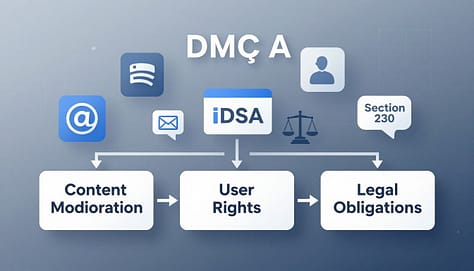
For activists, this legal landscape has a clear strategy. Platforms have strong immunity but must remove content quickly if they get a valid notice. This shows the centralized control that platform owners have over digital spaces. Campaign materials can vanish fast if someone claims they are illegal.
The table below summarizes key liability frameworks relevant to Digital Activism Law.
| Framework | Jurisdiction | Core Principle | Key Mechanism | Activist Consideration |
|---|---|---|---|---|
| Section 230 | United States | Immunity from publisher liability for user content. | Broad legal shield; platforms can moderate content in good faith. | High platform discretion; legal threats often lead to removal. |
| DMCA Safe Harbor | United States | Immunity from copyright infringement liability. | Notice-and-takedown system for copyrighted works. | Campaign videos or images using protected material are at high risk. |
| Digital Services Act (DSA) | European Union | Conditional liability exemption for illegal content. | Expanded notice-and-action, transparency, and risk assessment duties. | More procedural rights, but faster removal of content deemed illegal. |
To use this knowledge, campaigns need to take proactive steps. They should develop plans that follow these platform policies.
- Pre-Assessment: Check all campaign assets for legal issues before starting. Keep records of fair use for any media used.
- Notice Response Protocol: Have a team member watch for takedown notices. Prepare a standard way to check the notice’s validity and make a counter-notice if needed.
- Content Archiving: Keep independent backups of all important campaign materials. This ensures access if main channels are blocked.
This structured approach makes legal complexity easy to manage. It helps protect a campaign’s voice and keeps it going.
Data Protection 101 (Lawful Basis, Consent, Cookies, Retention)
The world of digital organizing relies heavily on data privacy rules. For advocacy groups, handling supporter data is key. It’s governed by laws like the GDPR and U.S. state statutes.
Understanding online advocacy rules starts with a lawful basis for personal info. Consent is common, but not the only option. Campaigns might use legitimate interest for direct marketing to engaged supporters.
| Lawful Basis | Description | Best Use Case for Campaigns |
|---|---|---|
| Consent | Freely given, specific, informed, and unambiguous agreement from the individual. | Signing up for a newsletter, opting into SMS alerts, or joining a new petition. |
| Legitimate Interest | Processing is necessary for your legitimate purposes, balanced against the individual’s rights. | Re-engaging past donors or volunteers for a similar campaign initiative. |
| Contractual Necessity | Processing is required to fulfill a contract with the data subject. | Managing data for paid campaign staff or contractors. |
| Legal Obligation | Processing is necessary to comply with a common law or statutory obligation. | Retaining donation records for financial regulatory compliance. |
Going beyond consent shows you’re serious about privacy. You need to document your reasons. This proves your campaign’s goals outweigh privacy concerns.
Being open about what data you collect is essential. Supporters should know why you’re collecting their info. A clear privacy notice is key. It should explain how you use data, how long you keep it, and their rights.
The rule of data minimization means only collecting what’s necessary. For a petition, you might need names and emails. But you don’t need birth dates or home addresses. Keeping data collection to a minimum is safer and more ethical.
Setting rules for how long to keep data is important. Don’t keep data forever. Set specific times for different types of data. For example, remove people from marketing lists right away if they ask not to be contacted.
For financial records, you might need to keep data longer. Having a clear plan for how long to keep data is part of being a responsible data steward.
When it comes to websites, handling cookies is key. A good cookie banner lets users choose what to accept. This respects their choices from the start.
Managing email lists is also critical. Every email should have an easy way to unsubscribe. Send emails as often and with content as agreed upon. Segmenting lists helps keep your outreach clean and compliant.
Strong data protection is more than just following the law. It builds trust with supporters. Showing respect for their data leads to loyalty and ongoing support. Ethical digital organizing is all about responsible data privacy practices.
Copyright and fair use basics for activists
The line between legal use and copyright infringement is thin. The fair use doctrine is a key defense for commentary and criticism. For digital campaigns, knowing copyright law is essential. Unintentional infringement can lead to content removal, legal demands, and damage to reputation.
Copyright automatically protects original works of authorship, including images, videos, music, and text. This protection applies to the digital content activists share. Using such material without permission or a valid legal exception is infringement.
The fair use doctrine is critical for advocacy work. It allows limited use of copyrighted material without permission for criticism, comment, news reporting, teaching, and research. Courts evaluate fair use claims using a four-factor test:
- Purpose and Character of the Use: Transformative uses that add new meaning, message, or context are favored. Non-commercial, educational, or nonprofit purposes also weigh in favor of fair use.
- Nature of the Copyrighted Work: Use of factual or published works is more likely to be fair than use of highly creative or unpublished works.
- Amount and Substantiality Used: Using only the portion necessary for the intended purpose is key. Using the “heart” of a work, even if small, can weigh against fair use.
- Effect on the Market: If the use acts as a market substitute for the original work or harms its revenue, fair use is less likely.
Practical application of these factors separates defensible activist use from high-risk actions. For example, creating a video essay that analyzes and critiques a political advertisement, using short clips for illustration, is a strong candidate for fair use. On the other hand, using a popular song as background music for a fundraising video without alteration typically is not.
To mitigate risk, campaigns should adopt proactive sourcing strategies:
- Utilize works with Creative Commons licenses, carefully adhering to attribution requirements.
- Source material from the public domain or government works.
- Invest in creating original imagery, graphics, and music.
- When using copyrighted material, ensure the use is transformative, limited, and for a purpose aligned with fair use principles.
This context connects directly to intermediary liability frameworks like the DMCA, discussed previously. Platforms often receive takedown notices for alleged infringement. Understanding fair use empowers campaigns to file counter-notices when appropriate, protecting their speech rights and keeping vital content online.
Mastering these Digital Activism Law fundamentals turns a legal vulnerability into a strategic advantage. It allows movements to produce compelling, multimedia-rich narratives that resonate with audiences while operating on a solid legal foundation. Informed practices safeguard the campaign’s voice and ensure its energy remains focused on creating change.
Political ads and finance basics
Online activism meets campaign finance law in a complex mix. When efforts aim to sway elections or ballot measures, they fall under strict rules. This means clear financial transparency and ad disclosures are key.
Paid digital ads for candidates or issues must follow strict rules. Laws demand clear who paid for the ad. Campaigns must also keep detailed records and report to bodies like the Federal Election Commission.
These online advocacy rules blend with each platform’s own platform policies. Big social networks have their own rules for political and issue ads. Knowing both is vital for legal campaigning.
| Platform | Key Political Ad Policy | Mandatory Disclosure |
|---|---|---|
| Meta (Facebook/Instagram) | Ads must be authorized and stored in a public Ad Library for 7 years. | “Paid for by” disclaimer and sponsor contact information. |
| Google / YouTube | Requires verification of advertiser identity and location for election ads. | Clear “Paid for by” label visible on the ad itself. |
| X (formerly Twitter) | Bans most candidate and party ads but allows cause-based issue ads. | Issue ads must carry a “Promoted by” disclaimer if they reference legislation. |
Following these rules builds electoral capacity. Sociologist Zeynep Tufekci says this is a movement’s ability to go from protest to political power. Being transparent and lawful shows serious intent and maturity.
For big campaigns, becoming a political committee might be needed. This is when a group’s main goal is to influence federal elections and it gets or spends a lot. Being registered means more reporting and legal duties.
Knowing platform policies and online advocacy rules is more than avoiding trouble. It’s a strategic move that boosts a movement’s credibility. Following these rules shows a group can govern, which is key for lasting political success.
Jurisdiction and cross‑border risk
Online organizing reaches across borders, making laws in every country a challenge. This digital world creates legal complexity. An organization can face laws in countries it never visits.
Just having a website that people can access from another country can create legal ties. Actions like collecting donor info from EU citizens or targeting ads in a state can also tie you to laws. These actions lead to a mix of rules on data privacy, speech, and consumer protection.
There are big risks. For example, collecting email sign-ups might fall under the GDPR, with strict rules. Publishing a report that criticizes a foreign company could lead to defamation lawsuits in that company’s home country. Knowing Digital Activism Law means understanding these international rules.
It’s important to plan ahead for cross-border risks. Look at who you’re targeting, where your operations are, and what data you collect. Who are you trying to reach? Where are your servers and team members? What personal info do you collect, and where does it go?
| Risk Factor | Potential Jurisdictions Triggered | Primary Legal Concern | Mitigation Tactic |
|---|---|---|---|
| Collecting website analytics from EU visitors | European Union member states | GDPR compliance for data privacy | Implement cookie consent banners; consider IP-based geo-blocking. |
| Targeted social media ads in a U.S. state | That specific state (e.g., California, New York) | State-level campaign finance and ad disclosure laws | Review state election board regulations before launching ads. |
| Hosting user-generated content (comments, forums) | Countries where content is deemed defamatory or illegal | Intermediary liability and takedown orders | Publish clear community guidelines and a process for reporting illegal content. |
| Fundraising from international donors | Donor’s country of residence | Charity registration, tax laws, and financial reporting | Use established platforms that handle cross-border compliance; issue disclaimers. |
Practical ways to deal with these risks include geo-blocking and using clear disclaimers. These steps can help manage legal risks. For complex cases, getting advice from local lawyers is wise.
Managing cross-border risks is not about limiting goals. It’s a key part of planning for global campaigns. By understanding legal risks early, activists can build stronger campaigns. This approach turns a risk into a key part of a Digital Activism Law strategy.
Building a minimal compliance workflow and approvals
Procedural compliance is key to avoiding legal and reputational crises. It’s about moving from knowing online advocacy rules to actually following them. This builds network internalities, structures that keep operations consistent and reduce risks.
Successful digital advocacy shows that planning and discipline go hand in hand. Campaigns that document their review processes for content and ads do better. They handle platform policies and legal issues smoothly. This shows that a simple workflow is essential, not just extra work.
A simple compliance system has three parts. First, a checklist helps creators check legal and platform rules. Second, an approver, like a legal or communications lead, reviews sensitive material. Third, a documented process keeps an audit trail for ads and public statements.
The table below shows a simple compliance workflow. It outlines stages, actions, and who’s responsible to make legal knowledge work.
| Process Stage | Key Action | Responsible Role | Documentation |
|---|---|---|---|
| Content Creation | Screen draft against incitement, harassment, and copyright standards. | Content Creator | Completed pre-publish checklist |
| Platform Policy Review | Verify alignment with specific online advocacy rules and community guidelines. | Campaign Manager | Platform ToS reference sheet |
| Legal/Comms Approval | Final sign-off for high-risk content (political ads, data forms). | Legal or Comms Lead | Approval log with date and name |
| Publication & Retention | Publish approved content; archive checklist and approvals per data policy. | Campaign Manager | Secure digital archive |
| Post-Campaign Audit | Review workflow effectiveness and update checklists. | Team Lead | Lessons-learned memo |
This structured workflow turns legal knowledge into daily practice. It gives clear rules for team members and keeps a record of due diligence. This approach keeps campaigns effective while following the law and platform policies.
Case snapshots:
Two big digital movements, #MeToo and Net Neutrality, show us how legal strategies work. They teach us about using legal rules in online battles. These lessons help us fight for change online today.
#MeToo: Speech Rights, Defamation, and Platform Moderation
The #MeToo movement showed a clash between speech rights and legal dangers. People shared their stories, using their right to free speech. This sparked a worldwide talk about abuse.
But, naming people publicly led to legal risks. Survivors faced defamation lawsuits, where proving the truth was key. This was a big challenge for them.
Social media platforms played a big role. They had to decide what to allow and what to remove. This was a tough balance between sharing stories and stopping abuse.
One important lesson is the need for legal help for survivors. Good movements offer free legal advice. This helps with defamation and understanding platform rules.
It’s also important to check facts before sharing. Knowing the laws about defamation is key. The movement showed that speaking out comes with legal risks.

Net Neutrality: Regulatory Advocacy and Data Integrity
The fight for Net Neutrality was about changing rules at the Federal Communications Commission (FCC). It showed the importance of data privacy and real public opinions.
Campaigns got people to write comments during official periods. These comments were legally important. The goal was to show what the public wanted.
But, fake comments were used to cheat the system. This made the whole process seem unfair. It taught us the value of real, verified opinions.
Using data in campaigns was also a big deal. It had to be done right, with consent and transparency. The data had to be true and reliable.
The Net Neutrality fight showed that just having a lot of comments isn’t enough. It needs real, verified opinions and a deep understanding of the rules. Being true is important for success.
In short, #MeToo teaches us about legal risks and platform rules when speaking out. Net Neutrality shows the hard work of changing rules and the need for honest data. Both teach us how to fight for change online better.
Templates and checklists to operationalize
To grow advocacy efforts wisely, using standard templates and checklists is key. These tools make complex legal rules easy to follow for team members. They help keep efforts moving while keeping legal risks low.
For example, the Hyatt advocacy case shows how having these resources helps. Teams can then focus on their goals, not on figuring out legal rules for every task. This section gives you the basic documents to follow online advocacy rules well.
A social media policy for volunteers sets clear rules. It protects both the person and the campaign from legal trouble. Important parts include:
- Rules on what speech is okay, like not encouraging violence or harassment.
- How to tell personal views from official campaign statements.
- How to deal with opposition or mean comments.
- Rules for sharing copyrighted stuff and user content.
This policy makes sure everyone speaks as one. It also helps new people join in by teaching them the rules.
A clear data privacy notice builds trust with supporters. It tells them how the campaign website uses their personal info. A good notice should say:
- Why the data is being used (like for newsletters).
- What the data is for, like signing petitions or managing donations.
- How cookies work and how to opt out.
- How long data is kept and if supporters can see it.
This notice is key for following Digital Activism Law on data protection. It shows the campaign cares about doing things right.
The most important tool is a checklist for checking content before it goes live. This step catches problems before they happen. Here’s a detailed checklist framework.
| Checkpoint | Legal & Compliance Area | Action Item |
|---|---|---|
| Content Origin | Copyright & Fair Use | Make sure all media is original or properly credited/licensed. |
| Speech Tone | Unlawful Speech (Incitement) | Check for language that could be seen as a threat or harassment. |
| Platform Alignment | Platform Rules (ToS) | Make sure the post follows the platform’s community guidelines. |
| Data Handling | Data Protection | Make sure any user data is used legally and mentioned in the privacy notice. |
| Call-to-Action | Political Finance | Make sure any fundraising appeals follow the rules for political ads. |
For starting new projects, a basic risk assessment checklist is very helpful. It helps organizers think about possible problems early. This list should include:
- Find out which laws apply and where.
- Check if data will be shared across borders or targeted.
- Think about how sensitive the data is and what security it needs.
- Check the copyright status of main campaign materials.
- Look at the legal protections for the platforms being used.
Using these templates makes following rules a routine. It keeps teams consistent, even if they’re far apart. This is key for today’s connectification. By making online advocacy rules part of daily work, campaigns spend less time on legal issues.
This way, leaders can focus more on strategy and messaging. These tools are not just rules. They are the foundation for lasting, effective Digital Activism Law practice.
Legal disclaimer and where to get help
The information here is for educational use only. It’s not legal advice. Every digital campaign is different. It’s important to get legal advice from experts.
For legal questions, there are many places to get help. Pro bono legal networks and nonprofit defense groups offer valuable advice. They help with platform policies and data privacy rules.
Organizations like the American Civil Liberties Union and the Electronic Frontier Foundation focus on digital rights. They are key for campaigns facing legal issues.
A detailed guide on nonprofit legal assistance is available. It lists national and state resources. Legal aid offices and bar associations can also help find the right lawyer.
Adding legal checks to your campaign’s plan is smart. Knowing the laws about speech, copyright, and data privacy lowers risks. Following platform policies helps keep your message out there. This makes legal knowledge a key part of successful digital organizing.