
Let’s be honest. For every digital platform that changes the world, a hundred others vanish. What makes some stand out?
It’s not just luck. It’s a mix of timing, design, and knowing what people actually want. These spaces make user engagement fun, not a chore.
Reddit turned chaotic forums into a world of niche communities. Substack lets writers connect directly with their audience, skipping media gatekeepers. TikTok made us all viral stars with a simple scroll and dance.
Each of these successful platforms found a secret. They built huge user bases by solving real problems, often ones we didn’t know we had. Their success is not a fairy tale; it’s a guide.
Rise of Gamified Activism
We once thought civic engagement needed good intentions. But then, we found out it could be done with Amazon gift cards. Our early 2010s experiment turned policy proposals into a game. Users got points for TIME magazine subscriptions and Amazon vouchers by joining in.
The system was simple and a bit sneaky. Earn points for researching policy issues or drafting proposals. Get others to engage with your ideas? You hit the jackpot. It was like a slot machine, creating “civic motion.”
Our app showed how civic tech could turn duty into fun rewards. But, people weren’t learning or feeling empathy. They were just chasing points. We wondered: were we making better citizens or just better players?
This way of doing things made us question the value of real motivation. How does solidarity fit in when your opinion is worth 50 points for free shipping? Is there room for empathy when you’re racing to earn points?
The rise of gamified activism is a key part of civic tech history. It aimed to make democracy exciting by adding game elements. Now, attending town halls feels as rewarding as beating a video game level. Sharing petitions can earn you social points and real rewards.
But does this method really build lasting engagement? Or does it attract “civic tourists”? Our early results showed it was the latter.
This isn’t just about political apps. Many groups are using gamification to get people involved. It seems to work: it’s easy to start, gives instant feedback, and shows progress. But, the long-term effects on civic health are unclear.
The big question with gamified activism through civic tech is: can you make caring about issues fun without making it cheap? Our experiment showed we were trading depth for points. We were substituting solidarity for scores. The engagement was short-lived, not teaching people to value democracy’s slow pace.
Next, we’ll look at how some platforms have handled this challenge better. But our early attempt with points-based patriotism is a warning. It shows that while civic tech can make joining in fun, making it meaningful is the real challenge.
Key Examples of Successful Platforms
Think civic duty is boring? Think again. Citizens are folding proteins for science like it’s a video game. This is the arcade where recycling bins are joysticks and high scores are better cities. It’s where gamification has turned from theory to real impact.
Foldit is a leader in this field. It turns biochemical problems into puzzles. Players solve virtual protein strands, helping scientists make real breakthroughs. It shows that games can be serious research tools.
Recyclebank makes recycling exciting. It rewards you for eco-friendly choices. It’s like a loyalty card for the planet, making sustainability rewarding.
Urgent Evoke is a game by the World Bank. It solves real-world social challenges. Community PlanIt gamifies urban planning, making it a team effort.
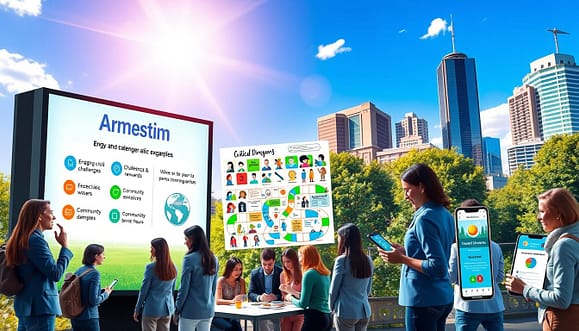
But there’s more. Barcelona’s Decidim the Game is a board game version of its digital platform. It makes democracy fun. Who knew?
GreenApes rewards sustainable actions. Stadtsache empowers kids to report on their city. The Playful Paradigm URBACT network helps European cities use these tactics.
So, what makes these platforms work? Is it the tangible reward like Recyclebank’s points? Or the sense of contributing like in Foldit? It’s all of these. They show that serious goals can be fun.
These platforms prove gamification isn’t about making issues light. It’s about making participation engaging and rewarding. The world-saving leaderboard is live, and these platforms are leading the way.
Anatomy of Viral Civic Games
Looking at a viral civic game is like studying a hit song. Both need a catchy hook, a good rhythm, and a reason to share. The secret lies in the psychological blueprint. Let’s dive in.
W_NDER is a game for two players during lockdown. You explore your neighborhood while a friend gives you clues from afar. It’s simple yet powerful. It changes how you see your surroundings.
Gametrification is a board game from Italy. It makes urban renewal a family challenge. You play as a developer, but the board fights back with surprises. Every move feels real, even if it’s just cardboard.
What do these games share? A clear goal you can state in seconds. No confusion allowed. You play a role, like a developer or a wanderer. This builds empathy by making you see things from different angles.
Another key part is consequences with teeth. In Gametrification, your actions can lead to protests. This shows how real political participation works. It’s a safe way to learn about cause and effect.
But how do you keep the excitement in digital games? Board games have a physical feel that apps lack. The answer is in design that teaches a lesson, not just entertains.
These games ask a big question. Can we make political participation fun and engaging? The answer is yes, but it takes careful design. You need a hook, a rhythm, and a reason to share that feels important.
This isn’t about making politics fun. It’s about making it clear, personal, and impactful. That’s how you create empathy that can change minds or policies.
Measurement & Impact Assessment
Measuring civic game success is like trying to capture the essence of a good debate. You end up with metrics that show activity but lack real impact. Your dashboard might show high user numbers and a competitive leaderboard. But, the real question is, are we building a stronger civic identity or just getting people to click?
Gamification is alluring because it’s measurable. We can track proposals, votes, and badges with ease. These numbers look great in reports and presentations. But, they often show activity, not understanding. They measure participation, not persuasion.
This is the key challenge in creating a strong digital democracy. Are we changing citizens, or just tracking user traffic?
There’s a big difference between “motion” and “movement.” Motion is easy to see, like a spike in downloads or likes on a poll. Movement is harder. It’s about growing democratic maturity, like listening and compromising.
My early-2010s project showed this difference. It was great for getting people to agree or disagree. But, it was catastrophically bad at teaching the value of compromise.
So, how do we measure societal change? It’s hard to quantify civic engagement or link it to our game-based efforts. We’re trying to connect a game mechanic to a change in civic behavior, which is very challenging.
| What We Often Measure (The Easy Stuff) | What We Should Try to Measure (The Hard Stuff) |
|---|---|
| Daily/Monthly Active Users (DAU/MAU) | Depth of Policy Understanding Pre/Post-Engagement |
| Number of In-App Votes or Submissions | Shifts in Willingness to Compromise or Consider Opposing Views |
| Leaderboard Position & Badge Acquisition | Increased Trust in Democratic Processes & Institutions |
| Session Length & App Retention Rates | Propensity for Offline Civic Action (Volunteering, Attending Meetings) |

The real goal isn’t to make a better game. It’s to build a better civic culture. A game can open doors, but culture keeps people engaged. This is where the real work starts—the surveys, focus groups, and studies that look beyond the screen.
It’s about linking digital activity to real-world actions. A platform that builds trust and scale does so by creating lasting connections, not just quick interactions.
Assessing digital democracy impact requires looking at both numbers and people. We need to see if players are smarter, more empathetic, and more invested in self-governance. Or are they just good at your game? Until we can answer that, we might be scoring in an empty stadium.
Building Momentum Through Competition
Competition is like the espresso in our civic engagement latte. It wakes us up and makes us want to do more. The world of civic tech now uses our competitive nature to get us involved.
It’s not just about gentle nudges anymore. It’s about using dopamine and social proof to motivate us. A platform that lets you earn badges for reporting issues turns a simple task into a fun achievement.
When we compete, things get really interesting. Imagine a city-wide challenge to collect the most litter bags. It turns a simple task into a way to beat others.
This mentality makes us work together. It changes grumbling into action.
Choosing the right gamification techniques is key. It’s not just about adding points everywhere. The best civic tech platforms use a mix of tools:
- Leaderboards: Create social comparison and status.
- Badges & Achievements: Offer proof of progress.
- Reward Systems: Range from recognition to community benefits.
- Team Challenges: Encourage collaboration and increase impact.
These tools make things move fast. They turn slow processes into exciting games. People keep coming back to see their progress or beat others.
But there’s a catch. Making civic duty a competition might make generosity seem like a transaction. Are we doing it for the cause or for rewards? Does the “Masochist Medal” for boring meetings devalue showing up?
Keeping people engaged is the real challenge. Successful platforms evolve and change. They introduce new challenges and themes to keep things interesting.
Looking at successful campaigns, a pattern stands out. The best ones mix competition with a story. It’s not just about points; it’s about being part of something bigger.
So, is this momentum making democracy better or just more fun? The answer is both. Competition in civic tech is a tool, not a philosophy. It’s great for getting people involved but must be used wisely.
Replicating Success Strategies
Want to create a game that boosts political participation? Good. Success isn’t about copying code; it’s about understanding human psychology. The strategy is surprisingly simple.
First, know your players. Are they busy professionals or passionate students? Your game’s success depends on this.
Second, make your mission clear. If your game’s goal is hard to explain, you’ve lost. The best games have simple, clear objectives.
Third, create friendly competition. A leaderboard should spark rivalry, not anger. Think of it as a sport, not a war.
Fourth, design for everyone. True participation means being accessible. Include features like color-blind modes and simple interfaces. Inclusivity is key.
Tools like Smartico.ai can help with loyalty mechanics. But the heart of great games comes from skilled facilitation. They use role-playing and time limits to keep players engaged.
The ultimate goal isn’t just a high score. It’s creating a system that changes how people engage in civic activities.