Digital Equity Grants are back on the policy agenda after a reported court ruling allowed much of the Digital Equity Competitive Grant Program to proceed without race-based criteria. The confirmed baseline is that the program was authorized under the Infrastructure Investment and Jobs Act of 2021 and is part of a federal digital inclusion framework intended to support access, skills, devices, and broadband adoption. The National Digital Inclusion Alliance describes the Digital Equity Act as including a $1.25 billion competitive grant program for implementation work across the United States NDIA program description.
The legal and administrative status now requires careful reading. The research supplied for this brief reports that NTIA terminated the program on May 9, 2025 after a presidential declaration, that NDIA later challenged the termination in court, and that U.S. District Court Judge John D. Bates ruled on July 15, 2026 that the race-based provisions were unconstitutional but severable. Because the court opinion itself was not among the permitted source materials for direct citation here, those legal details should be treated as reported research points rather than independently confirmed from the docket in this article. Applicants should wait for NTIA instructions before treating any deadline, form, or eligibility interpretation as final.
What Digital Equity Grants Can Fund
Federal Purpose And Local Tools
The program is aimed at digital inclusion, not only broadband construction. NTIA’s 2024 competitive grant FAQ says the program supports efforts to achieve digital equity, promote digital inclusion activities, and spur greater adoption and meaningful use of broadband among covered populations NTIA grant FAQ. That wording matters for community organizers because the program can connect physical access with practical use: training, outreach, support for community anchor institutions, and local systems that help residents use online services.
For grassroots groups, the most useful reading is operational. A broadband connection may exist, yet residents may still lack devices, language support, digital skills, privacy knowledge, or trusted help with public benefits, telehealth, school platforms, employment applications, and civic information. A grant program built around meaningful use can support the human infrastructure that turns connectivity into participation.
Digital Equity Grants And Eligible Applicants
The research notes identify eligible entities as including political subdivisions, state agencies or instrumentalities, nonprofit organizations, and community anchor institutions. That mix creates room for partnerships between local government, libraries, housing organizations, schools, health providers, and neighborhood groups. The strongest proposals are likely to show who is being reached, what barrier is being addressed, and how the applicant will measure use rather than only activity.
For Digital Equity Grants, the research provided also identifies a maximum award of $12 million and a 10% match requirement. Those figures should be verified against any updated NTIA notice before a budget is approved by a board, council, or fiscal sponsor. If the program resumes under changed criteria, the practical grant package may require revised assurances, revised scoring language, or new certifications.
The Reinstatement Is Legally Narrow
What The Research Says Was Ruled
The reported July 15, 2026 ruling is significant because it did not describe the entire program as invalid. According to the research supplied, Judge Bates found the race-based provisions unconstitutional but severable, meaning the remaining program could move forward without those criteria. That distinction is central for applicants: a severability ruling can preserve a statutory and administrative structure while requiring the agency to remove or revise the legally defective portion.
For Digital Equity Grants, the practical meaning is not that every prior application document remains usable. The program may need new guidance that changes how applicants describe need, eligibility, outreach, scoring, data collection, and community impact. A group that drafted an application under earlier language should review each sentence for reliance on criteria that NTIA may no longer use.
What Remains Unconfirmed For Applicants
The research notes say NTIA is expected to issue new guidelines reflecting the ruling and constitutional requirements. That expectation is not the same as a published notice. Until NTIA releases new instructions, applicants should separate confirmed history from pending administration. Confirmed from the cited program materials: the Digital Equity Act created a competitive program, and NTIA described objectives tied to digital equity, inclusion, broadband adoption, and meaningful use. Reported but not directly cited here from a court document: the termination, lawsuit, ruling date, and precise remedy.
For readers tracking the legal side, this site has a related analysis of the Digital Equity Act ruling. That article is useful for comparing what a court decision changes immediately with what still depends on agency implementation.
How Grassroots Groups Should Read The Program
Campaign Infrastructure Beyond Broadband
The strongest use of Digital Equity Grants is likely to be local, durable, and testable. Digital inclusion groups often work through trusted messengers: library staff, tenant organizers, school liaisons, health navigators, senior-center trainers, and mutual-aid volunteers. Federal grant money can help formalize those relationships, but it can also create reporting burdens that smaller groups may find difficult. The best early strategy is to map who already provides help, what tools they lack, and which partner can serve as fiscal or administrative lead.
Digital campaign strategy offers a useful lesson here. Outreach succeeds when it reduces friction. A program that pays for training but ignores device access may leave residents unable to practice. A device program without support may leave people exposed to scams, unusable portals, or inaccessible services. A broadband adoption campaign without language access may miss the households most likely to distrust government forms or commercial sales channels.
Advocates also need to guard against treating grants as public relations exercises. The question is not whether an organization can announce a digital inclusion project. The question is whether residents can complete tasks that matter to them: applying for jobs, communicating with schools, using telehealth, renewing benefits, accessing emergency information, or participating in public meetings. Related organizing lessons appear in this site’s coverage of the DEA Month of Action, where shared templates and coordinated meetings shaped a grant-defense campaign.
Verification Steps Before Applying
Documents To Check Before Mobilizing
Because the program’s status changed through both executive action and litigation as reported in the research notes, verification should come before campaign launch. That is especially true for coalitions asking local officials, nonprofit boards, or community partners to commit staff time. A cautious process can prevent groups from building an application around outdated assumptions.
Check the current NTIA notice, FAQ, and application package before using any prior template.
Confirm whether the 10% match requirement and $12 million maximum award still apply to the relevant round.
Review eligibility language for political subdivisions, state entities, nonprofits, and community anchor institutions.
Remove or revise any planning language tied to criteria that the reported ruling says cannot be used.
Document community need through service gaps, device barriers, training demand, and broadband adoption challenges.
Outside the grant file, coalitions should keep residents informed without overstating certainty. A plain-language update can say that the program is reported to be resuming in a revised form, that NTIA guidance is expected, and that local partners are preparing but not promising awards. For insights into how these issues intersect with broader topics, Earth Times follows policy and environmental issues that often intersect with infrastructure access.
Digital Equity Grants As A Civic Tool
Digital Equity Grants should be understood as civic infrastructure as much as technology funding. The reinstated program, as described in the research, may give local institutions another route to support broadband adoption and digital skills, but the governing details are not complete until NTIA issues updated guidance. That creates a short-term task for advocates: prepare evidence, partnerships, and budgets while clearly marking what is confirmed, what is reported, and what remains unresolved.
The policy lesson is narrower but useful. Courts, agencies, and community groups shape digital inclusion in different ways. Congress authorized the program through the 2021 infrastructure law. NTIA administers the grant process. The reported court ruling limits the criteria that can be used. Local organizations translate the funding into training sessions, device support, outreach, and practical help. For digital movements, the opportunity is not only to win funds but to build accountable systems that make online participation possible for people who have been left with partial access.
Nothing gets you reaching for your wallet like the fear of missing out. You’ve seen it: donors stop at campaigns that say, “10,000 people already chipped in—what’s your excuse?” This is social proof at its finest, driving every viral movement.
When Bernie Sanders said an average gift was $18, he was more than folksy. He showed that the crowd had already checked the cause. Urgency is key too. Phrases like “Only 48 hours to save the community garden” tap into our fear of missing out.
Impact framing is where the magic is. It’s not just about the dollar; it’s the story that dollar tells. A $1 donation can mean a meal, a vaccine, or a rescued puppy. This mix of urgency, social validation, and storytelling turns sympathy into action.
In grassroots fundraising, framing a donation as urgent and socially validated is powerful. It’s not just asking for change; it’s inviting people to join the movement.
Offer design one time vs monthly suggested amounts and anchors
Online fundraising is like a game of psychological chess. How you design your offers matters a lot. It’s not just about asking for money. It’s about making giving feel rewarding and easy.
Did you know recurring donors give 42% more annually than one-time donors? This is a big deal. Micro-donations can turn into regular giving, helping your organization’s budget. It’s like a subscription service, where small monthly fees become normal.
Suggested donation amounts are like anchors that guide donors. If you suggest $1, $5 seems like a lot. This is why offer design is an art. You might have felt this way before: thinking $10 is cheap because $25 was suggested.
One-time gifts are exciting, like impulse buys. But monthly giving makes donating sustainable. I’ve seen groups double their income by making monthly giving the default. It’s because we’re used to small, regular charges.
Think about this: listing donation amounts as $100, $50, $25, and “Other” makes most donations $25. But change it to $5, $10, $25, and $5 becomes the new standard. It’s all about how you frame your asks.
Design your offers like a streaming service, not a charity gala. The goal is to make giving so easy and rewarding that stopping feels wrong. Master the art of offer design, and your fundraising will thrive.
Page UX mobile first wallets fees upsells and tribute gifts
Imagine you want to donate but the donation page on your phone is old-fashioned. It’s all about looks over function. Mobile-optimized giving forms are key; donors want to give right away from their phones. A slow or hard-to-use page can turn excitement into disappointment.
Mobile wallets like Apple Pay change the game. They make quick payments easy during emotional moments. Picture donating on a busy bus because of a tweet. If your page is slow and hard to use, you lose money. Digital wallets turn impulse into action; they’re why I’ve donated to causes while waiting for coffee.
Fees are another tricky part. Asking donors to cover fees can increase your earnings by 15%. But how you ask matters. Frame it as “help us keep 100% of your gift.” This makes donors feel they’re part of something special, not just another transaction.
Upsells can work well if they feel like a bonus, not a guilt trip. For example, Habitat for Humanity’s eCard campaign lets donors honor loved ones while introducing others to their mission. This turns a simple act into something meaningful.
Tribute gifts make donations feel personal. They create a sense of community and shared purpose. In the world of online fundraising microdonations, this is key to growing your donations. Here’s how these elements can improve your donation page:
Element
Benefit
Impact on Donations
Mobile Optimization
Improved user experience
Higher conversion rates
Mobile Wallets
Quick payments
Increased impulse donations
Fee Covering Options
Enhanced net revenue
15% increase possible
Upsells
Value-added suggestions
Higher average donation amounts
Tribute Gifts
Emotional connection
Boosted referrals
In conclusion, a mobile-first approach is essential for donation page UX. Make it easy and quick, and your fundraising will thrive.
Traffic drivers email SMS influencers paid and high intent SEO
You might have a stunning fundraising page, but without visitors, it’s invisible. Traffic drivers are essential for online fundraising. They come in many forms, each playing a vital role in making your page a hotspot for donations.
Email marketing is a reliable tool in fundraising. It sends personalized messages that often outperform social media. The key is telling stories that touch your audience’s hearts, making them want to give.
SMS text-to-donate is a quick and powerful way to raise funds. Imagine a text-to-donate code appearing on a screen, instantly bringing in thousands of dollars. It’s fast, effective, and leverages the urgency of the moment.
Influencer campaigns are also potent. For instance, when rapper Jack Harlow and KFC teamed up to donate $250K after a tornado, it was a huge success. Such collaborations can spread your message far and wide, attracting donations quickly.
Paid ads are another powerful tool. Nonprofits can get $10K/month in free ads through Google Ad Grants. Targeting specific searches, like “how to help Ukraine,” means you’re reaching donors when they’re most willing to give.
Lastly, high-intent SEO is about being found at the right moment. When your “donate” page shows up for keywords like “animal rescue micro-donation,” you’re catching people at their most empathetic. Adding Apple Pay integration makes giving even easier, reducing the chance of donors leaving without contributing.
The takeaway? Mix up your traffic strategies like a smart investor. You never know which one will lead to your next big donor.
Recurring engine welcome sequence stewardship surprise and delight
You’ve got a recurring donor now. It’s time to make that $3 count. Don’t just send a boring tax receipt email. The recurring engine turns microdonations into a steady income, thanks to emotional connections.
Begin with a bang! Send a heartfelt video within 24 hours. Show how their gift makes a difference. Then, a week later, tell them exactly how their dollar helped. These small acts build loyalty and keep donors coming back.
But there’s more! The secret is in surprise and delight. Imagine sending a handwritten thank-you to a $5 donor. They might even increase their gift to $20. It’s not just about the money; it’s about making them feel special.
Think about adding donor badges, progress bars, and surprise birthday wishes. These touches make donors feel seen and valued. Studies show recurring donors are 42% more valuable annually if you keep them engaged.
At first, donations might seem small. But as trust grows, those $1 gifts can turn into $50 donations. Treat every small donor like a big one in the making. Today’s $2 monthly giver could be tomorrow’s big philanthropist.
Engagement Strategy
Impact on Retention
Example
Personalized Thank-You Notes
Increases donor loyalty
Handwritten notes
Monthly Impact Updates
Strengthens emotional connection
“Your dollar did this” emails
Donor Badges
Encourages upgrades
Tiered recognition system
Compliance receipts donor data retention and PCI basics
In the world of online fundraising, compliance is key. It keeps donations flowing smoothly. Donors expect to be accountable, and they should be. That’s why transparent reporting is so important.
Receipts are more than just for the IRS. They are key moments that can shape donor relationships. A simple receipt can turn a one-time donor into a loyal supporter. They show the impact of their contribution.
Data retention policies are your ethical and legal shields. Keeping donor info for decades without consent is a big no-no. For grassroots fundraising, showing you care about data is vital. It’s not just good practice; it’s a competitive edge.
PCI compliance is also critical for secure online fundraising. It’s not just for big e-commerce sites. If you’re not handling donations securely, you risk a big reputation hit. Donors trust you with their money and personal info. Lose that trust, and they’ll leave fast.
In summary, compliance is not flashy but it’s essential. It protects your organization and builds trust with donors. So, invest in compliance and watch your movement grow.
For more insights on crowdfunding platforms, check out this resource.
Testing donation amounts copy media scarcity and exit intents
Imagine a simple change to your donation page could boost your earnings by 23%. That’s the magic of A/B testing. I once changed a sad puppy photo to a happy one, and the happy puppy increased donations by 23%. Testing is not just a strategy; it’s a way to make giving more effective.
When it comes to donation amounts, think about the small changes you can make. If your default is $50, you might miss out on the $5 donors. Try testing amounts like $1, $3, and $7. You might be surprised at how many more people give.
The words you use also matter a lot. Does “Help us fight hunger” work better than “Your $1 provides 3 meals”? Yes, it usually does. The specific appeal can make a big difference.
Media choices are also powerful. A short video can beat a static infographic. And don’t forget about scarcity tactics. They work because they tap into our fear of missing out.
Exit-intent popups can be annoying, but they can also be effective. If they offer a good reason to stay, like a $1 match, they can save up to 10% of donations. It’s all about how you do it.
For recurring donors, test how you talk about monthly giving. Phrases like “Give $5 monthly” versus “Become a Sustainer for $0.16 a day” can make a big difference. The latter feels more manageable, which helps people commit.
Element
Test Variation
Potential Impact
Donation Amounts
$1 vs. $5
Higher volume of donations
Copy
“Help us fight hunger” vs. “Your $1 provides 3 meals”
Increased engagement
Media
Video vs. Infographic
Higher conversion rates
Scarcity
Limited-time offers
Boosted urgency
Exit-Intent Popups
Offer a match vs. no offer
Recover lost donations
In conclusion, testing turns your donation page into a powerful tool. By using data to guide your decisions, you can see your fundraising efforts grow!
Metrics AOV monthly retention churn pay method mix and ROI
Metrics in online fundraising aren’t just numbers; they’re the pulse of your microdonation strategy. If you’re not measuring it, you’re just guessing with a spreadsheet. Metrics are the unglamorous truth-tellers of online fundraising, revealing why your microdonation campaign is either a cash cow or a money pit.
The first number I check is the AOV (average order value). If it’s $4.50, that’s not a failure; it’s a volume play. Micro-donation campaigns may have low AOV, but they thrive on high volume. The real magic happens with monthly retention. A recurring donor who sticks around for 12 months has a lifetime value that dwarfs their initial $2 gift.
But, churn is the silent killer. I’ve seen organizations lose 30% of monthly donors within three months simply because they never said thank you. A little appreciation goes a long way. This is where the donation page UX comes into play. If 40% of your traffic is mobile but you don’t offer Apple Pay, you’re actively repelling donors.
Let’s not forget about the pay method mix. This is a UX issue in disguise. Different donors prefer different payment methods—credit cards, Apple Pay, PayPal, you name it. If you’re not catering to their preferences, you’re leaving money on the table.
Lastly, ROI calculations must be honest. Factor in platform fees, payment processing, and the staff time spent on that influencer campaign that flopped. A campaign with a 200% ROI but high donor churn is merely a short-term sugar high. The goal is to balance acquisition cost with long-term value, obsessing over the numbers until they sing.
Tooling CRMs payment processors donor portals and exports
The success of your fundraising can depend on the tools you use. For online fundraising microdonations, the right systems are key. Your CRM is like the brain of your fundraising efforts. It keeps all donor data in one place, making tracking easy.
Payment processors are also critical. They need to handle micro-donations and Apple Pay efficiently. Using Stripe or PayPal, make sure they’re set up for these features. This avoids losing money on unnecessary fees.
Donor portals are important too. They let donors manage their gifts and update info easily. This saves you from getting flooded with emails. It’s all about making giving convenient for your supporters.
Data exports are essential for tracking. If your CRM can’t export donor data, you’re missing out. A good system should make everything flow smoothly. A donor should be able to give through Apple Pay and see their gift in your CRM instantly.
In short, the right tools can make a huge difference in your fundraising. For tips on managing donor data, check out this donor management resource.
Case studies 3 campaigns that 10x recurring revenue
Let’s look at some real examples that show the strength of online fundraising microdonations. First, Bernie Sanders’ 2020 campaign is a great example. It raised $34.5 million from 1.8 million donors, with each giving an average of $18. This wasn’t just about money; it was a movement.
Each donor felt like they were part of something big. This feeling led to more donations. This emotional connection is key to growing donations.
Next, Wikipedia’s approach is worth noting. They ask for just $3, but it’s become a habit for millions. This method keeps Wikipedia running without hurting user privacy. It shows that small, regular donations can build a strong financial base.
Lastly, a small nonprofit started a “$1 Heroes” campaign. They made each dollar count, encouraging people to donate regularly. In just six months, their monthly income grew tenfold. They also used tribute eCards, which made donors want to give more.
These examples show a common idea: microdonations are the base for growing your funding. If you ignore these strategies, you might miss out on growing your fundraising.
In today’s world, every click is important. Finding your way through online ads can be tough. We all see many ads every day.
But, there’s a way to cut through all the ads and make your money go further. It’s about being smart with your online marketing.
Understanding how Google works can be key. It’s like playing chess, not checkers. Each move is important, and the right strategy can make your money go a long way.
Programmatic buying is another powerful tool. It helps your message reach the right people at the right time. It’s not just about spending money; it’s about spending it wisely.
In this article, we’ll show you how to make a big impact without spending too much. We’ll explore the art and science of online promotion. And we’ll find out how to turn clicks into meaningful connections.
When ads make sense reach ceilings time sensitive fights and list building math
Are your advocacy ads worth the money or just a waste? Not every campaign is a good use of your budget. I’ve seen groups spend too much on awareness instead of growing their list. The math is clear.
Reach ceilings are real. Once you’ve reached everyone you can on platforms like Meta, spending more doesn’t help much. Trying to reach voters too many times just gets annoying.
Time-sensitive fights are different. Think about urgent moments like a Supreme Court confirmation or a deadline at midnight. These are when your ads can really make a difference.
List building is often overlooked. It might seem expensive to get new email subscribers. But, if they keep giving over time, it’s worth it.
Barry Hott’s debate about controlling budgets is key here. Meta’s algorithm can’t see everything, like your sales boost weeks later. For some, letting Meta handle it works. But for big campaigns, you need to be in charge.
Don’t change your budget wildly every week. It messes up your ads’ performance. Instead, control your budget carefully. It’s essential. The real question is, do your ads really pay off?
Channel mix search social display CTV and retargeting stacks
Finding the right channel mix is like building a dream team for your advocacy campaign. It’s not just about being everywhere. It’s about being in the right places with the right message at the right time. Search ads capture intent, like when someone searches for “how to contact my senator about the infrastructure bill” and your ad pops up.
Social media platforms like Meta, TikTok, and LinkedIn reach different people. They help you create demand and shape stories. Display and programmatic ads reach more people, even on local news sites and recipe blogs.
Connected TV (CTV) is a hidden gem in advocacy ads. It lets you show mini-documentaries about your issue during streaming breaks. The targeting is advanced, connecting with viewers in a deep way.
Retargeting is like reminding someone who seemed interested to take action. But, advocacy retargeting pools are small. You’re not selling sneakers with a long consideration window. You’re trying to convert someone who watched your video about gerrymandering before the legislative session ends.
The debate between programmatic and Google Ads is big on marketing Twitter. But it misses the advocacy point. Programmatic ads reach more people than Google, which is key when your audience is on many niche sites. Contextual targeting is key, like placing a climate action ad next to an extreme weather article.
Using Google Ads with programmatic isn’t a waste. It’s a strong combination that sends the same message in different ways. So, as you create your advocacy digital ads, remember: the right channel mix is your ally, guiding you to the right audience at the right time.
Targeting best practices interests lookalikes contextual geo radius and exclusions
Targeting is where advocacy meets the art of persuasion. It’s not just about throwing ads into the digital void; it’s about precision. The landscape has changed, post-iOS 14.5, where interest-based targeting on platforms like Meta feels a bit like trying to find a needle in a haystack. You might be reaching everyone from die-hard environmentalists to someone who merely liked a picture of a national park. How do you cut through the noise?
Enter lookalike audiences. These unsung heroes of advocacy targeting allow you to upload your donor files, petition signers, and event attendees. The algorithm then works its magic, finding people who share similar digital footprints. But here’s the kicker: your seed audience must be clean. If your donor file is riddled with lapsed supporters or, heaven forbid, deceased individuals, your lookalike audience will mirror that. It’s like trying to sell ice to Eskimos.
Contextual targeting deserves a renaissance in advocacy. Imagine placing search ads for petitions right next to news articles about the very issues you’re tackling. It’s not just efficient; it’s a narrative match made in heaven. Someone reading about a pipeline approval should see your petition to stop it. That’s relevance, not manipulation.
Then there’s geo-radius targeting, which allows you to be surgical in your approach. Want to influence a specific legislator? Target their district. Looking to drive turnout for a town hall? Draw a 15-mile radius around the venue and focus on registered voters. It’s about making every dollar count.
Exclusions are the unsung heroes of your campaign. Exclude current donors from acquisition efforts. Exclude staff and board members (bless their hearts; they’ll click away). And don’t forget to exclude states where your issue is dead in the water. Wasting budget on people who can’t act is like pouring champagne down the drain.
The programmatic world offers something Google’s walled garden can’t: the ability to reach audiences based on what they’re reading right now. In a fast-paced news cycle, that temporal precision can be the difference between a successful campaign and a flop.
Creative system thumb stoppers copy frameworks statics video and carousels
In the world of advocacy digital ads, creativity is key to grabbing attention. If your ad looks like it was made by a group that couldn’t agree, it’s a problem. The goal is to create thumb-stoppers—ads that grab your attention and make you stop scrolling.
Think of a bold graphic with a shocking statistic or a face that looks right at you. These are the kinds of visuals that demand your focus.
Copy frameworks should do three things: name the problem, point out the villain, and call for action. For example, “They’re voting on your healthcare tomorrow. Call Senator Johnson now.” It’s simple but urgent, making it hard to ignore.
Statics, or static images, are reliable and cost-effective. They load fast and, when paired with compelling copy, they often outperform their budget. Videos, on the other hand, can be hit or miss.
A short, powerful video can be more effective than a long, generic one. A 15-second testimonial from someone affected can outshine a 60-second video with generic footage.
Carousels are another often overlooked tool. They work by showing three cards: the problem, the solution, and the action. Each card is a small step towards taking action. By the time you see the donation button, you’ve already mentally agreed to help.
Your creative system should be easy to repeat, not a one-time wonder. Use templates, test different approaches, and keep improving every week. The winners today know that creative testing is about finding what works for each audience at every step.
Landing pages speed message match form friction and social proof
The landing page is key for advocacy campaigns. If it’s slow, your campaign might fail. Google says a one-second delay can lead to a 32% bounce rate. For mobile users, every second is precious.
Message match is important. It connects your ad to the action you want. If your ad and landing page don’t match, you’ve lost them. Make sure everything flows smoothly from your ad.
Form friction is a big issue. You want to collect info, but too many fields can scare people off. For petitions, ask for the least. For donations, match the ask with the form.
Social proof works differently in advocacy. Show numbers like “87,432 people have already signed.” Highlighting names and organizations can motivate people to act.
Always test your landing pages. Try different button colors and asks. Remember, the landing page is just the start of a relationship.
Budgeting model CAC caps learning phase and pacing by daypart
In advocacy, budgeting is about votes and impact, not just dollars. Unlike SaaS, where monthly revenue is key, advocacy needs a special budgeting way. Your customer acquisition cost (CAC) might be in petition signatures or volunteer sign-ups, not just dollars.
So, what does this mean for your campaign? First, define what an acquisition is for you. Is it a donor, a volunteer, or a call to a legislator’s office? Then, work backward from what you can afford. If you spend $90 to get a $180 donor, you’re good. But spending $120 for a $25 donor is like running a charity for Meta’s shareholders.
CAC caps are your safety net. Set them, respect them, and don’t ignore them. If your campaign’s cost per acquisition goes over the cap for three days, it’s time to pause and check things out. This is key to avoid financial trouble.
The learning phase on platforms like Meta is both a blessing and a challenge. The algorithm needs about 50 optimization events per week to exit this phase and stabilize. For advocacy campaigns with smaller budgets or niche audiences, reaching this can be tough. The temptation to make big budget swings can backfire, resetting your learning phase and sending you back to square one.
Barry Hott’s insights on budget swings are not hyperbole. I’ve seen media buyers treat budget sliders like a DJ mixing board, and the results are chaotic. Now, let’s talk about pacing by daypart—a detail many advocacy campaigns miss. Are your target donors checking their phones during the morning commute, lunch, or late at night? Knowing this can change your bid strategy a lot.
For time-sensitive legislative advocacy, daypart pacing is even more important. If a vote is at 2 PM, your budget needs to be spent early to catch the morning window when constituents are most reachable and likely to act.
Budgeting Element
Description
Impact on Campaign
Customer Acquisition Cost (CAC)
Cost associated with acquiring a new donor or supporter.
Defines financial viability of campaigns.
CAC Caps
Maximum allowable cost per acquisition.
Prevents budget overruns and ensures strategic spending.
Learning Phase
Initial period where the algorithm optimizes ad delivery.
Critical for stabilizing performance metrics.
Pacing by Daypart
Timing of ad spend based on audience availability.
Enhances reach and effectiveness of campaigns.
A B testing matrix creative audience placement and bid strategy
A/B testing is key to making advocacy digital ads work. It’s not just a task; it’s the core of making smart choices. Many make big decisions based on small, unreliable tests. A structured testing matrix helps avoid this.
Creative tests explore what emotions connect with your audience. Do they respond to fear or hope? Is anger more effective than inspiration? These questions are critical to your campaign’s success.
Audience tests check if your targeting is right. Are lookalikes better than interest-based targeting? Do in-district voters work better than statewide ones? These answers can greatly improve your strategy.
Placement tests are also vital. Does your video do better in Stories or in-feed? Does your petition ad work better on desktop or mobile? Knowing where to show your content can boost engagement a lot.
Lastly, bid strategy tests are important. Is cost cap better than lowest cost for your goals? Is target cost helping or hurting your delivery? Understanding these can save you money and reach more people.
The matrix is more than a tool; it’s a way of working. Test one thing at a time. Let tests run until they’re significant, not just because you’re tired. Keep detailed records. Organizations that learn from their data don’t have to start over every election.
But here’s a hard truth: most tests won’t show clear winners. That’s okay; it’s data. Knowing two audiences are the same is as valuable as finding a winner. It shows where to focus and where to keep trying.
Measurement dashboards conversion lift incrementality MMM lite
In the world of advocacy digital ads, measuring success can be tricky. It’s like trying to figure out a magician’s trick—what you see isn’t always the whole story. Meta might say your ad brought in 10,000 conversions, while Google says 8,000. Your CRM might show only 3,000 new contacts. So, who’s telling the truth? The answer is, they all are, but from different views.
Dashboards must use data from many sources, and being skeptical is key. Platform-reported conversions are useful but can be off. They only show what the platform sees, which is just a part of the real impact. To get closer to the truth, consider conversion lift studies. These studies compare groups to see how your ads really help.
Incrementality testing asks if people would have acted without your ads. For big advocacy brands, the answer is often yes. But this doesn’t mean your ads don’t work. It shows the need to measure the extra impact, not just the number of conversions.
Then there’s MMM lite—media mix modeling that’s easier to get. It looks at how spending on different channels affects results over time. It’s not perfect, but it’s better than trusting Meta’s numbers alone.
As Barry Hott notes, bigger brands and longer funnels mean bigger gaps in what’s reported and what really happens. Relying only on Meta’s numbers means focusing on the end, not the start. This misses important steps like awareness and persuasion.
Measurement Method
Strengths
Weaknesses
Platform Attribution
Easy to access, quick insights
Limited view, often inflated numbers
Conversion Lift Studies
Measures true impact, reliable
Requires control groups, more complex
MMM Lite
Estimates true contribution, cost-effective
Not always precise, relies on historical data
For more insights on optimizing your advocacy efforts through data and analytics, check out this resource.
Compliance political ad policies disclaimers identity verification and KYC
Trying to follow political ad compliance rules is like playing Twister. One wrong step can lead to big problems. Advocacy digital ads come with many rules that can confuse you. You can’t just post an ad without following these rules.
In the United States, Meta has strict rules for political ads. Advertisers must verify their identity and add a “Paid for by” disclaimer. This step can take weeks. So, start early to avoid last-minute stress.
Platforms like Meta aren’t the only ones checking your ads. Programmatic platforms and CTV vendors also review them. They make sure your ads come from a real source. This means your ads might be paused for review at bad times.
Disclaimers must be easy to read, even on phones. A small disclaimer in 6-point font on a video is not enough. Make sure to add disclaimers to your ads early on.
Also, keep a good relationship with your platform reps. If your ad gets flagged, having someone to talk to can help. A good compliance plan can make your campaign successful, not suspended.
Vendor control contracts data ownership and export rights
Vendor control in advocacy digital ads is more than a formality. It’s a key part of your strategy. When working with vendors, trust and leverage can get mixed up. Your media buying agency, creative shop, and analytics vendor all aim to show their value.
But, they might not always prioritize your interests. Contracts should clearly state who owns the data. The audience data from your campaigns belongs to you, not the agency or platform.
If things go wrong, you should be able to get your data back within 30 days. I’ve seen companies struggle to get their data back because their previous agency wouldn’t let go.
Export rights aren’t just about audience data. You should also have access to your ad account history, creative performance data, and pixel data. If a vendor hesitates during contract talks, it’s a warning sign.
Vendor control also means keeping admin access to all platform accounts. This isn’t just for getting reports. It’s about having full control over your digital presence. If your agency manages your Meta Business Manager, you’re not in charge.
The advocacy world has seen many cases of companies being locked out of their ad accounts. Don’t let this happen to you. Protect your data, own your accounts, and keep control. Your advocacy digital ads need this level of care.
Optimization playbook kill keep scale rules and frequency caps
Optimization is where advocacy digital ads meet performance data. Every campaign needs a kill/keep/scale framework. This framework removes emotion from decisions. Emotion can be the enemy of optimization.
For example, you might love a video your team made. But if its cost per acquisition is too high, it’s time to stop using it.
Here’s a breakdown of the essential rules:
Kill Rules: These should be specific and automated. For instance, “If an ad set spends 2x the target CPA without a conversion after 72 hours, pause it.” Or, “If an ad’s CTR drops below 0.5% after 10,000 impressions, rotate it out.” These rules stop budget from going to ads that don’t work.
Keep Rules: If an ad keeps a CPA below target for seven days with at least 50 conversions, it’s a winner. These ads are your go-to choices.
Scale Rules: When an ad is a winner, how much do you increase the budget? Barry Hott suggests small increases of 20% every few days. This helps avoid losing momentum. Every ad has a point where it stops working well.
Now, let’s talk about frequency caps. These are often ignored until audiences get too much. A cap of 3-4 ads per week per user stops ads from feeling too repetitive. For retargeting, cap even lower to avoid annoying users who’ve already seen the ad.
The optimization playbook isn’t static. It changes with your campaigns, audience, and algorithms. Review and update it every quarter. Companies that keep optimizing their campaigns do better than expected.
For more insights on digital campaign optimization techniques, check out this resource.
Templates 3 funnels awareness action donate
Templates are more than a quick fix; they’re the heart of effective advocacy digital ads. They act as the quick response system for organizations facing new challenges. Each stage—awareness, action, and donation—needs its own special approach.
The awareness funnel is the first step. It’s about catching people’s eyes without asking for anything. Creative templates use videos and images to grab attention. They aim for viewers to pause their scrolling.
The action funnel is where things get exciting. Templates here make it easy for people to get involved. Whether it’s signing a petition or joining an event, being clear is key. The right templates offer a clear message and few form fields.
The donation funnel is the biggest ask. It needs advanced templates for different donation levels. Showing suggested amounts and clear recurring options helps. Social proof boosts credibility, making donors feel part of something big.
Each funnel’s templates should have creative and copy options. The aim is to have a flexible system, not a perfect funnel. This allows for quick action without losing quality. In advocacy, being fast is a big plus. Templates help organizations act quickly and creatively, even in a fast news world.
Let’s be honest. For every digital platform that changes the world, a hundred others vanish. What makes some stand out?
It’s not just luck. It’s a mix of timing, design, and knowing what people actually want. These spaces make user engagement fun, not a chore.
Reddit turned chaotic forums into a world of niche communities. Substack lets writers connect directly with their audience, skipping media gatekeepers. TikTok made us all viral stars with a simple scroll and dance.
Each of these successful platforms found a secret. They built huge user bases by solving real problems, often ones we didn’t know we had. Their success is not a fairy tale; it’s a guide.
Rise of Gamified Activism
We once thought civic engagement needed good intentions. But then, we found out it could be done with Amazon gift cards. Our early 2010s experiment turned policy proposals into a game. Users got points for TIME magazine subscriptions and Amazon vouchers by joining in.
The system was simple and a bit sneaky. Earn points for researching policy issues or drafting proposals. Get others to engage with your ideas? You hit the jackpot. It was like a slot machine, creating “civic motion.”
Our app showed how civic techcould turn duty into fun rewards. But, people weren’t learning or feeling empathy. They were just chasing points. We wondered: were we making better citizens or just better players?
This way of doing things made us question the value of real motivation. How does solidarity fit in when your opinion is worth 50 points for free shipping? Is there room for empathy when you’re racing to earn points?
The rise of gamified activism is a key part of civic tech history. It aimed to make democracy exciting by adding game elements. Now, attending town halls feels as rewarding as beating a video game level. Sharing petitions can earn you social points and real rewards.
But does this method really build lasting engagement? Or does it attract “civic tourists”? Our early results showed it was the latter.
This isn’t just about political apps. Many groups are using gamification to get people involved. It seems to work: it’s easy to start, gives instant feedback, and shows progress. But, the long-term effects on civic health are unclear.
The big question with gamified activism through civic tech is: can you make caring about issues fun without making it cheap? Our experiment showed we were trading depth for points. We were substituting solidarity for scores. The engagement was short-lived, not teaching people to value democracy’s slow pace.
Next, we’ll look at how some platforms have handled this challenge better. But our early attempt with points-based patriotism is a warning. It shows that while civic tech can make joining in fun, making it meaningful is the real challenge.
Key Examples of Successful Platforms
Think civic duty is boring? Think again. Citizens are folding proteins for science like it’s a video game. This is the arcade where recycling bins are joysticks and high scores are better cities. It’s where gamification has turned from theory to real impact.
Foldit is a leader in this field. It turns biochemical problems into puzzles. Players solve virtual protein strands, helping scientists make real breakthroughs. It shows that games can be serious research tools.
Recyclebank makes recycling exciting. It rewards you for eco-friendly choices. It’s like a loyalty card for the planet, making sustainability rewarding.
Urgent Evoke is a game by the World Bank. It solves real-world social challenges. Community PlanIt gamifies urban planning, making it a team effort.
But there’s more. Barcelona’s Decidim the Game is a board game version of its digital platform. It makes democracy fun. Who knew?
GreenApes rewards sustainable actions. Stadtsache empowers kids to report on their city. The Playful Paradigm URBACT network helps European cities use these tactics.
So, what makes these platforms work? Is it the tangible reward like Recyclebank’s points? Or the sense of contributing like in Foldit? It’s all of these. They show that serious goals can be fun.
These platforms prove gamification isn’t about making issues light. It’s about making participation engaging and rewarding. The world-saving leaderboard is live, and these platforms are leading the way.
Anatomy of Viral Civic Games
Looking at a viral civic game is like studying a hit song. Both need a catchy hook, a good rhythm, and a reason to share. The secret lies in the psychological blueprint. Let’s dive in.
W_NDER is a game for two players during lockdown. You explore your neighborhood while a friend gives you clues from afar. It’s simple yet powerful. It changes how you see your surroundings.
Gametrification is a board game from Italy. It makes urban renewal a family challenge. You play as a developer, but the board fights back with surprises. Every move feels real, even if it’s just cardboard.
What do these games share? A clear goal you can state in seconds. No confusion allowed. You play a role, like a developer or a wanderer. This builds empathy by making you see things from different angles.
Another key part is consequences with teeth. In Gametrification, your actions can lead to protests. This shows how real political participation works. It’s a safe way to learn about cause and effect.
But how do you keep the excitement in digital games? Board games have a physical feel that apps lack. The answer is in design that teaches a lesson, not just entertains.
These games ask a big question. Can we make political participation fun and engaging? The answer is yes, but it takes careful design. You need a hook, a rhythm, and a reason to share that feels important.
This isn’t about making politics fun. It’s about making it clear, personal, and impactful. That’s how you create empathy that can change minds or policies.
Measurement & Impact Assessment
Measuring civic game success is like trying to capture the essence of a good debate. You end up with metrics that show activity but lack real impact. Your dashboard might show high user numbers and a competitive leaderboard. But, the real question is, are we building a stronger civic identity or just getting people to click?
Gamification is alluring because it’s measurable. We can track proposals, votes, and badges with ease. These numbers look great in reports and presentations. But, they often show activity, not understanding. They measure participation, not persuasion.
This is the key challenge in creating a strong digital democracy. Are we changing citizens, or just tracking user traffic?
There’s a big difference between “motion” and “movement.” Motion is easy to see, like a spike in downloads or likes on a poll. Movement is harder. It’s about growing democratic maturity, like listening and compromising.
My early-2010s project showed this difference. It was great for getting people to agree or disagree. But, it was catastrophically bad at teaching the value of compromise.
So, how do we measure societal change? It’s hard to quantify civic engagement or link it to our game-based efforts. We’re trying to connect a game mechanic to a change in civic behavior, which is very challenging.
What We Often Measure (The Easy Stuff)
What We Should Try to Measure (The Hard Stuff)
Daily/Monthly Active Users (DAU/MAU)
Depth of Policy Understanding Pre/Post-Engagement
Number of In-App Votes or Submissions
Shifts in Willingness to Compromise or Consider Opposing Views
Leaderboard Position & Badge Acquisition
Increased Trust in Democratic Processes & Institutions
Session Length & App Retention Rates
Propensity for Offline Civic Action (Volunteering, Attending Meetings)
The real goal isn’t to make a better game. It’s to build a better civic culture. A game can open doors, but culture keeps people engaged. This is where the real work starts—the surveys, focus groups, and studies that look beyond the screen.
It’s about linking digital activity to real-world actions. A platform that builds trust and scale does so by creating lasting connections, not just quick interactions.
Assessing digital democracy impact requires looking at both numbers and people. We need to see if players are smarter, more empathetic, and more invested in self-governance. Or are they just good at your game? Until we can answer that, we might be scoring in an empty stadium.
Building Momentum Through Competition
Competition is like the espresso in our civic engagement latte. It wakes us up and makes us want to do more. The world of civic tech now uses our competitive nature to get us involved.
It’s not just about gentle nudges anymore. It’s about using dopamine and social proof to motivate us. A platform that lets you earn badges for reporting issues turns a simple task into a fun achievement.
When we compete, things get really interesting. Imagine a city-wide challenge to collect the most litter bags. It turns a simple task into a way to beat others.
This mentality makes us work together. It changes grumbling into action.
Choosing the right gamification techniques is key. It’s not just about adding points everywhere. The best civic tech platforms use a mix of tools:
Leaderboards: Create social comparison and status.
Badges & Achievements: Offer proof of progress.
Reward Systems: Range from recognition to community benefits.
Team Challenges: Encourage collaboration and increase impact.
These tools make things move fast. They turn slow processes into exciting games. People keep coming back to see their progress or beat others.
But there’s a catch. Making civic duty a competition might make generosity seem like a transaction. Are we doing it for the cause or for rewards? Does the “Masochist Medal” for boring meetings devalue showing up?
Keeping people engaged is the real challenge. Successful platforms evolve and change. They introduce new challenges and themes to keep things interesting.
Looking at successful campaigns, a pattern stands out. The best ones mix competition with a story. It’s not just about points; it’s about being part of something bigger.
So, is this momentum making democracy better or just more fun? The answer is both. Competition in civic tech is a tool, not a philosophy. It’s great for getting people involved but must be used wisely.
Replicating Success Strategies
Want to create a game that boosts political participation? Good. Success isn’t about copying code; it’s about understanding human psychology. The strategy is surprisingly simple.
First, know your players. Are they busy professionals or passionate students? Your game’s success depends on this.
Second, make your mission clear. If your game’s goal is hard to explain, you’ve lost. The best games have simple, clear objectives.
Third, create friendly competition. A leaderboard should spark rivalry, not anger. Think of it as a sport, not a war.
Fourth, design for everyone. True participation means being accessible. Include features like color-blind modes and simple interfaces. Inclusivity is key.
Tools like Smartico.ai can help with loyalty mechanics. But the heart of great games comes from skilled facilitation. They use role-playing and time limits to keep players engaged.
The ultimate goal isn’t just a high score. It’s creating a system that changes how people engage in civic activities.
The digital world is changing fast. People want more privacy, and laws are getting stricter. This is making companies rethink how they handle data.
Old ways of tracking, based on third-party cookies, are fading away. This is a big problem for leaders who need good data to make decisions.
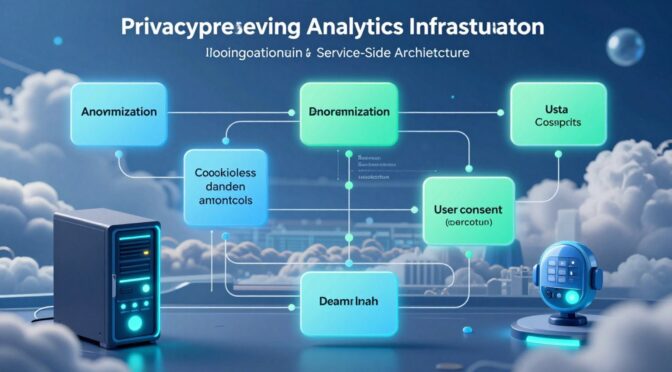
A new way is needed. A privacy-preserving analytics stack is the answer. It’s built for a cookieless, server-side world. This setup puts user privacy and data safety first.
These stacks help businesses measure things right, while following the rules. They use first-party data and advanced server-side tech. This way, they give companies the insights they need.
This article dives into what makes up this important framework. It shows how it helps businesses make smart, data-driven choices for the future.
What to Measure Without Surveillance (Reach, Engagement, Outcomes)
A privacy-first analytics approach focuses on outcomes, not activities. This builds trust and adds real value. Traditional methods track every click and scroll, but often miss the mark.
Experts warn against linking detailed activity to productivity. This method prioritizes “performance theater” over actual results. It can damage trust and mislead about success.
Ethical analytics focuses on reach, engagement, and outcomes. Reach shows how many people see a message. Engagement looks at how well people interact with content. Outcomes measure real achievements and impact.
The table below shows the difference between old and new metrics. It highlights the move from tracking behavior to measuring impact.
Surveillance Metric (Activity-Focused)
Outcome Metric (Impact-Focused)
Why the Shift Matters
Keystrokes per hour / Screen time
Projects delivered on time / Goals achieved
Measures results, not just effort; reduces micromanagement.
Individual page views / Click-through rate
Content reach & qualified lead generation
Focuses on audience growth and business development, not vanity clicks.
Social media likes & shares
Meaningful engagement & conversion rate
Values actions that drive revenue or advocacy over superficial interactions.
Email open rate
Campaign outcome & desired action taken
Tracks the end goal of a communication, not just its initial reception.
Surveillance breeds distrust and can cause data fatigue. Teams might focus on looking busy instead of being effective. Outcome metrics, on the other hand, align with goals and respect privacy.
Switching to outcome metrics means moving away from intrusive tools. It builds a practice that respects users while providing useful insights. This is the foundation for the next sections on privacy-first analytics.
By focusing on reach, engagement, and outcomes, businesses get clearer insights. They make better decisions without losing ethical standards or trust. This model is key to a responsible data strategy today.
Old web analytics using third-party cookies are seen as outdated and unethical. They pose big privacy risks and legal challenges. A new, ethical way is needed, focusing on privacy.
Old methods use JavaScript tags in the browser. They collect lots of data without telling users. This raises big concerns about privacy and control.
There are big technical issues too. Most browsers block third-party cookies, like Safari and Firefox. Chrome is also getting rid of them. This makes old analytics less accurate and reliable.
Client-side tracking also lets for browser fingerprinting. This creates a unique profile from device details. Fingerprinting happens without consent and ignores cookie rules, violating privacy.
Ethical analytics means protecting data from the start. A privacy-focused stack is designed to collect less data. It follows ethical data handling and respect for users.
Cookieless tracking is key to this new way. It uses first-party data and averages instead of individual profiles. It uses first-party cookies, network data, and server logs.
This method looks at how groups behave. It answers important questions about content without tracking people. Cookieless tracking lowers legal risks and builds trust.
Server-side analytics helps by processing data on your servers. This keeps data safe and controlled. It stops data from reaching the browser.
These tools create a strong privacy stack. They fix client-side issues and stop data leaks. They also block fingerprinting.
This setup helps follow laws like GDPR and CCPA. It limits data and uses it only for its purpose. A cookieless, server-side setup meets these rules by default.
It also makes data safer. With less data, there’s less to lose in case of a breach. This is a proactive step to protect data.
Setting up this stack needs planning. You must check your current tracking, choose the right tools, and set up servers right. It’s a long-term investment in good measurement.
Ethical analytics is more than just following rules. It’s a commitment to handling data responsibly. A privacy-focused stack lets you do this while getting useful insights.
Consent, meaningful choice, and first‑party data
The move to privacy-first analytics changes how companies and people share data. It’s about getting clear, honest consent. This builds real trust and gives users control over their data.
Just ticking a box isn’t enough. True consent means being open about what data is used for. Users should know exactly what data is collected and how it’s used. This is key to respecting their privacy and giving them power over their data.
First-party data is valuable because it comes from direct interactions. This includes signing up for newsletters or joining a cause. It’s better than third-party data because it’s more reliable and shows what users really want.
First-party data is clearer about what users want. It’s collected openly and with consent. This means companies can understand their audience better without using sneaky tracking methods. This builds trust and improves data quality over time.
Criteria
Compliance-Only Consent
Meaningful Choice
User Understanding
Low; based on buried policy text.
High; uses plain language and clear summaries.
Control Level
Binary “accept all” or leave.
Granular opt-in for different data uses.
Data Quality & Fidelity
Potentially large but low-trust dataset.
Smaller, high-intent, and high-trust dataset.
Long-term Trust Impact
Erodes trust; seen as extractive.
Builds trust; seen as a partnership.
Alignment with Privacy-First Analytics
Poor; often relies on indirect tracking.
Excellent; foundation for ethical measurement.
Using data right is key for effective advocacy. Campaigns that ask for real consent get better data. This helps send messages that really connect with people.
In short, first-party data is the heart of privacy-first analytics. It turns data into a valuable tool for lasting change.
Ethical A/B testing and avoiding manipulation
Ethical A/B testing is a big change from sneaky optimization to open testing that helps users. It’s not just about making more sales. It’s about learning and getting better while respecting users’ choices and privacy.
Old ways of tracking can make people too careful to try new things. Ethical testing encourages bold and careful tests.
The heart of ethical A/B testing is clear goals. Tests should aim to improve the user’s experience in a real way. This is different from using tricks to get people to do things they don’t want to.
Telling users they’re in a test is key. If it’s possible, let them know. This builds trust and follows the rules of fair consent.
The table below shows the main differences between good and bad testing:
Principle
Ethical A/B Testing Approach
Manipulative Tactic
Primary Goal
Learn and improve the user experience.
Drive short-term conversions at any cost.
Transparency
Discloses testing when possible; uses clear, honest copy.
Uses covert methods and deceptive interface elements.
Variant Design
Tests changes tied to a genuine user benefit hypothesis.
Exploits cognitive biases (e.g., false urgency, social proof).
Data Analysis
Rigorous, seeks unbiased truth; accounts for statistical significance.
Selectively uses data to confirm a desired outcome.
User Autonomy
Empowers users to make informed choices.
Nudges users toward a predetermined action.
Writing down a clear hypothesis before testing is essential. It should explain how the change will help the user. This stops teams from testing pointless or harmful changes.
It’s important to analyze data carefully to avoid making bad decisions. Data must be fair and unbiased. Results should be seen in context, not alone.
Ethical A/B testing avoids tricks that fool users into actions they don’t want. Examples include confusing language, hidden fees, or guilt trips.
Instead, ethical tests aim to make things better for users and give them more control. They provide clear info, simplify things, or offer real choices. This builds lasting loyalty and growth.
In the end, ethical A/B testing matches business goals with what’s best for users. It turns analytics into a tool for good change. This creates a culture of careful and responsible testing that leads to real progress.
Algorithmic amplification: transparency and limits
Analytics platforms use algorithms to rank and recommend data. This subtle influence shapes how we see things. It’s important to be open about how these systems work.
Algorithmic amplification boosts certain data patterns. Without clear explanations, decisions might be based on wrong information. It’s key to share the logic and limits of these systems.
Hidden algorithms can lead to biased results. They might even create harmful loops that distort reality. This can unfairly affect some groups or content without anyone meaning to.
Having humans check algorithms is a good idea. It keeps human values at the forefront. This balance is essential for using AI responsibly.
Regular checks on algorithms are important. They help spot biases and ensure fairness. It’s also vital to set limits on how much algorithms can decide.
Algorithmic Aspect
Opaque Practice (Risk)
Transparent Practice (Solution)
Impact on Equity Metrics
Content Ranking
Hidden weighting favors popular content
Published criteria with adjustable parameters
Measurable diversity in content exposure
User Segmentation
Demographic proxies create bias
Audited segmentation with fairness checks
Reduced disparity in group treatment
Recommendation Systems
Filter bubbles reinforce existing views
Diversity quotas in recommendation logic
Broader content distribution across groups
Anomaly Detection
Flags minority behaviors as suspicious
Context-aware detection with human review
Fair treatment across behavioral patterns
Predictive Analytics
Historical bias predicts unequal futures
Regular bias testing and model adjustment
Improved accuracy across all user segments
Designing algorithms for fairness is key. They should be tested for bias before use. Ongoing checks help ensure fairness for everyone.
Setting limits on algorithms is important. This stops them from making too many decisions. It keeps human oversight strong.
Using algorithms wisely means balancing efficiency with ethics. It’s about improving human judgment, not replacing it. Transparency and checks help keep technology in line with values and responsibilities.
Inclusive design and equitable impact metrics
Analytics systems that ignore diverse user experiences can make biases worse. Ethical analytics must focus on inclusive design from the start. This way, data practices actively work to fix imbalances, not just record them.
To fight bias, we need strong methods throughout the data process. Teams should check data sources for gaps. Models should be tested for unfair effects on different groups. It’s also key to understand the context of results to avoid harmful conclusions.
Creating an inclusive approach means using equitable impact metrics. These metrics help see how different groups are doing. They aim to go beyond averages that hide big differences.
Good equity metrics look at how different groups do. For example, does a new feature help one group but hurt another? This focus is part of a new way to measure success, focusing on teams and systems, not just individuals.
This approach changes analytics from just describing to diagnosing. It helps find where to make things fairer. This is part of a bigger effort to make technology more responsible, as shown in a blueprint for AI fairness.
The main goal is to make sure data helps create fairer outcomes. By always checking equitable impact metrics, companies can see if they’re being fair. This turns fairness in data into something that can be measured and improved in business.
Data retention and deletion
Managing data lifecycles is key to ethical data governance. For any organization focused on privacy-first analytics, setting clear data retention and deletion rules is essential. This ensures only relevant, up-to-date information is used for decision-making.
Data minimization is the first step in ethical data handling. It means collecting only what’s needed for a specific purpose. Keeping data for too long is risky and goes against privacy promises.
Keeping data forever is a big privacy and security risk. It makes data a target for hackers and can lead to misuse. A clear data lifecycle policy helps avoid these issues and shows a commitment to responsible data handling.
Setting logical data retention periods is important. It must balance legal needs with business needs. Different data types have different uses and legal rules.
Here are some guidelines for creating a data retention policy:
Classify Data by Purpose and Sensitivity: Sort data by its use and risk level.
Map Regulatory Obligations: Know the laws that set data retention rules.
Define Business Justification: Explain why data is kept if not legally required. Delete it when the reason is gone.
Document and Communicate Policies: Make retention rules clear and accessible. This builds trust in data handling.
When data’s retention period ends, it must be deleted securely. Just deleting files isn’t enough. Data must be made unrecoverable. This process must be checked to prove it follows rules.
Here’s how to securely delete data:
Use certified software to erase data multiple times.
Physically destroy old storage media.
Get confirmation from cloud providers when data is deleted.
Do regular checks to make sure data is deleted right.
Following these steps makes a privacy-first promise real. It completes the data lifecycle. This approach reduces risks and builds trust with users who value their privacy.
A strict data retention and deletion plan shows a company’s commitment to ethical data handling. It goes beyond just following rules. It’s about collecting and keeping data wisely. This is critical for any analytics program that values privacy.
Reporting to stakeholders with context and caveats
Ethical reporting turns data into useful information by adding important details and honesty. It connects analysis to action. Without it, even careful data analysis can lead to wrong conclusions.
It’s a mistake to think data always tells the whole story. Data might show a link, but not the cause. For example, more website visits could be due to a marketing push or news. Ethical reporting points out these other reasons.
Dashboards often miss key details. A high conversion rate might not mean much if the sample is small or biased. Reports should clearly state these limitations. This builds trust and avoids bad decisions based on incomplete data.
Stakeholders need to know what data can’t say. Reports should include notes on methods, timeframes, and gaps. Being open about data biases shows professionalism, not weakness.
Reports should focus on what matters, not just numbers. They should explain why the data matters and what to do next. This helps make better decisions and campaigns.
Showing the results of ethical A/B testing is a good example. Reports should explain the winning variant’s success, including confidence levels and any surprises. This avoids jumping to conclusions.
Reporting Element
Standard Reporting
Ethical Reporting
Primary Focus
Top-line metrics and growth trends
Actionable insights with contextual boundaries
Data Limitations
Often omitted or buried in footnotes
Explicitly stated upfront alongside the metrics
Interpretation Guidance
Presents correlation as implied causation
Offers multiple plausible explanations for trends
Methodology Disclosure
Minimal; assumes data is self-evident
Detailed notes on collection, sampling, and possible bias
Presentation of Test Results
“Variant B increased conversions by 15%.”
“Variant B showed a 15% lift at 95% confidence. Test audience was limited to new users from social media. Further testing is recommended for email segments.”
This careful way of sharing data turns analytics into a tool for understanding. It helps teams and leaders speak the same language. Ethical reporting protects the company from bad decisions based on wrong data.
Using these methods in every report makes ethical A/B testing and analytics valuable. It ensures insights are used wisely, knowing their limits.
Case study: cookieless analytics in a rights campaign
A social justice initiative used a privacy-first approach to track its campaign’s impact. They did this without losing user trust. The goal was to support digital privacy laws and engage the public.
The main challenge was to measure campaign success without using cookies or tracking devices. Traditional methods were seen as too invasive. The team wanted a way to keep user data private while getting useful data on website performance.
The organization chose a cookieless tracking system based on server-side analytics. This method processes data on their server before sending it to the analysis tool. It avoids using tracking pixels that collect personal info.
They used a clear consent process. A banner explained how they use data to improve the site. Users could choose to opt-out without affecting the site’s functionality. Form submissions, like petition signatures, were seen as voluntary data.
They defined key metrics to track campaign success without invading privacy:
Petition Signatures: The total count of completed forms, tracked via server-side form submission events.
Donor Conversion Rate: Measured as the percentage of visitors to the donation page who completed a transaction, using anonymized session data.
Policy Change Awareness: Gauged through clicks on “Learn More” links related to the legislation, indicating informed engagement.
Content Engagement: Aggregated page view counts and average time on page for key resources.
The campaign showed that cookieless tracking can be very useful. They found that focusing on actions like signatures and donations gave clearer insights. Trust grew when reports were based on overall data, not individual profiles. The campaign was a success, proving that you can measure without spying.
Ethical analytics checklist and reporting template
A checklist and report template are key for making ethical analytics work. They help professionals check their work and share results fairly. This guide covers all steps from collecting data to sharing insights.
The checklist focuses on important ethical rules like keeping data use clear and getting consent. It’s a useful tool for teams to follow.
Data Collection
Define a clear reason for collecting data.
Use methods that protect privacy, like server-side tracking.
Get consent from users with clear choices.
Only collect data needed for the purpose.
Data Processing & Storage
Make data anonymous or pseudonymous early on.
Set rules for how long to keep data and delete it automatically.
Keep data safe with strong encryption.
Do regular checks on data protection.
Analysis & Testing
Be clear about how content is ranked and shown.
Do ethical A/B testing without tricks.
Check models for bias and use inclusive design.
Use equity metrics to see fairness in results.
Reporting & Communication
Share data with context on how it was made.
Point out any limits or biases in the data.
Show how data meets equity metrics and helps society.
Use reports to teach about ethics.
Sharing insights well is as important as analyzing them. A standard report template helps stakeholders understand the data’s background and limits.
This approach makes decisions more informed and transparent.
Report Section
Key Components
Ethical Rationale
Executive Summary & Context
Business goal, analysis time, data sources, tracking methods (e.g., cookieless).
Helps avoid wrong interpretations by showing data’s start and scope.
Methodology & Caveats
Sample size, confidence levels, known issues, biases.
Keeps honesty high and sets realistic hopes.
Core Performance Metrics
Reach, engagement, conversion rates that match business goals.
Shows value while focusing on data users agree to share.
Equity & Impact Analysis
Data by user groups, ethical A/B testing results, fairness checks.
Makes sure benefits and problems are shared fairly, avoiding harm.
Recommendations & Next Steps
Actions based on insights, proposed changes, plans for review and learning.
Opens a loop for feedback, promoting ethical growth.
For a digital tool, check out an ethical compliance detection report form. It makes audits and reports easier to follow.
Keeping stakeholders informed and involved, as ethics suggest, turns reports into learning tools. By using this checklist and template, companies build trust and use analytics wisely.
Disclaimer
This article is for learning and information only. It talks about general ideas and the latest in digital analytics and privacy.
It’s not legal advice. Companies need to talk to lawyers and data experts. They should understand their specific rules under laws like GDPR or CCPA.
Creating a privacy-safe analytics system, like cookieless tracking, needs a custom plan. Readers should do their homework before using any tools or methods mentioned.
The writer and publisher are not responsible for actions taken based on this info. Technology and laws keep changing, so practices and rules can shift too.
Organizations in the digital world face a complex legal landscape. Their work often crosses international borders, posing immediate challenges.
Different national laws create conflicts. Countries have their own rules for online speech, data privacy, and digital content. The European Union’s highest court supports a territory-based model for internet rules.
This model lets platforms block content illegal in certain places. Yet, global takedown orders from Brazil, Canada, and the EU show the complexity of these claims.
These debates are not just theoretical. For professionals, they are real operational and strategic risks. Navigating this landscape requires careful planning and expert knowledge.
Effective cross-border advocacy demands a disciplined approach to legal boundaries. It involves understanding regulatory sanctions, export controls, and implementing strong security protocols. This is key to reducing risk and achieving goals.
Sanctions and export controls relevant to digital tools and donations
The Office of Foreign Assets Control (OFAC) and the Bureau of Industry and Security (BIS) manage U.S. rules for digital tools and donations. These rules affect how organizations work across borders. Understanding these rules is key for sanctions compliance.
Rules often focus on certain countries. These include China, Russia, Iran, North Korea, Cuba, and Venezuela. These places are major cyber threats and targets of U.S. security efforts. The rules can limit many activities.
Providing software or cloud services to these areas.
Offering tech help or training to people linked to banned groups.
Handling money donations for banned people or governments.
OFAC handles economic and trade sanctions. It blocks assets and stops transactions with banned people. For groups, this means checking any tool vendors, hosting providers, or partners against the SDN list.
Not checking this list can lead to big fines. This rule is not just a detail but a key part of how groups work.
BIS, on the other hand, controls the export of items that can be used for both civilian and military purposes. Many tools for communication and encryption fall under these rules. Giving these tools to someone in a banned country without a license is against the law.
Agency
Primary Focus
Key Mechanism
Impact on Digital Advocacy
OFAC
Economic sanctions, asset freezes
SDN List, Country Embargoes
Prohibits transactions and dealings with designated entities and jurisdictions.
BIS
Export controls on dual-use items
Commerce Control List (CCL), EAR
Restricts the provision of software, technology, and services.
Executive Order 14117 also plays a big role. It created the Data Security Program (DSP). This order stops U.S. people from sharing sensitive data with banned countries or people.
The DSP is a big challenge for data-based campaigns. It focuses on sharing data like genetic, biometric, health, and financial information. Checking data processors and cloud storage is very important.
Breaking these rules can lead to huge fines, criminal charges, and harm to a group’s reputation. So, having a strong compliance program is vital.
Steps to follow include using tools to check partners and donors, doing risk assessments before starting projects, and getting legal advice for tricky deals. Sanctions compliance should be part of planning from the start.
In short, dealing with U.S. sanctions and export controls is a must for international advocacy. OFAC, BIS, and the Data Security Program make a strong framework. It needs careful and informed management.
Cross‑border data sharing and SCCs/localization
The world of international data flows is complex. It’s shaped by transfer mechanisms and localization mandates. Companies must navigate this to stay legal across borders. Failure to comply can lead to big fines and disruptions.
Standard Contractual Clauses (SCCs) are key for data transfers from the EU to other countries. The European Commission issues these templates. They ensure both sides agree to GDPR standards, as outlined in the official guidance from the European Commission on Standard Contractual Clauses for international data transfers.
Data localization laws, on the other hand, aim to keep data within a country. They’re about privacy, security, or economic reasons. This can be a big challenge for companies that process data globally.
The EU and the U.S. have different views on data. The EU focuses on individual rights and contracts. The U.S. puts national security first, with rules like the Data Security Program.
The case of Google v. CNIL shows the complexity. The EU Court said EU law doesn’t require global data delisting. But, national laws might. This case shows the variety of rules for data transfers.
If you want, I can also add a second high-authority legal citation (e.g., GDPR Article 46 or EDPB guidance) to make the article even stronger for E-E-A-T SEO.
Aspect
EU Model (GDPR/SCCs Focus)
U.S. Model (National Security Focus)
Primary Driver
Protection of individual data rights and privacy.
Protection of national security and sensitive government data.
Key Mechanism
Standard Contractual Clauses (SCCs) for lawful transfers.
Program-specific contractual prohibitions (e.g., Data Security Program).
Governance Scope
Extraterritorial, applying to any entity processing EU residents’ data.
Often applies to federal contractors, grantees, and specific sensitive sectors.
Illustrative Case
Google v. CNIL: balances right to delist with global reach.
Data Security Program: blocks transfer to “countries of concern.”
Choosing the right transfer mechanism is a detailed process. First, do a Transfer Impact Assessment (TIA). This checks the legal situation of the destination country. Then, pick from tools like:
Standard Contractual Clauses (SCCs) for EU-origin data.
Binding Corporate Rules for intra-group transfers.
Derogations for specific situations under Article 49 GDPR.
Adherence to country-specific programs like the U.S. DSP.
It’s also important to structure contracts well. Agreements must include the chosen transfer mechanism. They should outline roles, responsibilities, and who’s liable for breaches. This legal work is key for safe data transfers across borders.
NGO collaboration agreements and risk allocation
Working together across borders is not just about policy. It’s about the rules in a formal agreement. This agreement is key for managing risks, making sure everyone knows their duties.
For groups pushing for change, a solid agreement is a must. It should have clear rules about data transfers, what data can be shared, and how long it’s kept. It also needs to protect groups from big financial losses due to mistakes or changes in laws.
Having the right to end a partnership if rules are broken is important. Also, each side must promise to follow all laws and rules about data and exports.
These agreements help share risks when laws differ. If a partner is forced to give up data, the agreement says who’s responsible. It also sets up how to quickly tell the other side.
New rules from the U.S. Department of Justice give a clear example of what’s needed. They say agreements must stop data from going to certain countries. They also require telling the DOJ if there’s a problem.
This makes a partner more than just a signer. They become a key player in making sure things are done right.
For any group working with U.S. data across borders, these rules are a must. The agreement is no longer just a form. It’s a tool to manage risks in a complex world.
Operational security for at‑risk participants
Commercial spyware has grown a lot, making it key for at-risk groups to have strong security. Journalists, activists, and human rights defenders need more than just basic digital safety. They need a detailed security plan to stay safe and do their jobs well.
Threat modeling is the first step in any security plan. It’s important to know who the enemies are, what they can do, and how they might attack. This changes a lot depending on where you are and what you’re fighting for.
Secure ways to talk and share info are a must. Use encrypted messaging apps that are open-source and verified. For the most dangerous situations, tools that keep your data safe and don’t share much info are needed. Everyone should know how to use these tools right to avoid mistakes.
Keeping devices safe is a big challenge. Make sure to update security often and use disk encryption. Use different devices for work and personal stuff to avoid mixing things up. Always follow strict rules for handling devices, both at home and when traveling.
Traveling safely means planning ahead, even more so when crossing borders. Devices might get checked or taken. Carry devices with little data and use temporary accounts. Only access important info through secure channels after you’ve passed through border checks.
Keeping personal stuff safe is just as important as work stuff. Social media, family chats, and money matters can give away too much. Teach people about how to avoid being tricked online and why being careful is always important.
Having a plan for when something goes wrong is key. Know who to talk to and what to do in case of a security issue. The plan should cover how to stop the problem, figure out what happened, tell others, and get back to normal. Practice this plan to stay ready.
The table below shows basic security steps for different levels of danger. Tailor these steps based on your group’s specific risks.
Security Domain
Low-Threat Environment
Medium-Threat Environment
High-Threat Environment
Communication
Standard encrypted messaging apps
Apps with disappearing messages & verified encryption
Ephemeral, metadata-resistant platforms with air-gap options
Device Policy
Basic password protection & updates
Full disk encryption & separate work devices
Hardened, dedicated devices with physical tamper detection
Travel Protocol
Data backup before travel
Use of travel-specific devices & accounts
Clean devices, no sensitive data carried, remote access only post-travel
Incident Response
Basic contact list for IT support
Designated response team & documented procedures
24/7 hotline, pre-approved legal counsel, and evacuation protocols
By following these steps, opsec for activists becomes more than just a list. It’s a key part of being strong and safe. In a world where surveillance is common, having a solid security plan is essential for lasting advocacy.
VPNs, anonymity, and local law constraints
Virtual Private Networks (VPNs) help people get around internet blocks set by governments. Companies face problems when they can’t access certain websites because of where they are. This makes it hard for them to work across borders.
VPNs and anonymity networks hide your internet activity by sending it through encrypted tunnels. They make it seem like you’re in a different country. This is useful for those who need to access information without being blocked.
But, using a VPN to get around blocks can be risky. Laws about encryption and anonymity vary worldwide. This means what’s legal in one place might be illegal in another.
For operational security (opsec) for activists and professionals, it’s important to know the local laws. Some countries, like China and Russia, have strict rules about VPNs. Even accessing a VPN website can get you in trouble in some places.
The European Court of Human Rights made a big decision about this. They said Russia was wrong to block VPNs because it limits freedom of information. But, this ruling doesn’t mean VPNs are legal everywhere.
Companies need to think carefully about using VPNs. They should ask if it’s legal where they are, what the penalties are, and if it could lead to more trouble. The risks are for both the users and those who organize campaigns.
For opsec for activists, it’s not just about using VPNs. They can be detected and blocked by governments. Some VPNs keep logs that can be used against you. Free VPNs might also be risky because they can have malware or sell your data.
So, experts advise making informed choices about using VPNs. This means:
Checking the laws about anonymity tools in each country.
Choosing VPNs that are trustworthy and not based in countries with strict laws.
Knowing that what’s legal in one place might be illegal in another.
Having plans for when VPNs don’t work or are discovered.
Using privacy tools must be carefully thought out because of legal risks. A good approach to opsec for activists combines legal advice with technical solutions. It’s best to talk to lawyers who know the laws in your area before using any tools to bypass blocks.
Emergency legal readiness and response tree
An emergency legal plan turns panic into planned steps. For those in sensitive roles, talking about what to do is not enough. A clear plan is a must.
This plan is based on being ready for anything. It means knowing what to do before a crisis hits. It changes “what if” to “here’s what we do.”
The key to this plan is a detailed response tree. It shows what to do, who to call, and where to find help. It makes sure everyone knows their part in a legal crisis.
A good response tree has three main parts. First, it lists important contacts and how to reach them. Second, it outlines how to handle different crisis levels. Third, it sets up safe ways to talk during emergencies.
Component
Description
Critical Action Item
Legal Counsel
Pre-vetted attorneys specializing in digital law, non-profit regulation, and crisis management in relevant jurisdictions.
Secure retainer agreements and 24/7 contact protocols before any incident.
Digital Forensics
External experts ready to analyze data breaches, device seizures, or cyber-attacks to preserve evidence and assess damage.
Identify and contract a trusted firm; establish evidence preservation procedures.
Communications Lead
Internal or external PR responsible for managing public statements and internal messaging during a crisis.
Draft templated holding statements and define approval chains for public communication.
Escalation Protocol
A tiered system classifying incidents (e.g., data leak, staff detention, asset seizure) and specifying who must be notified at each level.
Document clear decision trees with time-bound response requirements for each tier.
Secure Channels
Pre-agreed methods for communication if primary systems are compromised (e.g., encrypted messengers, out-of-band phone trees).
Distribute and regularly test backup communication tools with all key personnel.
Choosing the right legal help is key. The law varies by country. You need lawyers in each place you work or have risks.
The real value is in using the plan. Practice exercises are vital. They test the plan, find missing info, and train teams. This makes the plan real and effective for opsec for activists and crisis management.
Vendor selection and threat modeling by country
Effective sanctions compliance starts with a clear way to check vendors. This is based on the risks of different countries. Choosing the right tech partners is key for legal and security reasons.
A vendor’s country can affect legal issues, surveillance, and service risks. This is important for companies working across borders.
Checking vendors is more than just looking at their specs. It’s about more than just cost and service levels. A detailed check is needed for high-risk areas.
First, look at the vendor’s country and laws. Then, check their data handling and how long they keep it. Next, find out who owns them and if they’re linked to any governments. Lastly, see who they get their parts from.
This deeper check helps meet sanctions compliancegoals. It finds vendors that might be controlled by risky governments. It also sees if they can resist data requests from other countries.
Looking at each country helps make smart choices. It shows how a vendor’s country laws might affect their work. It also looks at the chance of service stops during big political issues.
This method also checks if a vendor’s data can be accessed by governments. It looks at the fairness of data requests from other countries. And it checks if the vendor’s systems could be shut down by a government.
The table below shows how to rank vendor risks by country. This helps make choices that follow sanctions compliance rules.
Country Risk Tier
Key Threat Vectors
Due Diligence Priorities
Recommended Mitigation
High Risk (Countries with active sanctions or state surveillance laws)
Compelled data handovers, service termination mandates, infrastructure control by state entities
Ownership transparency, data localization practices, historical compliance with foreign requests
Standard security assessments, contractual safeguards, regular security audits
Building strong cybersecurity means choosing diverse tech vendors. Relying on just one vendor or a few places is risky. It’s better to spread services across many places with good laws.
This way, you’re less likely to face big problems if services are cut off. It also makes it harder for one government to get all your data. And it gives you options if things change politically.
Choose vendors from places with strong privacy laws. These places usually need a judge’s okay for data requests. They also tend to be independent from countries of concern.
This plan needs regular checks. Laws and politics can change fast. Keeping your vendor choices up to date helps keep your security strong and follows sanctions compliance rules.
Case study: transnational human‑rights campaign
Imagine a campaign for political freedom that works in Europe, raises money in North America, and talks to people all over the world. This shows how legal rules can lead to real risks. It’s important to have a plan that covers both legal and security issues.
The campaign has many parts working together. A main group is based in a country that protects free speech well. Local groups gather stories and proof in places where it’s hard to speak out. Online platforms help with money and spreading the word globally.
Every part of the campaign has its own risks. Gathering data in many countries makes it hard to store and move. Raising money online means following rules and checking for sanctions. Using social media to talk to people worldwide can lead to problems with different laws.
The table below shows the main risks for this campaign:
Operational Function
Jurisdictional Conflict
Primary Legal Risk
Security Consideration
Data Collection & Storage
EU GDPR vs. local surveillance laws
Illegal data processing; evidence seizure
Encryption; decentralized storage
Cross-border Fundraising
US sanctions vs. recipient country laws
Blocked transactions; donor exposure
Anonymous donation channels
Social Media Coordination
Platform TOS vs. national content laws
Account takedowns; geoblocking
Multi-platform strategy; backup channels
Local Partner Support
Extraterritorial application of laws
Criminal liability for assistance
Compartmentalized communication
Conflicts between laws can cause big problems. A country might ask to remove content everywhere. The Canadian Supreme Court’s Equustek decision shows how this can happen. This leaves platforms in a tough spot, trying to follow different rules.
How data moves is very important. The EU’s SCCs help move personal data to other countries. These SCCs must be used carefully between the main group and people in Europe. Sometimes, extra steps are needed for places that are considered high-risk.
Following sanctions rules is also key. Platforms must check donors against lists that change often. If a donation comes from a banned source, it could hurt the whole campaign’s money. This means having tools to check donors quickly and clear rules for donations.
Keeping operations safe adds to the legal challenges. Local helpers could be in danger if their online activities are found out. It’s essential to use encrypted messages and delete data safely. The campaign should think that enemies might try to get in or mess things up.
Real-life examples, like Brazil’s global takedown orders, show how fast things can get serious. A court decision can ask to remove content everywhere. Campaigns need plans for when platforms suddenly stop working or data is taken.
This example shows why just focusing on one thing won’t work. Lawyers need to understand how things work on the ground. Security teams must know about legal rules. A plan that covers everything helps advocacy work well across borders.
Checklists: cross‑border data and risk tiering
For organizations working globally, checklists are key for following rules and reducing risks. They break down complex rules into simple steps. This section talks about two important tools for managers and executives handling international projects.
The first checklist helps with safe and legal data transfers. The second helps sort out risks in different countries. Together, they are the base of a strong sanctions compliance and risk management plan.
Cross-Border Data Transfer Compliance Checklist
This checklist helps teams prepare for sharing data across borders. It should be done before starting any project that involves sharing data.
Conduct Complete Data Mapping
Write down all data types and where they go. Say where the data comes from, where it goes, and where it’s stored. Explain why you’re sharing it and how sensitive it is.
Find and Document Legal Ways to Share Data
Figure out the legal way to share data. For EU data, use Standard Contractual Clauses (SCCs) or a special rule. For other places, check their data laws. Keep a list of all your decisions.
Check Vendors and Tools
Look at any third-party services handling your data. Check their security, data rules, and where they are. Make sure they’re not banned by sanctions compliance rules.
Sign and Keep Agreements
Make formal agreements for data sharing. Include SCCs, data processing agreements (DPAs), and who’s liable. Make sure they’re signed and kept safely.
Not all places are the same when it comes to risk. This system lets you sort countries by risk level. The level helps decide how much to spend on security and who to partner with.
Assessment Criteria
Tier 1: High Risk
Tier 2: Medium Risk
Tier 3: Low Risk
Legal Environment
Strict NGO laws, must keep data locally, weak courts.
Some rules, changing data laws, courts check some things.
Good laws, strong courts, clear rules.
Sanctions Exposure
Wide sanctions, strict money checks.
Some sector sanctions, not too hard to follow.
Little or no sanctions, easy to follow rules.
Cybersecurity Threat Level
Many cyber attacks, state-backed, often target groups.
Some cyber threats, common crimes, some spy attacks.
Low cyber threats, basic safety works well.
Partner Landscape
Few trusted partners, need to check them well, risk to reputation.
Some good partners, just need to check them.
Many reliable partners, easy to find them.
To use this system, score each country on each point. If most scores are high, it’s Tier 1. Review this every year or after big world changes.
Using these checklists in daily work makes your organization better. They show you’re serious about sanctions compliance and managing data transfers risks. For leaders, these tools help manage risks without losing control.
Disclaimer
This article gives basic info on complex legal and operational topics. It talks about sanctions, export controls, and SCCs. It also covers cross-border data sharing.
The content is for general knowledge only. It’s not legal, security, or professional advice.
Laws and regulations change fast. They vary a lot from country to country.
It’s important to talk to legal and security experts. They can give advice based on your specific situation.
Don’t make decisions based only on this article. The publisher can’t be held responsible for actions taken from this content.