The digital world is changing fast. People want more privacy, and laws are getting stricter. This is making companies rethink how they handle data.
Old ways of tracking, based on third-party cookies, are fading away. This is a big problem for leaders who need good data to make decisions.
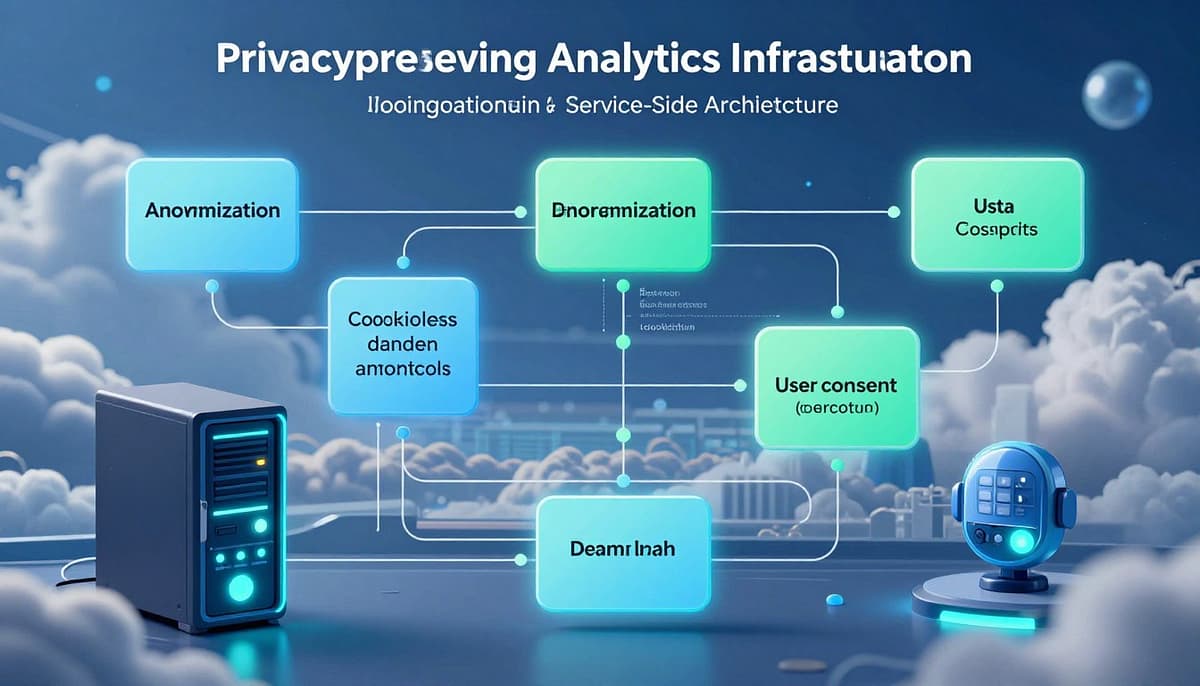
A new way is needed. A privacy-preserving analytics stack is the answer. It’s built for a cookieless, server-side world. This setup puts user privacy and data safety first.
These stacks help businesses measure things right, while following the rules. They use first-party data and advanced server-side tech. This way, they give companies the insights they need.
This article dives into what makes up this important framework. It shows how it helps businesses make smart, data-driven choices for the future.
What to Measure Without Surveillance (Reach, Engagement, Outcomes)
A privacy-first analytics approach focuses on outcomes, not activities. This builds trust and adds real value. Traditional methods track every click and scroll, but often miss the mark.
Experts warn against linking detailed activity to productivity. This method prioritizes “performance theater” over actual results. It can damage trust and mislead about success.
Ethical analytics focuses on reach, engagement, and outcomes. Reach shows how many people see a message. Engagement looks at how well people interact with content. Outcomes measure real achievements and impact.
The table below shows the difference between old and new metrics. It highlights the move from tracking behavior to measuring impact.
| Surveillance Metric (Activity-Focused) | Outcome Metric (Impact-Focused) | Why the Shift Matters |
|---|---|---|
| Keystrokes per hour / Screen time | Projects delivered on time / Goals achieved | Measures results, not just effort; reduces micromanagement. |
| Individual page views / Click-through rate | Content reach & qualified lead generation | Focuses on audience growth and business development, not vanity clicks. |
| Social media likes & shares | Meaningful engagement & conversion rate | Values actions that drive revenue or advocacy over superficial interactions. |
| Email open rate | Campaign outcome & desired action taken | Tracks the end goal of a communication, not just its initial reception. |
Surveillance breeds distrust and can cause data fatigue. Teams might focus on looking busy instead of being effective. Outcome metrics, on the other hand, align with goals and respect privacy.
Switching to outcome metrics means moving away from intrusive tools. It builds a practice that respects users while providing useful insights. This is the foundation for the next sections on privacy-first analytics.
By focusing on reach, engagement, and outcomes, businesses get clearer insights. They make better decisions without losing ethical standards or trust. This model is key to a responsible data strategy today.
Privacy‑preserving analytics stack (cookieless/server‑side)
Old web analytics using third-party cookies are seen as outdated and unethical. They pose big privacy risks and legal challenges. A new, ethical way is needed, focusing on privacy.
Old methods use JavaScript tags in the browser. They collect lots of data without telling users. This raises big concerns about privacy and control.
There are big technical issues too. Most browsers block third-party cookies, like Safari and Firefox. Chrome is also getting rid of them. This makes old analytics less accurate and reliable.
Client-side tracking also lets for browser fingerprinting. This creates a unique profile from device details. Fingerprinting happens without consent and ignores cookie rules, violating privacy.
Ethical analytics means protecting data from the start. A privacy-focused stack is designed to collect less data. It follows ethical data handling and respect for users.
Cookieless tracking is key to this new way. It uses first-party data and averages instead of individual profiles. It uses first-party cookies, network data, and server logs.
This method looks at how groups behave. It answers important questions about content without tracking people. Cookieless tracking lowers legal risks and builds trust.
Server-side analytics helps by processing data on your servers. This keeps data safe and controlled. It stops data from reaching the browser.
These tools create a strong privacy stack. They fix client-side issues and stop data leaks. They also block fingerprinting.
This setup helps follow laws like GDPR and CCPA. It limits data and uses it only for its purpose. A cookieless, server-side setup meets these rules by default.
It also makes data safer. With less data, there’s less to lose in case of a breach. This is a proactive step to protect data.
Setting up this stack needs planning. You must check your current tracking, choose the right tools, and set up servers right. It’s a long-term investment in good measurement.
Ethical analytics is more than just following rules. It’s a commitment to handling data responsibly. A privacy-focused stack lets you do this while getting useful insights.
Consent, meaningful choice, and first‑party data
The move to privacy-first analytics changes how companies and people share data. It’s about getting clear, honest consent. This builds real trust and gives users control over their data.
Just ticking a box isn’t enough. True consent means being open about what data is used for. Users should know exactly what data is collected and how it’s used. This is key to respecting their privacy and giving them power over their data.
First-party data is valuable because it comes from direct interactions. This includes signing up for newsletters or joining a cause. It’s better than third-party data because it’s more reliable and shows what users really want.
First-party data is clearer about what users want. It’s collected openly and with consent. This means companies can understand their audience better without using sneaky tracking methods. This builds trust and improves data quality over time.
| Criteria | Compliance-Only Consent | Meaningful Choice |
|---|---|---|
| User Understanding | Low; based on buried policy text. | High; uses plain language and clear summaries. |
| Control Level | Binary “accept all” or leave. | Granular opt-in for different data uses. |
| Data Quality & Fidelity | Potentially large but low-trust dataset. | Smaller, high-intent, and high-trust dataset. |
| Long-term Trust Impact | Erodes trust; seen as extractive. | Builds trust; seen as a partnership. |
| Alignment with Privacy-First Analytics | Poor; often relies on indirect tracking. | Excellent; foundation for ethical measurement. |
Using data right is key for effective advocacy. Campaigns that ask for real consent get better data. This helps send messages that really connect with people.
In short, first-party data is the heart of privacy-first analytics. It turns data into a valuable tool for lasting change.
Ethical A/B testing and avoiding manipulation
Ethical A/B testing is a big change from sneaky optimization to open testing that helps users. It’s not just about making more sales. It’s about learning and getting better while respecting users’ choices and privacy.
Old ways of tracking can make people too careful to try new things. Ethical testing encourages bold and careful tests.

The heart of ethical A/B testing is clear goals. Tests should aim to improve the user’s experience in a real way. This is different from using tricks to get people to do things they don’t want to.
Telling users they’re in a test is key. If it’s possible, let them know. This builds trust and follows the rules of fair consent.
The table below shows the main differences between good and bad testing:
| Principle | Ethical A/B Testing Approach | Manipulative Tactic |
|---|---|---|
| Primary Goal | Learn and improve the user experience. | Drive short-term conversions at any cost. |
| Transparency | Discloses testing when possible; uses clear, honest copy. | Uses covert methods and deceptive interface elements. |
| Variant Design | Tests changes tied to a genuine user benefit hypothesis. | Exploits cognitive biases (e.g., false urgency, social proof). |
| Data Analysis | Rigorous, seeks unbiased truth; accounts for statistical significance. | Selectively uses data to confirm a desired outcome. |
| User Autonomy | Empowers users to make informed choices. | Nudges users toward a predetermined action. |
Writing down a clear hypothesis before testing is essential. It should explain how the change will help the user. This stops teams from testing pointless or harmful changes.
It’s important to analyze data carefully to avoid making bad decisions. Data must be fair and unbiased. Results should be seen in context, not alone.
Ethical A/B testing avoids tricks that fool users into actions they don’t want. Examples include confusing language, hidden fees, or guilt trips.
Instead, ethical tests aim to make things better for users and give them more control. They provide clear info, simplify things, or offer real choices. This builds lasting loyalty and growth.
In the end, ethical A/B testing matches business goals with what’s best for users. It turns analytics into a tool for good change. This creates a culture of careful and responsible testing that leads to real progress.
Algorithmic amplification: transparency and limits
Analytics platforms use algorithms to rank and recommend data. This subtle influence shapes how we see things. It’s important to be open about how these systems work.
Algorithmic amplification boosts certain data patterns. Without clear explanations, decisions might be based on wrong information. It’s key to share the logic and limits of these systems.
Hidden algorithms can lead to biased results. They might even create harmful loops that distort reality. This can unfairly affect some groups or content without anyone meaning to.
Having humans check algorithms is a good idea. It keeps human values at the forefront. This balance is essential for using AI responsibly.
Regular checks on algorithms are important. They help spot biases and ensure fairness. It’s also vital to set limits on how much algorithms can decide.
| Algorithmic Aspect | Opaque Practice (Risk) | Transparent Practice (Solution) | Impact on Equity Metrics |
|---|---|---|---|
| Content Ranking | Hidden weighting favors popular content | Published criteria with adjustable parameters | Measurable diversity in content exposure |
| User Segmentation | Demographic proxies create bias | Audited segmentation with fairness checks | Reduced disparity in group treatment |
| Recommendation Systems | Filter bubbles reinforce existing views | Diversity quotas in recommendation logic | Broader content distribution across groups |
| Anomaly Detection | Flags minority behaviors as suspicious | Context-aware detection with human review | Fair treatment across behavioral patterns |
| Predictive Analytics | Historical bias predicts unequal futures | Regular bias testing and model adjustment | Improved accuracy across all user segments |
Designing algorithms for fairness is key. They should be tested for bias before use. Ongoing checks help ensure fairness for everyone.
Setting limits on algorithms is important. This stops them from making too many decisions. It keeps human oversight strong.
Using algorithms wisely means balancing efficiency with ethics. It’s about improving human judgment, not replacing it. Transparency and checks help keep technology in line with values and responsibilities.
Inclusive design and equitable impact metrics
Analytics systems that ignore diverse user experiences can make biases worse. Ethical analytics must focus on inclusive design from the start. This way, data practices actively work to fix imbalances, not just record them.
To fight bias, we need strong methods throughout the data process. Teams should check data sources for gaps. Models should be tested for unfair effects on different groups. It’s also key to understand the context of results to avoid harmful conclusions.
Creating an inclusive approach means using equitable impact metrics. These metrics help see how different groups are doing. They aim to go beyond averages that hide big differences.
Good equity metrics look at how different groups do. For example, does a new feature help one group but hurt another? This focus is part of a new way to measure success, focusing on teams and systems, not just individuals.
This approach changes analytics from just describing to diagnosing. It helps find where to make things fairer. This is part of a bigger effort to make technology more responsible, as shown in a blueprint for AI fairness.
The main goal is to make sure data helps create fairer outcomes. By always checking equitable impact metrics, companies can see if they’re being fair. This turns fairness in data into something that can be measured and improved in business.
Data retention and deletion
Managing data lifecycles is key to ethical data governance. For any organization focused on privacy-first analytics, setting clear data retention and deletion rules is essential. This ensures only relevant, up-to-date information is used for decision-making.
Data minimization is the first step in ethical data handling. It means collecting only what’s needed for a specific purpose. Keeping data for too long is risky and goes against privacy promises.
Keeping data forever is a big privacy and security risk. It makes data a target for hackers and can lead to misuse. A clear data lifecycle policy helps avoid these issues and shows a commitment to responsible data handling.
Setting logical data retention periods is important. It must balance legal needs with business needs. Different data types have different uses and legal rules.
Here are some guidelines for creating a data retention policy:
- Classify Data by Purpose and Sensitivity: Sort data by its use and risk level.
- Map Regulatory Obligations: Know the laws that set data retention rules.
- Define Business Justification: Explain why data is kept if not legally required. Delete it when the reason is gone.
- Document and Communicate Policies: Make retention rules clear and accessible. This builds trust in data handling.
When data’s retention period ends, it must be deleted securely. Just deleting files isn’t enough. Data must be made unrecoverable. This process must be checked to prove it follows rules.
Here’s how to securely delete data:
- Use certified software to erase data multiple times.
- Physically destroy old storage media.
- Get confirmation from cloud providers when data is deleted.
- Do regular checks to make sure data is deleted right.
Following these steps makes a privacy-first promise real. It completes the data lifecycle. This approach reduces risks and builds trust with users who value their privacy.
A strict data retention and deletion plan shows a company’s commitment to ethical data handling. It goes beyond just following rules. It’s about collecting and keeping data wisely. This is critical for any analytics program that values privacy.
Reporting to stakeholders with context and caveats
Ethical reporting turns data into useful information by adding important details and honesty. It connects analysis to action. Without it, even careful data analysis can lead to wrong conclusions.
It’s a mistake to think data always tells the whole story. Data might show a link, but not the cause. For example, more website visits could be due to a marketing push or news. Ethical reporting points out these other reasons.
Dashboards often miss key details. A high conversion rate might not mean much if the sample is small or biased. Reports should clearly state these limitations. This builds trust and avoids bad decisions based on incomplete data.
Stakeholders need to know what data can’t say. Reports should include notes on methods, timeframes, and gaps. Being open about data biases shows professionalism, not weakness.
Reports should focus on what matters, not just numbers. They should explain why the data matters and what to do next. This helps make better decisions and campaigns.
Showing the results of ethical A/B testing is a good example. Reports should explain the winning variant’s success, including confidence levels and any surprises. This avoids jumping to conclusions.
| Reporting Element | Standard Reporting | Ethical Reporting |
|---|---|---|
| Primary Focus | Top-line metrics and growth trends | Actionable insights with contextual boundaries |
| Data Limitations | Often omitted or buried in footnotes | Explicitly stated upfront alongside the metrics |
| Interpretation Guidance | Presents correlation as implied causation | Offers multiple plausible explanations for trends |
| Methodology Disclosure | Minimal; assumes data is self-evident | Detailed notes on collection, sampling, and possible bias |
| Presentation of Test Results | “Variant B increased conversions by 15%.” | “Variant B showed a 15% lift at 95% confidence. Test audience was limited to new users from social media. Further testing is recommended for email segments.” |
This careful way of sharing data turns analytics into a tool for understanding. It helps teams and leaders speak the same language. Ethical reporting protects the company from bad decisions based on wrong data.
Using these methods in every report makes ethical A/B testing and analytics valuable. It ensures insights are used wisely, knowing their limits.
Case study: cookieless analytics in a rights campaign
A social justice initiative used a privacy-first approach to track its campaign’s impact. They did this without losing user trust. The goal was to support digital privacy laws and engage the public.
The main challenge was to measure campaign success without using cookies or tracking devices. Traditional methods were seen as too invasive. The team wanted a way to keep user data private while getting useful data on website performance.
The organization chose a cookieless tracking system based on server-side analytics. This method processes data on their server before sending it to the analysis tool. It avoids using tracking pixels that collect personal info.
They used a clear consent process. A banner explained how they use data to improve the site. Users could choose to opt-out without affecting the site’s functionality. Form submissions, like petition signatures, were seen as voluntary data.
They defined key metrics to track campaign success without invading privacy:
- Petition Signatures: The total count of completed forms, tracked via server-side form submission events.
- Donor Conversion Rate: Measured as the percentage of visitors to the donation page who completed a transaction, using anonymized session data.
- Policy Change Awareness: Gauged through clicks on “Learn More” links related to the legislation, indicating informed engagement.
- Content Engagement: Aggregated page view counts and average time on page for key resources.
The campaign showed that cookieless tracking can be very useful. They found that focusing on actions like signatures and donations gave clearer insights. Trust grew when reports were based on overall data, not individual profiles. The campaign was a success, proving that you can measure without spying.
Ethical analytics checklist and reporting template
A checklist and report template are key for making ethical analytics work. They help professionals check their work and share results fairly. This guide covers all steps from collecting data to sharing insights.
The checklist focuses on important ethical rules like keeping data use clear and getting consent. It’s a useful tool for teams to follow.
- Data Collection
- Define a clear reason for collecting data.
- Use methods that protect privacy, like server-side tracking.
- Get consent from users with clear choices.
- Only collect data needed for the purpose.
- Data Processing & Storage
- Make data anonymous or pseudonymous early on.
- Set rules for how long to keep data and delete it automatically.
- Keep data safe with strong encryption.
- Do regular checks on data protection.
- Analysis & Testing
- Be clear about how content is ranked and shown.
- Do ethical A/B testing without tricks.
- Check models for bias and use inclusive design.
- Use equity metrics to see fairness in results.
- Reporting & Communication
- Share data with context on how it was made.
- Point out any limits or biases in the data.
- Show how data meets equity metrics and helps society.
- Use reports to teach about ethics.

Sharing insights well is as important as analyzing them. A standard report template helps stakeholders understand the data’s background and limits.
This approach makes decisions more informed and transparent.
| Report Section | Key Components | Ethical Rationale |
|---|---|---|
| Executive Summary & Context | Business goal, analysis time, data sources, tracking methods (e.g., cookieless). | Helps avoid wrong interpretations by showing data’s start and scope. |
| Methodology & Caveats | Sample size, confidence levels, known issues, biases. | Keeps honesty high and sets realistic hopes. |
| Core Performance Metrics | Reach, engagement, conversion rates that match business goals. | Shows value while focusing on data users agree to share. |
| Equity & Impact Analysis | Data by user groups, ethical A/B testing results, fairness checks. | Makes sure benefits and problems are shared fairly, avoiding harm. |
| Recommendations & Next Steps | Actions based on insights, proposed changes, plans for review and learning. | Opens a loop for feedback, promoting ethical growth. |
For a digital tool, check out an ethical compliance detection report form. It makes audits and reports easier to follow.
Keeping stakeholders informed and involved, as ethics suggest, turns reports into learning tools. By using this checklist and template, companies build trust and use analytics wisely.
Disclaimer
This article is for learning and information only. It talks about general ideas and the latest in digital analytics and privacy.
It’s not legal advice. Companies need to talk to lawyers and data experts. They should understand their specific rules under laws like GDPR or CCPA.
Creating a privacy-safe analytics system, like cookieless tracking, needs a custom plan. Readers should do their homework before using any tools or methods mentioned.
The writer and publisher are not responsible for actions taken based on this info. Technology and laws keep changing, so practices and rules can shift too.