Categories
Digital Tools and Platforms

Social Media Automation Tools for Horse Welfare Campaigns

Championing horse welfare is like running a digital steeplechase. You’re driven by passion but held back by logistics.

The task is huge, but your team is small. That’s where smart technology comes in as your secret weapon.

Forget about chaotic posting schedules. Modern digital advocacy tools offer a connected system. They give you the data-driven support your mission needs.

Apps like Hookle are praised for saving hours and giving detailed stats. It’s not about replacing heart with hardware. It’s about making your voice louder.

We’re moving from just feeling sorry to making a real impact. It’s time to see how the right tech can keep your message clear in the digital noise.

Automation Strategy Overview

Let’s talk about why we should automate compassion. It might seem odd, like using a robot to pet a kitten. But, emotion alone can’t feed horses or change policies. Sustainability does.

Your automation strategy is like a blueprint for doing the right thing. In precision farming, sensors help make decisions about animal care. Your social media scheduling and content management systems do the same for advocacy. They turn random outrage into a strong campaign.

Animal welfare is key to the environment and society. Technology helps send messages that lead to real change. It’s not about being robotic; it’s about being reliable when it counts.

Every strategy should answer three big questions. First, what’s our story? Are we sharing a rescue tale, teaching something, or pushing for policy changes? Second, who are we talking to, and where do they hang out online? The equestrian crowd on Instagram is different from LinkedIn’s sustainability pros.

Third, how do we get people to act? A like is nice, but a donation or volunteer work is better. Your content management plan should guide this journey.

I create campaigns that work like ecosystems, not just one-off events. The big post gets attention, but a schedule keeps people engaged. For more on this, check out these marketing automation strategies and use cases that work across many fields.

If your advocacy only shows up in emergencies, you’re teaching people to only care then. Being consistent builds trust. Trust leads to communities that can make lasting changes. Your tools help keep the message focused and growing.

The goal isn’t to replace humans. It’s to make their work better. By automating some tasks, you can focus on the important stuff. You can respond to new things instead of just posting all the time.

Before we dive into the details, make a basic plan. Your tools will appreciate it. And so will the horses.

Hootsuite Multi-Platform Management

Forget juggling apps on your phone. True multi-platform management for a horse welfare campaign is less about being a one-man band and more about conducting a symphony. You need every instrument—Twitter, Facebook, Instagram, LinkedIn—to play in harmony, at the right tempo. That’s where Hootsuite stops being a mere tool and starts being your conductor’s baton.

Think of its dashboard as mission control. From this single pane of glass, you can draft a call-to-action about pasture conditions, pair it with a powerful image, and then schedule its release across multiple networks with the precision of a farrier’s hammer strike. This is the essence of intelligent social media scheduling. It’s about building a week’s worth of content around legislative news cycles or adoption events, then letting the system execute while you focus on real-world interventions.

But Hootsuite’s real power isn’t just in sending messages out. It’s in pulling strategic intelligence in. Its social listening streams are like having a stethoscope on the public conversation. You can monitor keywords like “horse neglect,” “sanctuary funding,” or “equine therapy bill.” This lets you identify supporters, correct misinformation with the grace of a seasoned trainer, and join relevant discussions before they gallop away.

The difference between manual posting and Hootsuite’s orchestrated approach isn’t subtle; it’s the difference between shouting into a hurricane and broadcasting on a clear channel.

Tactic Manual Posting Hootsuite Management
Content Creation Reactive, in-the-moment. Proactive, strategic batches.
Platform Deployment One app at a time. All major networks from one dashboard.
Audience Engagement Scattered, missed opportunities. Focused, based on keyword alerts.
Time Investment Constant, draining. Consolidated, efficient.
Campaign Coherence Low, inconsistent. High, orchestrated.

In short, Hootsuite doesn’t just manage your platforms. It transforms the chaotic noise of the social media landscape into a manageable, strategic campaign. It turns frantic reaction into calm, calculated presence. And for a cause that runs on passion and precision, that’s not just an advantage—it’s a necessity.

Buffer Content Scheduling

If Hootsuite is your mission control, then Buffer is your silent, efficient concierge. It doesn’t command armies of data. Instead, it remembers your preferences and opens doors at the right moment. Everything runs with quiet precision.

Buffer’s genius lies in mastering the queue. It’s like an automated feeding system for your social media channels. You load it with content, and it delivers each post at the best times. It streamlines the entire content management process.

A sleek and modern digital dashboard interface for Buffer's content scheduling, prominently displayed on a large computer screen in a well-lit office setting. The foreground features a high-tech UI with vibrant graphs, timelines, and a calendar layout reflecting scheduled social media posts for a horse welfare campaign. In the middle, a professional in business attire is engaged with the dashboard, analyzing data with focused expression. The background reveals an organized workspace with motivational quotes about animal care on the walls and potted plants for a touch of greenery. Soft, natural light filters through a nearby window, casting a warm glow, creating an atmosphere of productivity and innovation. The angle captures the screen and the user in a dynamic view, emphasizing interaction with the digital tools.

You’re not just throwing hay over the fence. You’re designing a consistent, balanced diet for your audience’s attention. The interface is so intuitive, it feels like a betrayal of how powerful it is. Drag, drop, schedule. Repeat. This is content management reduced to its elegant essence.

Where does the AI come in? Some integrated tools offer drafting assistance, similar to features praised in apps like Hookle. Staring at a complex study on laminitis? The AI can help reframe the key findings into a punchy, engaging tweet in seconds. It’s your digital copywriter on standby.

This creates what I call the “set it and forget it” efficiency. Your social presence hums along like a Swiss watch. This frees your mental bandwidth for real crises—the colic case at midnight, the unexpected vet bill, the new rescue arriving malnourished. Buffer handles the digital heartbeat so you can focus on the living ones.

Aspect Manual Posting Method Buffer’s Approach Impact on Your Campaign
Consistency Erratic, depends on daily capacity Rock-solid, automated schedule Builds reliable audience trust and habit
Time Investment Hours per week, reactive One batch session, proactive Frees up 10+ hours for hands-on welfare work
Optimal Timing Best-guess, often suboptimal Data-driven for max engagement Increases reach and donation conversions
Content Mix Often lopsided (all asks, no story) Balanced queue (education, story, appeal) Nurtures supporters instead of exhausting them
Mental Load Constant “Did I post today?” anxiety Peace of mind, automated content management Reduces burnout, sustains long-term advocacy

The table reveals the stark contrast. Buffer isn’t merely a tool; it’s a strategic reallocation of your most precious resource—time. Why manually flip the stable lights on and off when you can install a timer? The result is a campaign that feels always-on, professionally managed, and authentically present, even when you’re mucking out stalls.

Later Visual Storytelling

If a picture is worth a thousand words, Later is the top digital advocacy tool for horse welfare. Pictures show a horse’s suffering or recovery better than words. A dull coat, wary eye, and defeated posture tell a story.

Later gets this. It’s made for the Instagram and Pinterest era. It turns your campaign into a film, not just posting photos. You’re storyboarding a revolution.

The visual calendar is Later’s best feature. It shows your Instagram grid as a story. You plan the emotional arc, from before to after, not random posting.

Here’s how it changes advocacy:

  • Grid Planning: Create a feed that shows a problem and then a solution, building a silent argument.
  • Reels Scheduling: Make short, powerful videos that show healing in motion, more compelling than stats.
  • Pinterest Pins: Schedule infographics on topics like bitless bridles or hoof care directly to boards, as permanent resources.

The automation is smart. It makes sure your best visual proof hits the feed when it matters most. You schedule the most emotional moments for maximum impact.

Other tools manage content. Later curates evidence. It turns your social presence into a living, visual documentary. In debates filled with words, this tool lets horses speak for themselves. Their story is clear and strong.

IFTTT Cross-Platform Integration

Move over, Rube Goldberg; IFTTT creates elegant cause-and-effect chains that make campaign automation feel like magic. This is where your digital strategy evolves from scheduled broadcasts to a living, breathing system. IFTTT—If This Then That—is the humble genius in your toolkit.

Think of it as the stable hand who knows exactly when to open the gate. The tool doesn’t post content for you. Instead, it connects everything else. One action triggers another, automatically. It’s the connective tissue between your spreadsheet, your weather app, and your social feeds.

Here’s the nerdy magic in action. A new donor gets added to your Google Sheet. IFTTT sees this “if.” Then, it performs the “that”: sending a personalized thank-you via Twitter DM. No manual entry. No forgotten follow-ups. The system works while you focus on the horses.

Another powerful example? Weather intelligence. Your local forecast app predicts a brutal heatwave. IFTTT catches this trigger. It then auto-posts a critical reminder on your Facebook page: “Please offer water to carriage horses today.” The campaign responds to real-world conditions in real time.

This creates what I call a digital nervous system. Your tools talk to each other. They react to data. This mirrors precision farming, where soil sensors trigger irrigation. Your campaign becomes equally responsive and attuned.

The beauty lies in the simplicity. You create “Applets” by choosing a trigger and an action. The platform supports hundreds of services. Connect your email to Trello. Link Instagram to a donor database. The possibilities build a web of automated support.

For horse welfare, this integration is transformative. It turns scattered efforts into a coordinated machine. Donor management, weather alerts, and volunteer coordination can flow together. This is campaign automation at its most elegant and invisible.

You’re not just scheduling posts. You’re engineering a system that feels, reacts, and cares. It’s the difference between having tools and having a teammate. IFTTT is that silent partner, making sure no connection is ever missed.

Zapier Donation Automation

Zapier is like the top athlete in the game of donation workflows. While IFTTT is steady, Zapier is the expert at complex tasks. It’s your power tool for digital advocacy, focusing on the heart of any campaign: money.

Most digital advocacy tools are good at sharing your message. But turning a ‘like’ into a donation is where the real magic happens. Zapier doesn’t just share; it acts. It makes the frictionless donation pipeline a reality.
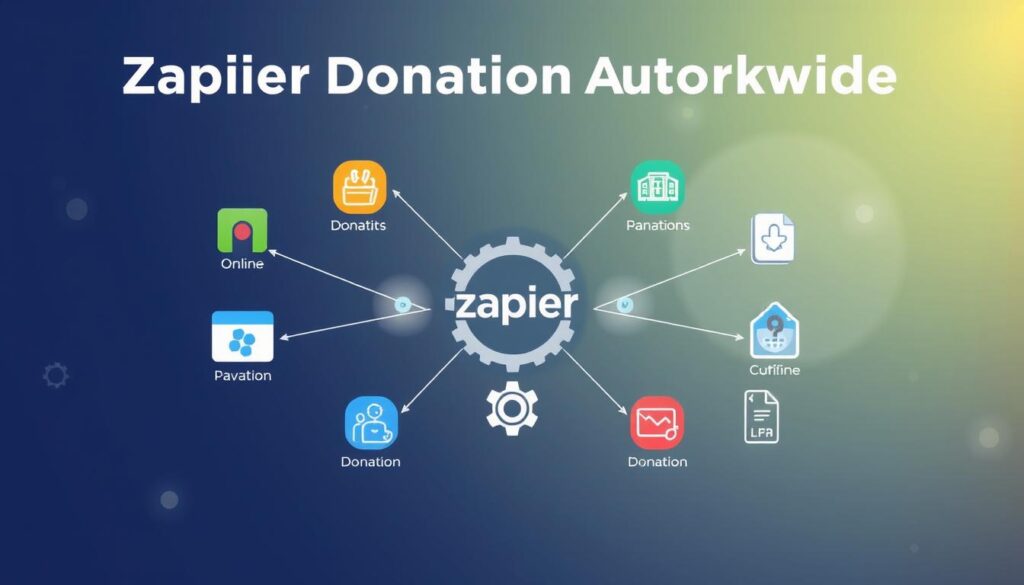
A detailed Zapier donation automation workflow diagram, illustrated in a clear and organized manner. The foreground features vibrant icons representing various online donation platforms, connected by arrows symbolizing the automated workflow. In the middle, a central node signifies Zapier, embellished with gears to convey automation. The background showcases a soft gradient with subtle light effects, emphasizing a tech-savvy atmosphere. Use a wide-angle perspective to create depth, and ensure the lighting is bright and inviting, suggesting efficiency and ease of use. The mood is professional yet approachable, aimed at promoting innovative solutions for fundraising in horse welfare campaigns. No text, watermarks, or other distractions should be present.

Imagine a supporter signing your Change.org petition. That’s Event A. Before, someone would have to manually add their email to a list and send a thank-you note.

With Zapier, that signature is a signal to start. It sets off a ‘Zap’—a series of automated steps. Here’s a typical sequence:

  • Step 1: The petition data goes to your Mailchimp audience for updates.
  • Step 2: A new contact is added to your donor CRM.
  • Step 3: Your fundraising team gets a Slack alert with the supporter’s details.

This isn’t just automation; it’s intelligent stakeholder conversion. You’re not just adding emails; you’re building a relationship. The supporter becomes a tracked, nurtured lead in seconds. That’s advanced content and data management.

Horse welfare faces tough economic realities. Feed, vet bills, and land costs add up. Zapier helps by reducing donor drop-off. No more “I meant to donate” or “I never got a follow-up.”

Your CRM and email platform are like two paddocks. Zapier opens the gate at the right time, moving donors from awareness to commitment. This turns passive supporters into active stakeholders.

In practice, your team spends less time on admin and more on strategy. The economic efficiency is key. It’s what keeps a rescue sustainable, not just scrambling.

Analytics and Optimization

Campaign automation without optimization is like feeding a horse without checking its weight—you’re going through the motions blind. You might be posting regularly, but are you actually moving the needle? The analytics dashboard is where your social media scheduling strategy either proves its worth or reveals its embarrassing flaws.

Think of these metrics as your campaign’s biometric sensors. They’re the digital equivalent of checking a horse’s pulse, respiration, and temperature. Is your content healthy and thriving, or is it showing signs of distress?

Vanity metrics are the sugar cubes of the data world—sweet but nutritionally empty. A thousand likes feel good, but did anyone click your adoption application link? Real optimization means tracking what actually matters for horse welfare.

Let’s break down the critical metrics. Engagement rate tells you if people are listening. Click-through rate shows if they’re taking action. Conversion rate reveals if they’re actually helping. Each data point is a piece of evidence in your advocacy case.

The most powerful insight? Timing. Your analytics will show you exactly when your audience is most receptive. Maybe rescue stories perform best on Sunday evenings when people are reflective. Perhaps urgent calls for foster homes get more traction on Wednesday afternoons.

Metric What It Measures Welfare Campaign Insight Optimization Action
Engagement Rate Likes, comments, shares relative to reach Which messages resonate emotionally with your audience Double down on content themes that spark conversation
Click-Through Rate (CTR) Percentage who click your links How effective your calls-to-action are for donations or petitions Test different button colors, text, and placement
Conversion Rate Visitors who complete a desired action Actual impact on adoption applications or volunteer sign-ups Simplify forms and reduce steps in the conversion process
Audience Growth Rate New followers versus unfollows Whether your advocacy is expanding its reach sustainably Identify which content attracts loyal supporters versus casual scrollers
Link Saves/Bookmarks Users saving your content for later Which resources (care guides, legislation info) people find valuable Create more “evergreen” educational content on high-save topics

Here’s where campaign automation gets intelligent. Most scheduling tools let you A/B test different versions of the same message. Try two different images for your fundraising post. Test emotional versus factual headlines for your legislative alert.

The data doesn’t lie. One version will consistently outperform the other. Now you’re not just automating posts—you’re automating what actually works. That’s the difference between shouting into a canyon and having a targeted conversation at the trough.

Real-time monitoring is your early warning system. Notice a sudden spike in negative comments? Your community manager needs to engage immediately. See a post going viral? Boost it with a small ad spend to maximize the moment.

Optimization is an ongoing process, not a one-time setup. Review your analytics weekly. What’s working this month that didn’t work last quarter? Audience behavior shifts like weather patterns—you need to adjust your social media scheduling according.

The ultimate goal? Turning data into better outcomes for horses. When you see that a particular story leads to more foster applications, you know which narratives to amplify. That’s how analytics become welfare indicators, not just vanity stats.

Your campaign automation should evolve based on what the numbers tell you. It’s the scientific method applied to advocacy: hypothesize, test, measure, refine. The tools give you the lab equipment, but you’re the researcher asking the right questions.

Ethical Automation Guidelines

Can automation be ethical in advocacy work? We’re not talking about scheduling posts or syncing calendars. We’re talking about using digital advocacy tools to help those who can’t speak for themselves.

The tension is real. On one hand, campaign automation lets small teams do big things. On the other, it risks making compassion a commodity. The solution isn’t to give up on tools. It’s to create rules for their use.

Think of these as the three commandments for the modern advocate. They keep our humanity in control while the software handles the details.

Rule 1: Never Automate Empathy. This is the non-negotiable line. A system can send many donation receipts. But it can’t write a heartfelt thank-you for a story about a rescued mare. Automation is good at transactions but fails at connection.

Your campaign automation should handle the “what” and “when.” But a human must always control the “why” and “who.” Schedule the legislative alert. But personally respond to the volunteer who shares their childhood horse story. The tools create space for the real work.

Rule 2: Transparency Is Your Shield. Be upfront about your digital machinery. A simple disclaimer works wonders: “We use automated alerts to track harmful bills in real time.” This builds trust instead of breeding suspicion.

Audiences are savvy. They can smell a bot from a mile away. When you disclose your digital advocacy tools, you’re not admitting to shortcuts. You’re showing off your strategy. It says, “We’re using every ethical advantage to win for the horses.”

Rule 3: Conduct Regular Ethics Audits. Is your shiny new campaign automation causing harm? Is it creating an inhuman pace that burns out your team? Are responses feeling generic and cold?

Set a quarterly reminder. Gather your team and ask one brutal question: “Are these tools serving our mission, or have we started serving the tools?” The metrics might look great. But the soul of your campaign might be withering.

This is where philosophy meets practice. Ethical automation in animal welfare mirrors ethical farming. Technology should reduce stress and amplify care. It should never create distance or indifference.

Your digital advocacy tools are leverage. They’re force multipliers. But the force must always be directed by human conscience. The algorithm suggests a posting time. You choose the message that goes in that slot.

The software manages the calendar. You decide which stories are worth telling. This balance transforms campaign automation from a liability into your greatest asset. It lets you fight smarter without fighting colder.

Remember, the horses don’t care about your open rates. They care about outcomes. Our tools must bridge that gap, not widen it. Use them to clear the administrative underbrush. Then step into the clearing and do the work that only humans can do.

Crisis Response Automation

A welfare scandal breaks online. Your inbox floods. The old way of writing statements in a rush is a disaster. Today, automation is your first line of defense.

Your content management system is like a digital emergency kit. With tools like Hootsuite, you can have ready-made messages ready to go. This isn’t just about robots. It’s about making sure the right info gets out fast.

The key is integration. Set up alerts to act fast when your name is mentioned in bad news. Tools like Zapier can send volunteer sign-ups straight to your CRM. This turns anger into action.

For more, look into AI tools. TrueFan AI can spot negative vibes early. It’s like having a warning system. Imagine stopping a rumor about horse neglect with videos for that area.

Your content management plan should be ahead of the game, not just reacting. Plan your posts to head off criticism. Build a library of solid responses. This way, you can shape the story, not just follow it. Is your social media scheduling ready to lead in a crisis?

Categories
Digital Tools and Platforms

Best Digital Platforms to Organize Horse Racing Welfare Protests

The image of protestors waving handwritten signs feels old-fashioned, like a paper betting slip at the Kentucky Derby.

In today’s world, animal advocacy has changed. It’s not just about shouting on a picket line. It’s about using digital tools to make a difference. The fight for horse racing welfare now uses digital platforms, not just loud voices.

Studies, like those from Animal Charity Evaluators, show the power of protests. They can grab media attention and start important conversations quickly. But, one mistake can cause a big backlash, hurting all the hard work done before.

The key to success? Your technology. Choosing the right Digital Protest Platforms is like picking the best jockey. It’s about control, clear communication, and timing.

This isn’t about shouting into the wind. It’s about using smart, effective pressure where it counts. So, pick up your phone. The next big protest for horse welfare might start with a message in your DMs.

Platform Selection

Choosing your app is more than a simple decision. It’s a bold statement, like declaring war or peace. Your first click is your first move in a high-stakes game of digital organizing. Are you aiming for a big crowd or a small, tight group?

Research from ACE on nonviolent action shows success is not random. It depends on matching your tactic to your target. Are you aiming for a big splash or a lasting change? Your strategy isn’t just a theory. It’s your tech choice.

Think of it as picking your battlefield. A platform for rallying your followers might not reach the wider public. Getting this wrong is like bringing a picnic blanket to a fight.

So, we start with a tough question: Is this about awareness, action, or attrition?

Awareness campaigns focus on getting attention. They need to be big, shareable, and grab public interest. Think viral videos and trending hashtags.

Action campaigns aim to mobilize people. They need clear calls to action, detailed plans, and turning online anger into real-world action. This is where organizing protests gets serious.

Attrition is the long-term approach. It’s about keeping up pressure, doing deep research, and wearing down resistance through constant, focused advocacy.

Your goal determines your digital home. The table below helps match your ambition with the right platform.

Protest Goal Primary Need Digital Organizing Style Ideal Platform Type
Awareness (Media Salience) Maximize public reach & viral impact Broadcast, public-facing, visual Public Social Feeds (Facebook, Twitter, Instagram)
Action (Mobilization) Coordinate logistics & real-time updates Task-oriented, rapid-response, closed-group Chat Apps & Event Hubs (Discord, Eventbrite)
Attrition (Policy Change) Secure communication & long-term planning Clandestine, strategic, document-heavy Encrypted Channels & Collaboration Tools (Telegram, Signal)

See the difference? Facebook is great for big crowds but bad for secret plans. Discord is perfect for urgent action but not for simple petitions.

Good protest coordination means using the right tool for your cause. Success in nonviolent action comes from strategy, not just shouting. Your platform choice is your first strategy. It tells everyone what kind of fight you’re in for.

Now, let’s look at the specific tools in this digital stable.

Facebook Groups vs Events for Track Protests

The success of a track protest often depends on a simple choice: Group or Event? It’s not about the platform, but how you use it. A Group builds your army, while an Event deploys it.

A Facebook Group is like your campaign headquarters. It’s where strategies are made, resources shared, and sympathizers become activists. Here, your horse welfare campaigns story grows. The Group is a community hub, existing between actions.

A Facebook Event is like your call to action. It’s about logistics, numbers, and showing strength. Even if people are initially upset, the Event makes your cause known.

Source 2 data guides your strategy. Protests boost media attention and public talk. They might face initial backlash, but media coverage and support grow. The Group helps your community through tough times, and the Event turns commitment into action.

Using an Event without a strong Group is like charging without an army. You might get some attention, but not a movement. The Group gives depth, identity, and resilience. The Event creates the spectacle the media loves.

Here’s a simple table showing the difference:

Feature Facebook Group Facebook Event
Purpose Community building & narrative shaping Logistical coordination & public mobilization
Best For Long-term education & activist conversion Specific protest dates & immediate action
Content Type Discussions, articles, internal resources Time, place, instructions, media-ready visuals
Engagement Style Deep, conversational, relationship-focused Transactional, action-oriented, shareable
Outcome Committed core of activists High headcounts & media salience

This digital organizing is key to successful horse welfare campaigns. The Group builds a movement, and the Event makes it visible. This creates a loop: media coverage boosts the Group, which grows your base for the next Event.

This is the heart of online activism. It’s not just shouting; it’s building a message in the Group and amplifying it with the Event. Facebook is a suite of tools. The Group is your training ground, and the Event is your race day. Master both, and you’ll dominate the track.

Discord Real-Time Coordination

Modern protests need a system to move from planning to action. Discord’s real-time setup is that system. It turns digital organizing into action on the ground.

Think of Discord as your secret war room for protest day. It’s not about sharing messages. It’s about precise planning and action.

A sleek, modern Discord protest coordination dashboard displayed on a high-resolution monitor, featuring real-time updates and a vibrant chat interface. The foreground showcases organized channels dedicated to specific aspects of horse racing welfare protests, with colorful icons and user avatars in professional attire. In the middle, graphs and statistics relevant to the protests are illustrated, blending seamlessly with live chat bubbles exchanging strategies among users. The background depicts a blurred office setting with soft lighting, creating a focused yet collaborative atmosphere. The overall mood is energetic and determined, with a sense of urgency conveyed through the bright colors and dynamic layout, emphasizing community and activism. The scene is captured from a slightly elevated angle to provide a comprehensive view of the dashboard's features.

Imagine spotters at Santa Anita sending updates through Discord. Legal observers and media liaisons also use it. Each has their own space, yet they all connect instantly.

The ACE research on the Grand National disruption shows Discord’s power. Animal Rising activists needed to act fast. Discord helped them work together seamlessly.

Voice channels are like briefing rooms. Activists get final instructions before moving. Text channels keep important info for later. This setup is key when plans change suddenly.

See how Moroccan Gen Z activists used Discord to connect digital dreams with reality. Their story is similar to what horse racing welfare groups face. Being able to adapt in real-time is what makes a protest successful.

Discord is key for protest coordination because of:

  • Instant Communication: Messages are sent in milliseconds
  • Channel Organization: Separate spaces for different teams
  • Voice Flexibility: Easy switch from text to voice
  • Information Archiving: Every update is saved automatically

Discord is perfect for situations where timing is everything. A delay of just five minutes can be disastrous. It makes communication seem almost telepathic among activists.

The platform helps keep things organized. Unlike messy group chats, channels keep things focused. This means logistics and legal updates don’t get lost in media messages.

At Santa Anita protests, this focus was critical. Teams needed clear channels for their tasks. Discord made sure of that, keeping everything cohesive. The result was actions that seemed spontaneous but were actually well-planned.

Remember, Discord isn’t for building your movement. It’s for deploying it with precision. It’s your command center for turning plans into action.

Effective protest coordination needs more than good intentions. It needs systems that can handle real-world chaos. Discord is that system, making it a key tool for modern activism.

Telegram Secure Communication

When planning horse racing welfare protests, some conversations need to happen in secret. Telegram is the platform that keeps your sensitive talks safe. It offers encrypted secret chats and self-destructing messages for your most private discussions.

Why do we need such secrecy? History teaches us a hard lesson. The Stop Huntingdon Animal Cruelty (SHAC) campaign was very effective but faced a harsh government crackdown. This crackdown changed the rules for anti-activist groups and led to severe consequences.

Today, it’s clear that your main channels might be monitored. This is not just a theory but a basic rule for serious online activism. Telegram helps keep your conversations private. It’s the perfect place to discuss legal matters or share sensitive information.

Think of Telegram as your secret backchannel. While Discord and Facebook are great for public actions, Telegram keeps your plans safe. This way, your public actions won’t be compromised.

Telegram’s features are like something out of a spy novel. It offers end-to-end encryption and self-destructing messages. These features are essential for those involved in online activism and want to protect themselves.

For example, planning civil disobedience or coordinating legal observers? Telegram keeps your conversations safe. It’s also great for discussing sensitive strategies without fear of leaks.

Telegram makes protest coordination more complex and secure. Your public platforms handle the mobilization, while Telegram keeps the strategy and logistics safe. This approach is key for modern movements to stay protected.

In the world of animal welfare advocacy, secure communication is not just a luxury but a necessity. Telegram provides that essential protection, allowing your movement to plan without being targeted. Sometimes, the most important conversations need to happen in secret.

EventBrite Physical Demo Organization

Social media is like the megaphone of protests, while EventBrite is the stage manager. It handles the behind-the-scenes work that turns chaos into action. While everyone wants to give the big speech, someone has to make sure there are enough chairs. For your physical demonstration, that someone is EventBrite.

Waivers, capacity limits, and reminder emails might not be exciting. But for horse welfare campaigns, they’re essential. They help turn a disorganized group into a well-organized movement. EventBrite makes your protest look like a professional event, not a spontaneous gathering.

Requiring a free RSVP is not about keeping people out. It’s about making them commit. The email address you get is very valuable. It can turn a one-time attendee into a lifelong supporter.

Successful protests don’t just make noise; they build lists. Research shows that demonstrations can lead to more sign-ups and donations. EventBrite helps turn yesterday’s protester into tomorrow’s donor.

What does this logistical backbone do for your horse welfare campaigns?

  • Controlled Capacity: No more guessing games. Set a maximum that matches your permit and safety plan.
  • Automated Communication: Send weather updates, legal guidelines, or last-minute location changes with one click.
  • Data Capture: Build that critical email list with every RSVP.
  • Professional Presentation: A branded event page signals seriousness to both attendees and observers.

This isn’t just about convenience. It’s about strategy. When you cap attendance, you manage expectations and safety. When you send reminders, you boost turnout. When you capture data, you extend the campaign’s lifespan far beyond the protest day. This systematic approach is the essence of effective digital organizing.

The platform helps you navigate the practical realities that can make or break a demonstration. Rain forecast? Send an update. Legal team issues new guidelines? Distribute them instantly. Need volunteers for specific roles? Create different ticket types. It’s the difference between hoping people show up and knowing they will.

Think of it this way: the protest itself is the dramatic third act. EventBrite handles the casting call, rehearsal schedule, and ticket sales. It ensures your message isn’t drowned out by logistical chaos. For horse welfare campaigns seeking lasting change, this professional foundation matters immensely.

Ultimately, EventBrite signals that your movement is here for the long haul. It tells supporters, opponents, and the media that you’re organized, serious, and building something sustainable. In the theater of protest, it’s what happens backstage that determines whether the show goes on—or falls apart before the curtain rises.

Santa Anita Coalition Case Study

California’s horse racing industry has faced intense scrutiny. Santa Anita became a focal point for controversy. This intense focus brought together unlikely allies.

Activists, trainers, and breed associations united for change. They moved from protest to reform. This shift marked a new era in horse welfare campaigns.

A dynamic scene depicting a Santa Anita coalition horse welfare campaign. In the foreground, a group of diverse individuals in professional business attire passionately holding signs advocating for horse welfare. The middle ground features vibrant banners showcasing various slogans related to horse safety and racing ethics. In the background, the iconic Santa Anita Park racetrack, with rolling green hills and clear blue skies creating a hopeful atmosphere. The lighting highlights the determination on the faces of the activists, with a warm golden hour glow casting long shadows. The angle captures the energy of the gathering, emphasizing their commitment to change. The overall mood is one of unity and strong advocacy for equine welfare.

A digital coalition formed, using private Facebook Groups. It included a trainer using Equine MediRecord (EMR) and officials from the Arabian Racing Association of California (ARAC). They all aimed for better standards.

This group wasn’t just about protesting. It focused on finding solutions. They discussed how to improve the industry together.

The Coalition’s Digital Toolbox

This united front used digital tools for action. Their efforts were divided into three main areas.

Stream of Action Digital Tool Used Strategic Outcome
Evidence Assembly Shared cloud folders, EMR data exports Creates an irrefutable, data-driven case for specific reforms, moving arguments from emotional to factual.
Unified Messaging Drafting channels in Discord or Slack Ensures every member—from insider to advocate—sings from the same hymnbook when addressing the CHRB or media.
Support & Coordination Private announcement channels, encrypted direct messages Provides safe haven for whistleblowers and coordinates tangible support for individuals pushing for change within the system.

The CHRB webinar on EMR was a turning point. Over 120 trainers attended, showing support for transparency. It was a clear signal of change.

The ARAC’s backing was genuine. They stood up for better care for their horses. This coalition used online activism to improve the industry.

From Case Study to Blueprint

The Santa Anita case offers a blueprint for change. Modern online activism now balances confrontation and collaboration. It uses insider knowledge to push for change.

The digital platform is key. It shares data and organizes actions. It drafts statements together, all in one thread.

This is the future of horse welfare campaigns. It’s about working together, not just pointing fingers. The message is clear: “Here’s the data, here’s the solution, and we’re ready to help.”

Legal Considerations

Think of the law as the final hurdle in your protest coordination. A great campaign can falter if legal issues aren’t addressed. Your digital actions create a permanent record. Every post, message, and event page can be used as evidence.

The SHAC campaign is a chilling example. Their tactics were very effective but led to new laws against activists. This shows that winning can sometimes give your opponents new tools.

Your digital footprint starts when you create a Facebook event. This is when your legal risks begin. Law enforcement can access public groups without a warrant. Assume everything is being saved.

To stay safe, practice digital hygiene. This is about following rules, not being paranoid. Teach everyone about their rights. Use encrypted apps for secret plans, but never discuss illegal topics openly. The ACE research shows that peaceful, disciplined actions are best.

Also, know the rules of your location. Trespassing is different from peaceful assembly. The racing industry has strict rules, like the Absolute Insurer Rule for trainers. You should understand these rules too.

Have a digital legal observer in your team. They should watch what you say and be ready to share “know-your-rights” guides. Your digital efforts must include a plan for legal crises.

Platform Primary Legal Risk Mitigation Tactic
Facebook Groups/Events Public evidence gathering; incitement claims. Keep tactical discussions vague; use “Go Live” for real-time public observation only.
Discord Subpoena for server logs; inflammatory chat history. Establish clear channel rules; purge sensitive logs regularly; use voice for transient talk.
Telegram Perception of secrecy leading to heightened scrutiny. Use for logistics only; avoid illegal speech even here; leverage auto-delete timers.
Eventbrite Creating a formal record of intent for all attendees. Frame event description in purely educational or vigil terms; avoid explicit calls to blockade.

Smart digital organizing today means planning for legal scrutiny tomorrow. It’s not about suppressing passion. It’s about directing it so effectively that the only thing the opposition can prosecute is your success.

Platform Integration Strategy

Knowing how to use tools is one thing. But making them work together is where the real power is. A Facebook Group, a Telegram channel, and an EventBrite page alone can lead to confusion. It’s like having separate kingdoms instead of one united place.

Here’s a smart move: don’t let your platforms be isolated. Look at how industries like Racing Victoria solved their problems. They used a single platform to connect everything.

Your group should aim to connect, not separate. You want to grow your voice by working together. This means using your strength to overcome any obstacles.

The key is a shared operational hub. Start with a public Google Calendar on a simple website. This keeps everyone on the same page, avoiding wasted efforts.

Then, manage your people well. Use a CRM like Airtable to keep track of supporters. This way, you can send messages to the right people without breaking privacy rules.

This creates a system where each platform has its role:

  • Facebook spreads the word and shapes the story.
  • EventBrite handles the details of in-person events.
  • Discord helps with quick decisions on the ground.
  • Telegram keeps important talks private.

All these tools should send data back to your main hub. This lets you learn and plan better for the future. This is how you turn tools into a winning strategy for protest coordination.

Crisis Response Protocols

So your digital protest machine is humming. Facebook Events are set. Discord is buzzing. Then the local news calls your activists “radicals.” Public opinion dips. What now?

Every horse welfare campaign needs a crisis playbook. The data shows initial backlash is almost guaranteed. Your online activism must include a rapid response protocol. This makes your movement professional.

Think of it as digital triage. Have pre-written statements ready in a shared Google Doc. Assign a team to monitor sentiment across platforms. Create a “crisis-comms” channel in your Discord server for instant coordination.

Train your Facebook Group admins. Their job is to moderate inflammatory comments, not fan the flames. A single rogue post can worsen the narrative.

This is where your platform integration pays off. Use Telegram for secure updates to your legal team. Use your main social channels to broadcast calm, factual counter-messaging.

The goal isn’t to avoid the storm. It’s to sail through it. A coordinated crisis response turns a short-term PR headache into a display of strength. It shows your horse welfare campaigns are professional, resilient, and built to last.

Public opinion can shift back. Media attention can bring new sign-ups. But only if you’re prepared to manage the story from minute one. Your digital command center isn’t just for planning the protest. It’s for surviving the aftermath. That’s the final piece of modern online activism.

Categories
Social Media Advocacy Strategies

Map personas and value exchange for followers

Defining your brand’s purpose and tone is like setting the stage for a blockbuster show. It’s that important. Just as Starbucks makes its customers feel like part of a cozy, global coffee club on Instagram, your brand can too.

But, how do you achieve this level of community engagement? It starts with understanding your audience. Then, you craft a consistent brand voice that resonates with them. On platforms like Twitter, where conversations are dynamic and fast-paced, having a clear tone is key.

By mapping your personas and value exchange, you can create a recognizable and relatable community. This isn’t just about broadcasting your message. It’s about fostering a dialogue that makes your followers feel seen and heard.

IG features: Stories, Broadcast Channels, Collabs, Guides

Instagram’s features, like Stories and Guides, help us connect in many ways. Each feature has its own benefits for building a community.

Stories have changed how we share on Instagram. You can post content that vanishes in 24 hours. This makes your posts feel special and exclusive.

Leveraging Instagram Features for Community Building

So, how do you use these features to build a community? Let’s talk about Collabs. Working with other accounts can bring in new followers. It’s good for both of you, as it grows your audience and makes your content more credible.

Guides are great for organizing content around a theme. They’re perfect for educational stuff or showing off user content. This helps new followers find and join your community.

Let’s compare different Instagram features and how they help build a community:

Feature Community Building Engagement Metrics
Stories High – Behind-the-scenes, polls, questions Swipes, replies, drops
Collabs High – More reach, credibility Likes, comments, new followers
Guides Medium – Organized content, educational Saves, shares, comments

By using these features well, you can create a more engaged and loyal community on Instagram.

X features: Lists, Communities, Spaces, long posts

The Twitter/X platform offers many features to boost community interaction. These include Lists, Communities, Spaces, and long posts. They are not just tools but the foundation of a lively community. Just as a chef uses different ingredients to make a dish, community builders use Twitter/X’s features to create an engaging experience for their followers.

Twitter/X Features for Enhanced Community Interaction

Let’s explore how these features can be used. Lists let you pick content from various users, making a personalized feed. It’s like making a playlist for your favorite songs. It adds a personal touch that makes the experience better.

Communities on Twitter/X are like groups for special interests. They help followers connect over common topics. It’s like a dinner party where everyone shares a common interest. The conversation flows better, and connections are made.

Spaces are Twitter/X’s live audio chats, like Clubhouse rooms. They offer real-time talks, allowing for quick feedback. Hosting a Space is like a live podcast or Q&A session. It’s dynamic and helps connect with your audience deeper.

Long posts let you share detailed content, like blogging but on Twitter/X. This feature is great for deeper discussions and sharing complex ideas. It’s a key tool for building a community.

By using these features well, community builders can make a rich and engaging experience for their followers. It’s about combining these tools to create a community that’s as lively and diverse as its members.

Onboarding rituals: welcome threads, IG Highlights

Starting a social media community needs a solid base: onboarding rituals. These rituals help new followers feel part of the group. We’ll look at how brands can use welcome threads on Twitter/X and IG Highlights on Instagram to make a great first impression.

Creating Effective Onboarding Rituals for New Followers

Onboarding rituals are more than a nice gesture; they’re a way to build loyalty. By welcoming new followers with threads or Highlights, brands can make them feel at home. This encourages them to get involved.

Here are some tips for making onboarding rituals work:

  • Personalization: Make your welcome messages speak to what new followers like.
  • Storytelling: Share your brand’s story and values through stories.
  • Clear Guidance: Show new followers how to interact with your content.

For example, a brand can use Instagram Highlights to show off community rules, top content, and member features. On Twitter/X, a welcome thread can introduce new followers to your brand’s history, values, and how to join in.

By using these rituals, brands can greatly improve the experience for new followers. This makes it more likely they’ll become active and engaged community members.

Conversation architecture: prompts, polls, Q&As

Building a strong community on social media starts with the right conversation setup. It’s about making interactions fun, meaningful, and fitting for your audience.

Brands can use prompts, polls, and Q&As on Twitter and Instagram to spark talks. These tools help uncover what your community likes and cares about.

Designing Conversations that Drive Engagement

Creating engaging conversations requires being intentional and creative. Mix up your approach with prompts that invite sharing, polls to check opinions, and Q&As for clear answers.

For example, Twitter is great for Q&A sessions with experts. This boosts engagement and makes your brand a go-to for info.

Instagram is perfect for interactive content. Use the “Question Sticker” in Stories to ask followers about their views on topics.

  • Use open-ended prompts to get followers to share their thoughts and stories.
  • Make polls to see what people think about important issues and start discussions.
  • Host Q&A sessions with experts to share valuable knowledge.
  • Use Instagram Stories and Twitter Spaces for live chats.

By using these strategies, you can build a lively and interactive community. This community will be eager to join in and share their thoughts.

Moderation and community standards toolkit

Moderation is key to keeping online spaces friendly and helpful. It’s important for brands to have a strong moderation plan. But why is moderation so vital, and how can brands set up a good moderation system?

Establishing a Moderation Framework for Community Health

A solid moderation framework is essential for a healthy community. It keeps out bad behavior and makes sure everyone feels welcome. So, how do you create such a framework?

First, you need to set clear community standards. These should tell people what’s okay and what’s not. It’s also important to share these standards with everyone. But, just having rules isn’t enough; they must be followed fairly.

Good moderation uses both tech and people. AI can spot problems, but humans are needed for tough decisions. They need to understand and empathize.

To show what a moderation framework includes, look at this table:

Component Description Tools/Methods
Community Standards Clear guidelines for community behavior Written policies, community guidelines document
Content Moderation Reviewing user-generated content for compliance AI-powered content review tools, human moderators
User Reporting Mechanism for users to report violations Reporting buttons, community forums for feedback

With a good moderation plan, brands can keep their community safe and friendly. This makes users happy and helps the brand’s image.

Can a brand ignore moderation? The answer is no. A well-moderated community brings many benefits. It keeps users engaged, reduces fights, and builds loyalty.

Volunteer roles: moderators, note-takers, clip editors

Empowering community members is key for lasting engagement. It’s not just good vibes; it’s essential. By giving them roles, you share the work and build a sense of belonging.

Exploring volunteer roles can transform your community. Moderators are vital for keeping discussions friendly and focused. They fight off spam and negativity, making your community a safe space for everyone.

Key Benefits of Volunteer Roles

Volunteer roles do more than just add extra help. They make your community more active and caring. Here’s why:

  • Increased Engagement: Members who help out tend to get more involved.
  • Diverse Perspectives: Volunteers bring new ideas, making your community richer.
  • Leadership Development: These roles help spot and grow future leaders.

A vibrant community meeting scene showcasing volunteer roles in action. In the foreground, a diverse group of individuals—two moderators engaged in constructive discussion, a diligent note-taker meticulously jotting down ideas, and a focused clip editor on a laptop, reviewing video snippets. The middle ground features a warm, inviting setup with colorful sticky notes and laptops spread across a large table, symbolizing teamwork and collaboration. In the background, soft, natural lighting filters in through windows, illuminating potted plants and a bulletin board filled with community announcements, creating an uplifting atmosphere. The camera angle is slightly elevated, capturing the interaction and energy among volunteers, emphasizing their commitment to community building efforts on social media platforms.

Now, let’s see how different roles can make a difference. Below is a table showing common roles and what they do:

Role Responsibilities Impact
Moderators Monitor discussions, enforce community guidelines Maintains a safe and respectful environment
Note-takers Document key discussions, decisions, and actions Ensures transparency and keeps members informed
Clip Editors Create engaging content from community discussions Helps in promoting the community and its activities

Empowering community members through volunteer roles is a smart move. It makes managing your community easier and makes it a better place for everyone.

Cross-posting rules without fatigue

Cross-posting can boost your message but might cause fatigue if not done right. The secret to good cross-posting is knowing each platform’s unique traits and adjusting your content strategy.

To dodge cross-posting’s downsides, you need a content strategy that fits each social media’s special features. It’s not just about sharing the same stuff everywhere. It’s about weaving a story that speaks to different people.

Adapting Content for Different Platforms

Creating content for social media is like a jazz musician changing a melody for different styles. You might make a LinkedIn post shorter for Twitter or turn an Instagram pic into a YouTube video.

  • Know who you’re talking to and what style fits each platform.
  • Change your content to match each channel’s unique features.
  • Keep your message the same but change how you share it.

For more tips on cross-posting, check out our guide on cross-posting social. It has practical advice to help your content reach more people.

With a smart cross-posting plan, you can grow your audience, get more engagement, and avoid the tired feeling from posting too much. It’s all about finding the right mix of consistency and creativity.

Accessibility and time-zone inclusivity

The world is getting more connected, making it vital to make community activities open to all. Today, a community’s strength is not just about its size. It’s also about how well it brings together people from different places.

Making community activities accessible means more than just translating or adding captions. It’s about making sure everyone feels welcome. This includes making sure digital platforms work with tools for people with disabilities and following accessibility rules.

Strategies for Inclusive Community Building

To be inclusive across time zones, communities can try a few things. One way is to rotate the timing of events so everyone can join in at a good time. Another is to use asynchronous communication tools, letting people join in whenever they can.

Strategy Description Benefit
Rotate Event Timing Schedule events at different times to accommodate various time zones. Increases participation from a broader geographical area.
Asynchronous Tools Use digital tools that allow members to participate at their convenience. Enhances engagement by allowing members to contribute at their preferred time.
Accessibility Features Implement features like captions, translations, and compatibility with assistive technologies. Makes the community more inclusive for members with disabilities or language barriers.

By using these strategies, communities can be open and welcoming to everyone. This helps create a sense of belonging for people all over the world. As we grow global communities, making them accessible and inclusive is essential for their success.

Monthly rituals: AMAs, wins threads, offline meetups

Monthly rituals are key to a strong online community. They keep everyone involved and make people feel like they belong. This is something I’ve learned from my own community-building experiences.

So, why do monthly rituals work so well? They offer a steady schedule for people to connect. This can be through an AMA (Ask Me Anything), a wins thread for sharing successes, or an offline meetup. These events create excitement and anticipation.

Sustaining Engagement through Rituals

Starting monthly rituals takes some planning, but it’s worth it. Here are some tips to help you get started:

  • AMAs: Invite experts or leaders for interesting talks and insights.
  • Wins Threads: Encourage sharing of achievements to build a supportive atmosphere.
  • Offline Meetups: Plan in-person gatherings to deepen connections and make memories.

Adding these rituals to your community plan keeps members active, motivated, and connected. Remember, consistency and flexibility are key as your community grows.

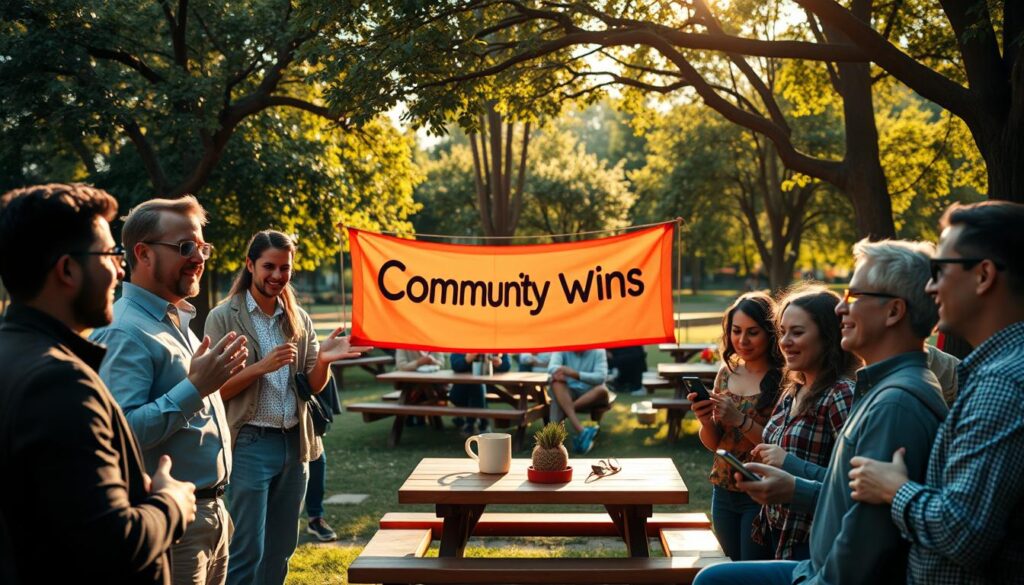
A vibrant scene depicting a lively community ritual in a sunlit outdoor park setting. In the foreground, a diverse group of six individuals, dressed in professional casual attire, enthusiastically engage in an Ask Me Anything (AMA) session, with one person speaking animatedly while others listen intently, showcasing inclusiveness. In the middle of the composition, a colorful banner reading “Community Wins” flutters gently in the breeze, surrounded by a circle of people sharing their achievements via smartphones. In the background, a cozy gathering area with picnic tables and greenery, coupled with soft, warm lighting creating an inviting atmosphere, hints at off-line meetups. The perspective is slightly elevated, capturing the energy and camaraderie of a connected community event, radiating positivity and unity.

The best communities find a rhythm that works for them. Try different rituals to see what your community likes. Be open to new ideas and see what sticks.

Community health metrics dashboard

Building a thriving online community is complex. A key question is: how do we measure success? The answer is a community health metrics dashboard. It gives us valuable insights into how our community works.

A good dashboard lets brands track important metrics. This includes engagement rates, how many new members join, and how well content does. By watching these, brands can see what’s working and what’s not. This helps them make better choices for their community.

Key Performance Indicators for Community Health

So, what should you watch? Keep an eye on user retention, how long people stay, and what they say. These metrics help brands understand their community better. They can then tackle any issues that come up.

Using a community health metrics dashboard helps brands improve their community. They can make it more active, welcoming, and strong. Are you ready to make your online community the best it can be?