Categories
Social Media Advocacy Strategies

Choose goals: awareness, persuade, or mobilize

Defining your goals is the first step in creating an effective campaign. Are you trying to raise awareness, persuade your audience, or mobilize them to take action? According to Gillian Caldwell, a pioneer in advocacy, understanding your objectives is key to a successful strategy.

Gillian Caldwell’s experience with “Bought & Sold” shows how important a clear goal is. Whether it’s raising awareness or mobilizing support, your goals shape your content‘s tone, style, and how it’s shared.

By picking the right goals, you can make a strong advocacy strategy. This focus helps you tell a story that connects with your audience.

Short vs Long Form: Where Each Wins

TikTok and Instagram Reels have changed how we share messages. Short-form video is now key. Knowing what works best is vital for reaching new people.

Short videos are big on TikTok and Instagram Reels. Ryan Stygar, a lawyer with a big TikTok following, says they’re great for finding new viewers. They make it easy to share messages in a way that grabs attention.

Understanding the Strengths of Short-Form Video

Short-form video is great at getting a point across quickly. It helps advocacy groups share complex ideas simply. This way, more people can understand and get involved.

Want to learn more about short and long videos? Here’s more on how they differ and when to use each in marketing.

Short videos are perfect for today’s fast social media world. They’re quick and easy to watch. Plus, they let creators try out many styles, from funny to serious, to reach everyone.

Story Formula: Hook, Human, Proof, Action

The power of advocacy video is in telling a story that hooks, makes us human, proves, and prompts action. It’s about creating a narrative arc that touches our hearts. This makes your message more impactful.

Creating a compelling story involves several key elements. First, you need a hook to grab attention. This could be an interesting fact, a provocative statement, or an emotional appeal. Next, you introduce the human element, making the issue relatable and personal.

Then, you provide proof with evidence or testimonials to support your claim. Lastly, you end with a clear call to action, guiding your viewers on what to do next.

Crafting a Compelling Narrative

To effectively craft your narrative, consider the following:

  • Understand your audience and tailor your story to resonate with them.
  • Use a mix of emotional appeal and factual information to keep your viewers engaged.
  • Keep your narrative concise and focused, avoiding unnecessary details.
  • Use visuals and storytelling techniques to make your message more memorable.

By incorporating these elements and techniques into your advocacy video strategy, you can create a powerful narrative. This narrative not only engages your audience but also inspires them to take action. Remember, the goal is to make your story relatable, credible, and actionable.

Script Templates for 15s, 30s, and 60s

A good script is key to a successful video advocacy campaign. It helps attorneys make content that grabs attention. Megan Braverman, owner of Berbay Marketing & PR, says a solid script is vital. It keeps content engaging and follows professional rules.

Creating a video advocacy campaign needs a clear script that speaks to your audience. The video’s length affects your script’s structure. Whether it’s 15 seconds, 30 seconds, or 60 seconds, a well-structured script is essential. It keeps you focused and helps you meet your goals.

Tailoring Your Script to Your Audience

Knowing your audience is critical for a script that hits the mark. Different groups respond to different messages and tones. For example, a script for younger viewers might use modern references and a casual tone. A script for professionals could be more formal and specific to their field.

To craft a script that resonates, consider your audience’s age, profession, and interests. This approach makes your message relevant and engaging.

A collection of script templates visually depicted on a sleek, modern desk. In the foreground, prominently display three distinct script sheets labeled for 15s, 30s, and 60s video content, with clear, organized bullet points and colorful highlights. The middle area features a stylish laptop open beside a cup of coffee, suggesting a creative workspace. In the background, a vibrant bookshelf filled with books about video content creation and advocacy creates an inspiring atmosphere. Soft, natural lighting filters in from a nearby window, casting gentle shadows. The mood is professional yet inviting, emphasizing creativity and productivity. No text, logos, or watermarks are present, ensuring a clean and appealing visual.

Video Length Script Structure Key Elements
15 seconds Introduction, Problem Statement Hook, Key Message
30 seconds Introduction, Problem Statement, Call to Action Hook, Key Message, CTA
60 seconds Introduction, Problem Statement, Solution, Call to Action Hook, Key Message, Solution Overview, CTA

By using these templates and tailoring your script, you can make advocacy videos that engage and persuade your audience.

Filming on a Phone: Light, Sound, Framing

The rise of mobile video production has changed how advocacy campaigns tell stories and connect with people. Now, with just a smartphone, groups can make high-quality videos to reach their audience better.

To get the most out of mobile video, knowing the basics is key. This includes lighting, sound, and framing. Lighting greatly affects the mood and clarity of your video. Natural light is best, so film near a window or outside during the golden hour.

Best Practices for Mobile Video Production

Sound quality is also important. The built-in microphone can pick up a lot of background noise. To avoid this, consider using an external microphone to make your message clear. Also, framing your subject right can make your video more engaging. Try using the rule of thirds, where you imagine your screen divided into nine parts. Place your subject along these lines for balanced shots.

  • Use natural light whenever possible.
  • Invest in an external microphone for better sound quality.
  • Apply the rule of thirds for more engaging framing.

By following these tips, advocacy campaigns can use mobile video to tell compelling stories. As Gary A. Dordick said, many young people prefer video content. This makes it a key tool for reaching younger audiences.

Editing Cheats: Captions, B-Roll, Meme Formats

Video editing is an art that can make your advocacy videos unforgettable. Using captions, B-roll, and meme formats can turn a simple video into a captivating story. The right editing tricks can grab your audience’s attention.

Captions are a powerful editing cheat. They make your content more accessible and engaging. A study shows captioned videos can keep viewers for up to 40% longer. Make sure captions are short, clear, and match the audio.

Enhancing Your Video with Editing Techniques

B-roll footage is a key tool in editing. It adds visual interest and depth to your story. Using B-roll can make your video more dynamic, like showing a community event.

Meme formats can also enhance your content. They add humor and make your video more relatable. But, use memes wisely to keep your message clear. A well-timed meme can significantly boost engagement and make your content stick in viewers’ minds.

To improve your video editing, try these techniques:

  • Use captions to highlight key points and enhance accessibility.
  • Incorporate B-roll footage to add visual interest and depth.
  • Leverage meme formats to add humor and relatability.
  • Experiment with different editing styles to find what works best for your narrative.

Mastering these editing tricks can make your advocacy videos informative, engaging, and memorable. Seth Horowitz, president of the Horowitz Agency, suggests scripting before recording and speaking in general terms. This can greatly improve your video’s impact.

Live Streams: Run-of-Show, Roles, Safety Moderator

Advocacy groups are using live streaming activism more often. This is because it’s a great way to get people involved. But, it needs careful planning to work well.

Good live stream planning starts with a clear run-of-show. This plan shows what will happen during the stream. It includes introductions, main content, and any interactive parts. A solid plan keeps the stream on track and covers everything important.

A modern digital workspace showcasing a live stream planning session. In the foreground, a diverse group of three professionals, dressed in smart casual attire, are engaged in discussion around a table filled with laptops, note pads, and coffee cups. Each person is focused, taking notes or pointing at a large screen displaying a colorful run-of-show graphic. The middle ground features a vibrant virtual backdrop illustrating various streaming icons and safety guidelines. In the background, a wall-mounted screen shows a countdown timer and a stylized "Live Stream" logo. The lighting is bright and inviting, suggesting an energetic and collaborative atmosphere, captured from a slightly elevated angle to encompass the entire scene.

Planning a Successful Live Stream

To make a live stream successful, you need to define roles clearly. Who will speak? Who will handle tech? Who will keep the chat respectful? Knowing these roles ahead of time is key for a smooth stream.

The safety moderator is often forgotten but is very important. They watch for harmful or inappropriate content. This keeps the stream safe for everyone. In live streaming activism, where things can get intense, the safety moderator is essential for a positive atmosphere.

  • Define a clear run-of-show to outline the sequence of events.
  • Assign roles clearly to avoid confusion during the live stream.
  • Appoint a safety moderator to monitor and manage potentially sensitive content.

By focusing on these key points, groups can use live streaming to really connect with their audience. With good live stream planning and the right team, live streaming can be a powerful tool for advocacy.

Safety: Blur Faces, Location Privacy, Consent Forms

To keep your advocacy video content trustworthy, safety is key. When making advocacy videos, think about the risks and how to avoid them.

Braverman says lawyers must protect privacy and get consent for video appearances. This shows how important safety is in making advocacy videos. With a few steps, you can make sure your content is both useful and ethical.

Protecting Your Subjects and Audience

There are ways to keep your subjects and viewers safe. Blurring faces helps keep identities hidden, which is important if showing faces could cause trouble.

  • Use video editing software to blur or pixelate faces.
  • Be careful with location privacy by avoiding well-known spots or using generic backgrounds.

Location privacy is also vital. Don’t film in places that could be easily recognized, as it might risk people or groups.

Getting consent forms from those in your videos is both legal and ethical. It makes sure people know how their images or stories will be used.

  1. Make clear consent forms that explain how the video will be used.
  2. Make sure people know their rights and what could happen because of their involvement.

By focusing on safety and following these steps, you can earn trust from your audience. It’s about being careful and responsible in your video advocacy work.

Distribution: Native vs Cross-Post, Paid Boosts

The success of your advocacy video depends on a good distribution plan. With many social media platforms out there, knowing where and how to share your content is key.

Horowitz says, “LinkedIn is the top choice for professional service providers.” This means your strategy should match your audience’s favorite platforms.

Maximizing Your Video’s Reach

To get your video seen by more people, try these tips:

  • Native Posting: Share your video directly on Facebook, Instagram, and LinkedIn. This can boost engagement because these platforms favor native content.
  • Cross-Posting: Cross-posting can be quick, but it might not work for everyone. Different people like different platforms.
  • Paid Boosts: Braverman suggests using paid ads to reach more people. Social media ads can target specific groups, making your video more visible.

When choosing between native posting and cross-posting, think about your audience and the platform’s rules. For example, Instagram Stories and IGTV are good for younger viewers. LinkedIn is better for professional stuff.

Try different ways and see what works best for your video. This will help you find the best way to share it.

By mixing these methods and focusing on your audience, you can make your advocacy video more effective.

Analytics: Retention, Shares, Watch Time to Action

Measuring your advocacy video’s success is more than just counting views. It’s about understanding video analytics deeply. You need to look at metrics that show how your audience interacts with your content.

Braverman says retention, shares, and watch time are key. Retention shows if your video keeps viewers interested. Shares show how much people want to share your content. And watch time tells you how engaging your video is.

Measuring Your Video’s Success

To really know if your video is working, track these metrics. If retention is low, your content might need to be more engaging. High watch times and shares mean your content is hitting the mark.

For more on social video metrics, check out Hootsuite’s guide. It offers insights to improve your video content’s engagement and advocacy.

By analyzing these metrics and making smart choices, you can improve your advocacy video strategy. Whether it’s raising awareness or getting people to act, knowing your video analytics is essential for success.

Iteration Cadence and Content Library System

To keep your advocacy video campaign strong, you must always be improving. Using an iteration cadence helps you test, learn, and change your plan to get better results.

Streamlining Your Content

Setting up a content library system helps you keep your videos organized. This makes it easy to use them again in future campaigns. Stygar’s story shows how important it is to share a message that really matters.

By combining iteration cadence and a content library system, your advocacy videos will stay fresh and impactful. This way, you can keep improving, grow your audience, and reach your goals.


Categories
Social Media Advocacy Strategies

Map personas and value exchange for followers

Defining your brand’s purpose and tone is like setting the stage for a blockbuster show. It’s that important. Just as Starbucks makes its customers feel like part of a cozy, global coffee club on Instagram, your brand can too.

But, how do you achieve this level of community engagement? It starts with understanding your audience. Then, you craft a consistent brand voice that resonates with them. On platforms like Twitter, where conversations are dynamic and fast-paced, having a clear tone is key.

By mapping your personas and value exchange, you can create a recognizable and relatable community. This isn’t just about broadcasting your message. It’s about fostering a dialogue that makes your followers feel seen and heard.

IG features: Stories, Broadcast Channels, Collabs, Guides

Instagram’s features, like Stories and Guides, help us connect in many ways. Each feature has its own benefits for building a community.

Stories have changed how we share on Instagram. You can post content that vanishes in 24 hours. This makes your posts feel special and exclusive.

Leveraging Instagram Features for Community Building

So, how do you use these features to build a community? Let’s talk about Collabs. Working with other accounts can bring in new followers. It’s good for both of you, as it grows your audience and makes your content more credible.

Guides are great for organizing content around a theme. They’re perfect for educational stuff or showing off user content. This helps new followers find and join your community.

Let’s compare different Instagram features and how they help build a community:

Feature Community Building Engagement Metrics
Stories High – Behind-the-scenes, polls, questions Swipes, replies, drops
Collabs High – More reach, credibility Likes, comments, new followers
Guides Medium – Organized content, educational Saves, shares, comments

By using these features well, you can create a more engaged and loyal community on Instagram.

X features: Lists, Communities, Spaces, long posts

The Twitter/X platform offers many features to boost community interaction. These include Lists, Communities, Spaces, and long posts. They are not just tools but the foundation of a lively community. Just as a chef uses different ingredients to make a dish, community builders use Twitter/X’s features to create an engaging experience for their followers.

Twitter/X Features for Enhanced Community Interaction

Let’s explore how these features can be used. Lists let you pick content from various users, making a personalized feed. It’s like making a playlist for your favorite songs. It adds a personal touch that makes the experience better.

Communities on Twitter/X are like groups for special interests. They help followers connect over common topics. It’s like a dinner party where everyone shares a common interest. The conversation flows better, and connections are made.

Spaces are Twitter/X’s live audio chats, like Clubhouse rooms. They offer real-time talks, allowing for quick feedback. Hosting a Space is like a live podcast or Q&A session. It’s dynamic and helps connect with your audience deeper.

Long posts let you share detailed content, like blogging but on Twitter/X. This feature is great for deeper discussions and sharing complex ideas. It’s a key tool for building a community.

By using these features well, community builders can make a rich and engaging experience for their followers. It’s about combining these tools to create a community that’s as lively and diverse as its members.

Onboarding rituals: welcome threads, IG Highlights

Starting a social media community needs a solid base: onboarding rituals. These rituals help new followers feel part of the group. We’ll look at how brands can use welcome threads on Twitter/X and IG Highlights on Instagram to make a great first impression.

Creating Effective Onboarding Rituals for New Followers

Onboarding rituals are more than a nice gesture; they’re a way to build loyalty. By welcoming new followers with threads or Highlights, brands can make them feel at home. This encourages them to get involved.

Here are some tips for making onboarding rituals work:

  • Personalization: Make your welcome messages speak to what new followers like.
  • Storytelling: Share your brand’s story and values through stories.
  • Clear Guidance: Show new followers how to interact with your content.

For example, a brand can use Instagram Highlights to show off community rules, top content, and member features. On Twitter/X, a welcome thread can introduce new followers to your brand’s history, values, and how to join in.

By using these rituals, brands can greatly improve the experience for new followers. This makes it more likely they’ll become active and engaged community members.

Conversation architecture: prompts, polls, Q&As

Building a strong community on social media starts with the right conversation setup. It’s about making interactions fun, meaningful, and fitting for your audience.

Brands can use prompts, polls, and Q&As on Twitter and Instagram to spark talks. These tools help uncover what your community likes and cares about.

Designing Conversations that Drive Engagement

Creating engaging conversations requires being intentional and creative. Mix up your approach with prompts that invite sharing, polls to check opinions, and Q&As for clear answers.

For example, Twitter is great for Q&A sessions with experts. This boosts engagement and makes your brand a go-to for info.

Instagram is perfect for interactive content. Use the “Question Sticker” in Stories to ask followers about their views on topics.

  • Use open-ended prompts to get followers to share their thoughts and stories.
  • Make polls to see what people think about important issues and start discussions.
  • Host Q&A sessions with experts to share valuable knowledge.
  • Use Instagram Stories and Twitter Spaces for live chats.

By using these strategies, you can build a lively and interactive community. This community will be eager to join in and share their thoughts.

Moderation and community standards toolkit

Moderation is key to keeping online spaces friendly and helpful. It’s important for brands to have a strong moderation plan. But why is moderation so vital, and how can brands set up a good moderation system?

Establishing a Moderation Framework for Community Health

A solid moderation framework is essential for a healthy community. It keeps out bad behavior and makes sure everyone feels welcome. So, how do you create such a framework?

First, you need to set clear community standards. These should tell people what’s okay and what’s not. It’s also important to share these standards with everyone. But, just having rules isn’t enough; they must be followed fairly.

Good moderation uses both tech and people. AI can spot problems, but humans are needed for tough decisions. They need to understand and empathize.

To show what a moderation framework includes, look at this table:

Component Description Tools/Methods
Community Standards Clear guidelines for community behavior Written policies, community guidelines document
Content Moderation Reviewing user-generated content for compliance AI-powered content review tools, human moderators
User Reporting Mechanism for users to report violations Reporting buttons, community forums for feedback

With a good moderation plan, brands can keep their community safe and friendly. This makes users happy and helps the brand’s image.

Can a brand ignore moderation? The answer is no. A well-moderated community brings many benefits. It keeps users engaged, reduces fights, and builds loyalty.

Volunteer roles: moderators, note-takers, clip editors

Empowering community members is key for lasting engagement. It’s not just good vibes; it’s essential. By giving them roles, you share the work and build a sense of belonging.

Exploring volunteer roles can transform your community. Moderators are vital for keeping discussions friendly and focused. They fight off spam and negativity, making your community a safe space for everyone.

Key Benefits of Volunteer Roles

Volunteer roles do more than just add extra help. They make your community more active and caring. Here’s why:

  • Increased Engagement: Members who help out tend to get more involved.
  • Diverse Perspectives: Volunteers bring new ideas, making your community richer.
  • Leadership Development: These roles help spot and grow future leaders.

A vibrant community meeting scene showcasing volunteer roles in action. In the foreground, a diverse group of individuals—two moderators engaged in constructive discussion, a diligent note-taker meticulously jotting down ideas, and a focused clip editor on a laptop, reviewing video snippets. The middle ground features a warm, inviting setup with colorful sticky notes and laptops spread across a large table, symbolizing teamwork and collaboration. In the background, soft, natural lighting filters in through windows, illuminating potted plants and a bulletin board filled with community announcements, creating an uplifting atmosphere. The camera angle is slightly elevated, capturing the interaction and energy among volunteers, emphasizing their commitment to community building efforts on social media platforms.

Now, let’s see how different roles can make a difference. Below is a table showing common roles and what they do:

Role Responsibilities Impact
Moderators Monitor discussions, enforce community guidelines Maintains a safe and respectful environment
Note-takers Document key discussions, decisions, and actions Ensures transparency and keeps members informed
Clip Editors Create engaging content from community discussions Helps in promoting the community and its activities

Empowering community members through volunteer roles is a smart move. It makes managing your community easier and makes it a better place for everyone.

Cross-posting rules without fatigue

Cross-posting can boost your message but might cause fatigue if not done right. The secret to good cross-posting is knowing each platform’s unique traits and adjusting your content strategy.

To dodge cross-posting’s downsides, you need a content strategy that fits each social media’s special features. It’s not just about sharing the same stuff everywhere. It’s about weaving a story that speaks to different people.

Adapting Content for Different Platforms

Creating content for social media is like a jazz musician changing a melody for different styles. You might make a LinkedIn post shorter for Twitter or turn an Instagram pic into a YouTube video.

  • Know who you’re talking to and what style fits each platform.
  • Change your content to match each channel’s unique features.
  • Keep your message the same but change how you share it.

For more tips on cross-posting, check out our guide on cross-posting social. It has practical advice to help your content reach more people.

With a smart cross-posting plan, you can grow your audience, get more engagement, and avoid the tired feeling from posting too much. It’s all about finding the right mix of consistency and creativity.

Accessibility and time-zone inclusivity

The world is getting more connected, making it vital to make community activities open to all. Today, a community’s strength is not just about its size. It’s also about how well it brings together people from different places.

Making community activities accessible means more than just translating or adding captions. It’s about making sure everyone feels welcome. This includes making sure digital platforms work with tools for people with disabilities and following accessibility rules.

Strategies for Inclusive Community Building

To be inclusive across time zones, communities can try a few things. One way is to rotate the timing of events so everyone can join in at a good time. Another is to use asynchronous communication tools, letting people join in whenever they can.

Strategy Description Benefit
Rotate Event Timing Schedule events at different times to accommodate various time zones. Increases participation from a broader geographical area.
Asynchronous Tools Use digital tools that allow members to participate at their convenience. Enhances engagement by allowing members to contribute at their preferred time.
Accessibility Features Implement features like captions, translations, and compatibility with assistive technologies. Makes the community more inclusive for members with disabilities or language barriers.

By using these strategies, communities can be open and welcoming to everyone. This helps create a sense of belonging for people all over the world. As we grow global communities, making them accessible and inclusive is essential for their success.

Monthly rituals: AMAs, wins threads, offline meetups

Monthly rituals are key to a strong online community. They keep everyone involved and make people feel like they belong. This is something I’ve learned from my own community-building experiences.

So, why do monthly rituals work so well? They offer a steady schedule for people to connect. This can be through an AMA (Ask Me Anything), a wins thread for sharing successes, or an offline meetup. These events create excitement and anticipation.

Sustaining Engagement through Rituals

Starting monthly rituals takes some planning, but it’s worth it. Here are some tips to help you get started:

  • AMAs: Invite experts or leaders for interesting talks and insights.
  • Wins Threads: Encourage sharing of achievements to build a supportive atmosphere.
  • Offline Meetups: Plan in-person gatherings to deepen connections and make memories.

Adding these rituals to your community plan keeps members active, motivated, and connected. Remember, consistency and flexibility are key as your community grows.

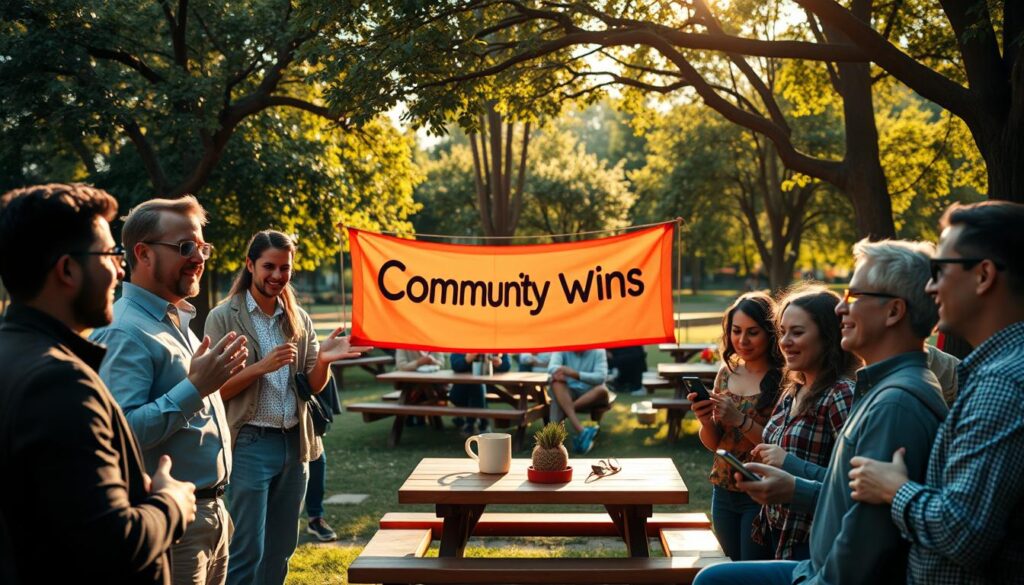
A vibrant scene depicting a lively community ritual in a sunlit outdoor park setting. In the foreground, a diverse group of six individuals, dressed in professional casual attire, enthusiastically engage in an Ask Me Anything (AMA) session, with one person speaking animatedly while others listen intently, showcasing inclusiveness. In the middle of the composition, a colorful banner reading “Community Wins” flutters gently in the breeze, surrounded by a circle of people sharing their achievements via smartphones. In the background, a cozy gathering area with picnic tables and greenery, coupled with soft, warm lighting creating an inviting atmosphere, hints at off-line meetups. The perspective is slightly elevated, capturing the energy and camaraderie of a connected community event, radiating positivity and unity.

The best communities find a rhythm that works for them. Try different rituals to see what your community likes. Be open to new ideas and see what sticks.

Community health metrics dashboard

Building a thriving online community is complex. A key question is: how do we measure success? The answer is a community health metrics dashboard. It gives us valuable insights into how our community works.

A good dashboard lets brands track important metrics. This includes engagement rates, how many new members join, and how well content does. By watching these, brands can see what’s working and what’s not. This helps them make better choices for their community.

Key Performance Indicators for Community Health

So, what should you watch? Keep an eye on user retention, how long people stay, and what they say. These metrics help brands understand their community better. They can then tackle any issues that come up.

Using a community health metrics dashboard helps brands improve their community. They can make it more active, welcoming, and strong. Are you ready to make your online community the best it can be?

Categories
Social Media Advocacy Strategies

Define goals, audiences, and one core action

Starting your social media activism journey requires a clear goal and understanding of your audience. Successful advocacy movements show that a well-defined goal and audience can make a big difference. For example, the #WhyIStayed movement on Twitter started a global conversation. Women shared their personal stories, sparking a big discussion.

To achieve similar success, you must know your target audience and what action you want them to take. This focused strategy creates a compelling story that connects with your audience. It also encourages meaningful engagement. This way, you’re on the path to creating a powerful social media strategy that gets results.

Pick a memorable, unique, and searchable hashtag

A good hashtag can make your campaign stand out. It’s important to choose one that’s easy to remember and unique. You need to find a hashtag that connects with your audience and stands out online.

Creating a catchy hashtag is an art. You must understand your campaign’s message and who you’re trying to reach. For example, the “HeForShe” campaign by UN Women used a hashtag that boosted their social media following.

Crafting a hashtag that resonates

To make a hashtag that people will remember, consider these points:

  • Relevance: Make sure the hashtag fits your cause or campaign.
  • Uniqueness: Pick a hashtag that’s not already taken or too similar to others.
  • Memorability: Keep it simple and easy to recall.
  • Searchability: Use keywords that people might search for related to your campaign.

Using specific hashtags for your campaign can encourage volunteers to share their experiences. For instance, a nonprofit can use a hashtag for volunteers to share their stories. This boosts engagement and helps track your campaign’s success.

Campaign Hashtag Impact
HeForShe #HeForShe 1.2 million Twitter followers and 4.1 million Facebook likes
Ice Bucket Challenge #IceBucketChallenge Raised over $100 million for ALS research
Black Lives Matter #BlackLivesMatter Brought global attention to racial injustice

Another strategy is trend hijacking. By using popular trends, you can make your campaign go viral. But, make sure the trend fits your campaign’s message to stay true to your cause.

In summary, a well-chosen hashtag is key for any social media campaign. Focus on making it relevant, unique, memorable, and easy to find. This way, your hashtag will connect with your audience and help your campaign reach more people.

Pre-brief partners, creators, and community leaders

To make your message stronger and last longer, it’s key to brief partners, creators, and leaders before starting. This makes sure everyone knows what to do and works together towards your goal.

Pre-briefing is more than just telling your partners what to do. It’s about building a team that can help your campaign succeed. This way, you reach more people and build a strong group of supporters.

Building a coalition for your campaign

A good coalition shares goals and understands each other well. To build one, find the right partners, creators, and leaders who can spread your message.

Take KFC’s #HowDoYouKFC campaign as an example. It was a hit because of its smart partnership with Foote, Cone & Belding (FCB). This shows how teamwork can make a hashtag campaign successful.

Identifying and partnering with influencers

Influencers are key in making your message heard. But, it’s not just about finding famous ones. Look for those who share your campaign’s values and goals.

When picking influencers, think about their relevance, reach, and how well they connect with your audience. Use this table to check them out:

Influencer Criteria Description Score (1-5)
Relevance How well does the influencer’s content align with your campaign? 4
Reach How large is the influencer’s following? 5
Resonance How engaging is the influencer’s content? 4

By using these criteria, you can find influencers who will help your campaign succeed.

Good pre-briefing and building a strong team are key to a successful social media hashtag strategy. Working with the right influencers and building a strong network can make your message stronger and more lasting.

Content pillars and UGC prompts across formats

To keep your campaign engaging, it’s key to have a strong content strategy. This strategy should use different formats and UGC prompts. A good strategy helps share your message well and builds a community.

Creating a content strategy means finding content types that appeal to your audience. This can include educational pieces, personal stories, and interactive stuff. For example, the WWF’s #LastSelfie campaign used Instagram’s “Add Yours” sticker to get volunteers to share their own content. This approach makes supporters feel involved, boosting your campaign’s reach.

Creating a Content Strategy for Your Campaign

To craft a compelling content strategy, you need to find your content pillars. These are the main themes that guide your content. They should match your campaign goals and appeal to your audience. For instance, if your campaign is about saving the environment, your pillars might include education, community involvement, and calls to action.

After setting your content pillars, create UGC prompts to get your supporters to make content. These prompts should be clear, easy to follow, and prompt action. Use various formats like images, videos, and stories to share your message and keep people interested.

A dynamic and visually engaging workspace scene depicting a content strategy meeting for a hashtag campaign. In the foreground, a diverse group of professionals in business attire collaborate over a large table filled with digital devices, notebooks, and colorful post-it notes. The middle ground features a whiteboard filled with visual content pillars, brainstormed UGC prompts, and campaign goals illustrated with icons and sketches. The background highlights a modern office environment with large windows allowing natural light to flood the space, creating an energized and collaborative atmosphere. The camera angle provides an overhead view, capturing the essence of teamwork and strategic thinking, infused with a sense of innovation and enthusiasm. The overall mood is vibrant, focused, and inspiring.

Good UGC prompts ask supporters to share their personal stories or show how they’re involved in your cause. This approach builds a community and shows social proof, encouraging more people to join your campaign.

To really make your content strategy work, think about trend hijacking. Use current trends and popular culture to make your campaign more relatable and fun. This can mean adding popular memes, hashtags, or challenges to your content, making it more likely to be shared and seen by more people.

By focusing on content pillars, UGC prompts, and trend hijacking, you can make a campaign that really connects with your audience and inspires action. So, be creative and build a content strategy that will make your campaign stand out!

Cadence: teaser, launch, sustain, finale

A well-orchestrated campaign timeline is key to any successful hashtag activism effort. Planning your campaign timeline is vital to keep it on track and maintain momentum.

A good cadence includes several phases. First, tease your campaign to build excitement. Then, launch it with impactful content. Next, sustain it with engaging material. Lastly, end it with a strong call-to-action to encourage supporters to act.

Campaign Timeline Planning

To plan your campaign timeline effectively, follow these steps:

  • Teaser Phase: Create buzz by releasing intriguing content that hints at what’s coming.
  • Launch Phase: Launch your campaign with a bang, using compelling content that clearly communicates your message.
  • Sustain Phase: Keep the momentum by posting engaging content, responding to supporters, and adapting your strategy as needed.
  • Finale Phase: End your campaign with a strong call-to-action, summarizing achievements and outlining next steps.

The #WhyIStayed campaign is a great example. It started with a single tweet and grew over time. This shows the power of a well-planned timeline in creating a successful campaign.

Phase Objective Content Strategy
Teaser Build Anticipation Intriguing hints at the campaign
Launch Introduce Campaign Compelling content that clearly communicates the message
Sustain Maintain Momentum Consistent posting, engagement, and adaptation
Finale Call to Action Summarize achievements, outline next steps

By understanding and implementing a well-planned cadence, you can boost your social media hashtag strategy and UGC workflow. This leads to a more engaging and successful campaign.

Real-life examples (wins + lessons) across causes

To grasp the power of successful cause hashtags, we must look at real campaign examples. These examples teach us what makes a cause hashtag work and how to engage people.

Analyzing successful campaigns

The #HeForShe campaign is a great example. It got a lot of followers and hijacked trends well. This shows us how to plan and run successful campaigns.

The #WhyIStayed campaign is another example. It used a simple hashtag to start a big movement. Its success came from connecting with people on a personal level. For those starting campaigns, getting advice from experts at comunicacaoepolitica.com can be helpful.

Looking at these campaign examples, we see important success factors. These include catchy and unique hashtags, working with partners, and a solid content plan. Knowing these can help create campaigns that truly make a difference.

Tool stack: monitoring, discovery, and spam control

Starting a successful social media campaign needs more than a good idea. It requires the right tools for monitoring, discovering, and fighting spam. As you start your social media hashtag strategy, a strong tool stack is key to success.

Managing your campaign well means tracking its performance, finding new chances, and keeping spam away. Social media analytics tools are essential for seeing how your campaign is doing. They give you insights to tweak your plan as needed.

Effective Tools for Campaign Management

Managing user-generated content (UGC) can be tough. Here are some tools to make it easier:

  • Tools for watching campaign mentions and hashtags
  • Platforms for finding and showing UGC
  • Software for fighting and controlling spam

For hashtag activism, it’s not just about starting a viral hashtag. It’s about keeping the momentum and making sure your message gets through. The right tools can help spread your cause.

Using these tools helps you understand your campaign better. You can make choices based on data to improve your strategy. Whether it’s tracking how people engage or spotting areas to get better, the right tool stack is a must.

Accessibility: alt text, captions, inclusive language

In today’s digital world, making your cause hashtag campaign accessible is key. It’s not just nice to do; it’s essential. By making your message inclusive, you can reach more people and get more engagement.

Making Inclusivity a Campaign Pillar

Creating a campaign that’s accessible is more than just a checklist. It’s about making sure everyone feels welcome. This means adding alt text for images, captions for videos, and using inclusive language in your messages. For example, the #PostItForward campaign showed how inclusive language and features can build a supportive community.

To make your campaign more accessible, try these strategies:

  • Use clear and simple language so everyone can understand your message.
  • Provide alt text for all images and captions for audio and video content.
  • Avoid language or references that might leave out certain groups.
  • Test your campaign materials with different groups to make sure they’re inclusive.

By focusing on accessibility, you’re not just reaching more people. You’re also building a stronger campaign. It’s about being intentional with your language and features to welcome everyone who supports you.

Safety plan: brigading, harassment, doxxing safeguards

The dark side of hashtag activism is a reality that campaigners must confront head-on. Threats like brigading, harassment, and doxxing are real. A well-planned social media hashtag strategy is key, but a strong safety plan is equally important.

When starting a hashtag campaign, anticipate risks. Brigading can quickly turn a supportive community into a toxic mob. Harassment and doxxing are serious concerns that can harm individuals involved.

Protecting Your Campaign from Harm

So, how can you protect your campaign? Here are some key strategies:

  • Monitor your campaign’s hashtag closely for signs of brigading or harassment.
  • Establish clear community guidelines and enforce them consistently.
  • Have a plan in place for quickly responding to and addressing any instances of harassment or doxxing.
  • Consider partnering with organizations that specialize in online safety and security.

The #HeForShe campaign had a detailed safety plan. It included monitoring and moderation. This ensured a positive and respectful environment for participants. Their proactive approach helped avoid risks and ensured success.

By focusing on safety and having a solid safety plan, you can reduce risks. This way, your hashtag activism can have a bigger impact. A successful campaign is not just about reaching many people. It’s also about creating a safe and supportive community.

Measurement: reach, participation, action conversion, sentiment

Measuring your campaign’s impact is like trying to hit a moving target. But with the right metrics, you can get close. Focus on key indicators to track your campaign’s performance. These show its reach, engagement, and overall influence.

Tracking Your Campaign’s Performance

Tracking engagement metrics like likes, comments, and shares is key. For example, the #LastSelfie campaign showed how to use these metrics to improve your strategy. Consider these metrics for a full view:

  • Reach: The number of people who saw your campaign content.
  • Participation: The number of people who interacted with your campaign through likes, comments, shares, and more.
  • Action Conversion: The number of people who took a desired action, like signing a petition or donating.
  • Sentiment: The overall attitude or opinion of your audience, found through social media listening and feedback analysis.

By analyzing these metrics, you can understand your campaign’s strengths and weaknesses. For instance, if your reach is high but participation is low, it might mean your content isn’t connecting with your audience. This could prompt you to tweak your social media hashtag strategy or UGC workflow.

A modern office space filled with diverse professionals analyzing social media campaign metrics. In the foreground, a diverse group of individuals in professional business attire, engaged in a discussion around a large screen displaying colorful graphs and analytics on reach, participation, action conversion, and sentiment analysis. In the middle, a stylish conference table with laptops and notepads, and a whiteboard with post-it notes summarizing campaign insights. The background features a large window with natural sunlight illuminating the room, creating a vibrant and energetic atmosphere. The scene conveys collaboration and strategic planning, focusing on the importance of measurement in social media campaigns, with a clear view of the analytics data on the screen.

To improve your measurement, use tools to monitor and analyze your campaign’s performance on different social media platforms. This helps you make informed decisions and optimize your campaign for better results.

Post‑campaign wrap: highlights reel and supporter handoff

A successful campaign doesn’t just end; it leaves a lasting impact. Notable campaign examples show how a good post-campaign wrap can make your campaign’s legacy strong. This includes making a highlights reel and passing the momentum to your supporters.

Crafting a lasting legacy

To make a great highlights reel, focus on the campaign’s most impactful moments and stories. For example, the #WhyIStayed campaign used a highlights reel to share important conversations. This left a strong impression and inspired future advocacy.

When wrapping up your campaign, think about empowering your supporters to keep going. Give them the tools and resources they need to carry on the cause. Using effective cause hashtags is key to keeping visibility and engagement high.

A thoughtful post-campaign wrap is vital to maximize your campaign’s impact. Reflecting on successes and challenges helps improve your approach for future campaigns. This ensures continued growth and advocacy.