
Remember when we hailed Twitter as the digital town square for revolution? How quaint.
The story has changed quickly, like a TikTok trend. Now, we’re not just fighting against the system. We’re also fighting the social networks that spread our words.
The last decade showed us the dark side. The Snowden leaks exposed the surveillance state. Elon Musk’s Twitter takeover showed us how unstable platforms can be. Our tools for freedom now seem like tools for control.
This isn’t just about switching from Facebook to Mastodon. It’s a big change in how we connect. We’re creating digital clans—close groups based on shared identity.
These groups give us a sense of belonging and purpose, no matter where we are. But there’s a big question.
How can we truly build community when our digital spaces are watched? Choosing a platform is more than a choice. It’s a statement of intent.
Let’s dive into this new world. We’ll look at where modern tribes form and how to stay strong in a world that’s always watching.
Foundations of Strong Digital Communities
Forget about the number of followers. What really matters is if your community’s members would stand up for it in an argument. This loyalty isn’t gained overnight. It’s built, piece by piece, on a foundation of shared identity.
This is where digital organizing truly starts. It’s not about the platform, but about creating a tribe.
Why do people stay? Social Identity Theory explains it. People feel good about themselves when they belong to a group. This leads to a strong “us vs. them” feeling. Your community’s strength comes from fulfilling this basic human need for belonging.
A big Discord server is just a list. But a small group with a strong sense of “we” can be powerful.
This is the heart of a digital clan. The term isn’t an exaggeration. From gaming guilds to political groups, the best online communities are like small societies. They have their own rules, language, and stories. Your task is to build that society.
- A Shared Identity and Purpose: “Fighting climate change” is a purpose. “Being an XR rebel” is an identity. This identity is what holds the group together. It’s why people feel part of something special when they join.
- Rituals and Customs: These are the daily actions that make a community feel like home. It could be a weekly thread or a special way to welcome new members. Rituals make a space feel lived-in.
- Leadership and Hierarchy: This is where volunteer management becomes more than just a task. Clear roles create a path for growth. Moderators should be respected leaders, not just cleaners. Good digital organizing sets up these paths.
- Mechanisms for Conflict Resolution: Every group faces disagreements. A clan needs a way to handle these issues. This means clear rules and a fair process for solving problems. It’s like having a council of elders.
Look at examples. A top World of Warcraft guild is more than just a team. It’s organized with clear roles and a schedule. Reddit’s r/stopsmoking is a support network with its own language and daily threads.
To build this, start by defining your clan’s identity clearly. Then, create simple rituals to begin. Most importantly, focus on your leadership from the start. Good volunteer management is key to growth. Give your most active members clear roles and recognition.
This foundation is what makes a group last. The tools are just the starting point. Your community is the society you build. Master this foundation, and your digital organizing will create a world.
Key Community Platforms & Their Uses
Choosing your online activism platform is key. It’s like deciding whether to shout in Times Square or whisper in a quiet room. This choice affects your movement’s reach, safety, and culture. Let’s explore the digital landscape.
Mainstream social networks like Facebook, Twitter, and YouTube are huge. They’re great for sharing news and shaping opinions. But, your activism helps them grow, making your group a target for surveillance and trolls. It’s like holding a protest in a mall owned by a boss who can change the rules anytime.
There are other options, like Mastodon, Signal, and Telegram. These platforms give you control and privacy. But, they might not attract as many people as big social networks. It’s a trade-off between reach and control, visibility and privacy.
The smart organizer uses a mix of platforms. They choose the right one for each task.
| Platform | Best For | Key Trade-off | Activist Use Case |
|---|---|---|---|
| Twitter / X | Rapid narrative shaping, media engagement | Maximum reach, maximum chaos & surveillance | Breaking news, hashtag campaigns, public pressure |
| Facebook Groups | Broad interest gathering, mass organizing | Familiar interface, but Meta’s prying eyes | Local event planning, large-scale discussion forums |
| Discord / Telegram | Secure, real-time collaboration & ops | Privacy-focused, but can feel insular | Internal strategy sessions, rapid response coordination |
| Mastodon Instance | Cultivating owned community culture | Full control, but smaller initial audience | Long-term discussion, archive, member onboarding |
| Specialized Forums | Deep, asynchronous discussion | High-quality dialogue, slower pace | Policy development, educational workshops |

Twitter, with its current changes, is for quick actions. It’s good for setting the news agenda, but be ready for anything. Its ups and downs can stir up conversations.
Facebook Groups are great for big events. They’re like the town square for organizing. But, remember, you’re always being watched.
For planning and sensitive talks, use encrypted channels. Discord or Telegram servers are your secret meeting places. Here, you can trust each other and plan without distractions.
Think of a Mastodon instance as your community’s home. It’s where your culture grows, history is kept, and bonds are strengthened. It’s a place where you’re not just a number.
Building a strong online community is about using different platforms for different needs. You share your message on big platforms and build deep connections on your own. The right choice shows how strong your movement is.
Social Media Strategy for Activists
Scholar Dieter Rucht’s “Quadruple A” framework gives activists four ways to deal with social media. It’s like choosing a strategy in a digital battle. Your choice shows how your movement interacts with the digital world.
This is the heart of digital organizing. Do you try to change, destroy, create, or leave? Let’s explore the options.
Abstention: The Strategic Log-Off. This is like a digital hunger strike. Some groups, like Extinction Rebellion, do this to stay safe and make a point. It says, “We don’t need your platform.”
But, it’s tough in a world that values online attention. Good volunteer management means building strong, offline support. You’re asking people to give up the main tool of today’s world. It’s bold, but hard to grow.
Attack: Going for the Knees. This is about fighting platform power head-on. The #StopHateForProfit campaign is a great example. It worked by getting advertisers to pull out.
This is risky. You need a strong group and a clear goal. But, if you succeed, you can change big companies’ ways. It’s not easy, though.
Alternatives: Building Your Own Square. If the main square is broken, build a new one. This is the “eroding” strategy. Look at Unicorn Riot, which covered Standing Rock protests well.
You control the story, rules, and data. But, it takes a lot of work. You need people to keep your platform going, against all the mainstream content.
Adaptation: Learning to Tango with the Devil. This is for those who want to work with the system. You learn the platform’s rules to get your message out. It’s about using algorithms and SEO to reach more people.
You’re not fighting the system; you’re using it for your goals. This is common in digital organizing. You need people who can do data science, community work, and make viral content.
So, what’s the best approach? The smart answer is a mix. No movement uses just one way. Your strategy should be flexible.
Maybe you have a team that adapts on Twitter and another that builds its own platform. Or, you might attack sometimes and stay away from certain networks. The “Quadruple A” framework helps you plan carefully.
It turns posting into a strategic move. Your social media plan is more than a list. It’s a plan for change, a new world, or a clever trick, depending on your strategy.
Tactics for Sustaining Engagement
The protest signs are packed away, and the hashtag has faded. The excitement of the event is just a memory. Sustaining engagement is the essential work of community building—like tending a garden after the spring bloom.
Forget viral moments. Lasting power comes from three pillars: Rituals, Leadership, and Defense. It’s a shift from broadcasting to stewarding.
First, create rituals. These are the heartbeat of your tribe. A weekly video check-in is like a digital campfire. Every Friday, members share one small “win.”
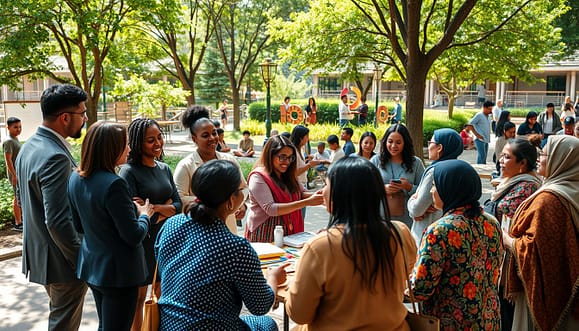
Second, leadership must empower. The fastest route to burnout is a one-person show. Smart leaders delegate. They turn passionate members into volunteer storytellers, event coordinators, or moderators.
Third, and most critical, is defense. Public social networks are a battlefield. Your people need shields against online harassment and surveillance. Have a plan for reporting and supporting targeted members.
The goal is to build a community that is resilient, not just reactive. This means mutual support is baked into the culture. It starts with defining clear goals and a core that everyone understands.
So, the real metric of success isn’t your follower count on public social networks. It’s whether your community can survive quiet weeks, support its members, and be ready to act when needed. That’s the deep, enduring work of true community building.
Impact Measurement & Growth
The true pulse of a digital community isn’t found in analytics dashboards but in the qualitative rhythms of its people. If you’re measuring success by follower count, you’re looking at the wrong numbers. Real impact needs a deeper look, not just numbers.
We must adopt a mindset of Tribal Digital Sovereignty. Here, data isn’t just numbers—it’s kin. It shows the health, lineage, and continuity of your tribe. This changes how we view digital organizing from broadcasting to caring for our community.
So, what questions should you ask instead of “How many retweets did we get?”
- Are our core organizers sticking around, or are they burning out?
- Is our collective knowledge being shared and archived, or lost when someone logs off?
- Are we onboarding new volunteers effectively and giving them meaningful work?
- Is our internal culture strong enough to resolve conflicts?
Growth in this context isn’t about quick viral success. It’s about building strong roots. This is key for alternative platforms facing the “network effect.” A Mastodon instance is empty if its community is weak.
Effective volunteer management is key. It’s the heart of sustainable digital organizing. Look at the decrease in moderator burnout. Celebrate solving internal disputes. Count the rise in member-led projects.
These signs show a strong, healthy tribe. They help you avoid the dangers of AI mistakes and wrong data.
To make this real, stop using fake metrics. Create a dashboard that shows true strength. The table below shows the old fake scorecard vs. a real, meaningful one.
| Metric Type | Vanity Metric (The Illusion) | Sovereignty Metric (The Reality) | Why It Matters |
|---|---|---|---|
| Growth | Follower/Subscriber Count | Retention Rate of Core Organizers | Measures loyalty and sustainable capacity, not just eyeballs. |
| Health | Likes & Shares | Successful Internal Conflict Resolutions | Indicates a resilient culture that can withstand pressure. |
| Knowledge | Post Volume | Archived & Accessible Internal Documentation | Ensures tribal wisdom survives beyond individual members. |
| Volunteer Management | Number of Sign-ups | Onboarding Success Rate & Task Completion | Focuses on integrating new members into meaningful work. |
| Initiative | Comment Count | Number of Member-Led Projects Launched | Shows the community’s ability to self-organize and innovate. |
This framework turns abstract health into real data. It makes volunteer management a strategic advantage. Your dashboard shows if your tribe is thriving or just surviving.
Ultimately, sophisticated digital organizing measures its own strength. Are we building something lasting? Or just making digital noise? The sovereignty dashboard answers that. It shows your community’s data is telling a story of strength, not just size.
Lessons from Thriving Movements
What do top World of Warcraft raid guilds and climate strike networks have in common? It’s not just shared struggles from failed plans. They show us how to build strong communities.
These groups use social networks for wide reach but keep safe spaces for planning. The #StopHateForProfit campaign is a great example of uniting different groups. It hit where it hurts the most.
Unicorn Riot’s work at Standing Rock shows the importance of telling your own story. This is key to success.
Digital clans, like gaming guilds, teach us about building culture. They share jokes and history, making a group feel like family. This isn’t just fun. Data shows that engaging programs can increase renewals by 40%.
Always see your followers as future helpers. Turning digital support into real action is vital. Tactics that treat DMs as special can make a big difference. A simple thank you can mean more than a gift.
Your community’s success isn’t tied to one platform. It’s about clear goals, flexible strategies, and protecting your community’s values. Don’t confuse a rented space with your true home.