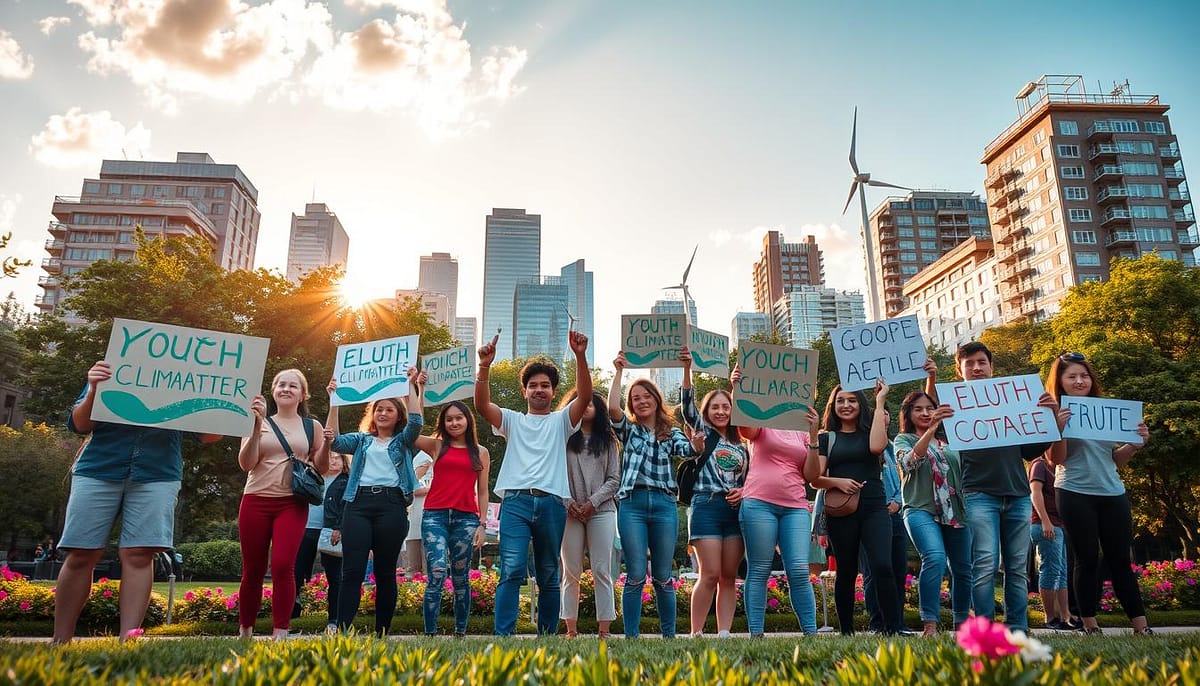
Forget smoky boardrooms. The real start of climate activism is on smartphone screens.
This generation sees their identity in Instagram bios, not civics books. Their world is online.
A 2020 UK study showed the internet inspires young people. It makes them think their voices count. Digital spaces are where they find power.
Then, add the fear of climate crisis. Scary headlines and unpredictable weather. It’s a call to action.
After 2024, it was clear Gen Z wasn’t just shouting. They were changing things, showing they’re a strong political force.
This movement didn’t just begin. It emerged. It’s the result of a generation using digital spaces to demand change.
Social Media Approach
Imagine trying to organize a protest in a mall that’s also trying to sell you diet pills. That’s what this youth movement faces online every day. They don’t just hope for the best; they’re experts in using social media wisely.
The #StopFisha case study was a big lesson for them. It showed how a hashtag can expose fake accounts and demand real action from platforms. They learned to use the platforms’ tools but never trust their lies.
This idea is similar to what the European digital collective Ctrl+Alt+Reclaim believes. They say, “Nothing for us, without us.” It means young activists want to change platforms, not just use them.
They’re very critical. They know Instagram can show their posts to many people, but also harmful content. Activists like Adele Zeynep Walton have seen this firsthand. They use their experiences to fight back.
So, what do they post? Their content is easy to share but also critical. It’s beautiful, informative, and funny. They aim to counter the platform’s tendency to spread divisive content.
They see social media differently than older groups. While others just broadcast, this youth movement tries to change the system.
| Aspect | Legacy NGO Approach | Youth for Climate Approach |
|---|---|---|
| View of Platform | A megaphone or bulletin board. | Contested terrain: a battleground and a home. |
| Primary Goal | Broadcast message, grow follower count. | Mobilize action, while critiquing platform design. |
| Relationship to Algorithm | Attempt to game it passively. | Actively dissect and expose its biases. |
| Content Philosophy | Official, polished, brand-safe. | Authentic, shareable, but intellectually skeptical. |
| Mantra | “Get our message out.” | “Nothing for us, without us.” |
For this youth movement, social media is a necessary evil. They go to the crowded party to be heard. But they’re not just there for fun. They’re planning a better party, one that fights for real change.
Tactics for Mobilizing Youth
The playbook for youth mobilization has changed. It’s now digital, not on paper. Forget old methods like fax machines and mimeographs. Today, it’s about quick digital memes and stepping aside.
The main tactic is using platforms fast and without bias. A policy failure can turn into a 60-second TikTok skit. A politician’s mistake can become a viral Instagram Reels clip. This generation uses “swarm logic”—fast, adaptable, and decentralized.

They use tools that confuse older organizers. Discord servers are like secure war rooms. Data analytics help target key areas, a modern tactic. Their social media is not just for fun; it’s a way to share their story without traditional gatekeepers.
This social media approach is very natural. It’s about being real, mixing up cultures, and moving fast. A hashtag can quickly become a global call to action. Mobilization is not a single event but a constant digital flow.
To mobilize youth leadership now, you need to get this. It’s not about controlling everything. It’s about sparking the right action. The tools are new, but the aim is the same: turning anger into action.
Online/Offline Actions
Hashtags are just the start. The real action is when people take to the streets. This shows the power of climate activism in action. It turns digital anger into real-world action.
A protest image goes viral on Instagram. Soon, it’s on a sign, held up in the rain. The goal is to move from online talk to real action.
They hold workshops on Zoom and plan protests on secret apps. TikTok helps explain how to join in. The #ClimateStrike is more than a trend; it’s a real event.

But there’s a clever twist. Sometimes, it’s better to log off. Digital justice movements say real power comes from face-to-face work. This builds deeper connections.
Offline work isn’t just big protests. It’s also about building community. Like a garden or a mutual aid network. These efforts keep the movement strong between big events.
The smart part of the climate activism movement knows this. They use digital tools to mobilize, but also build local communities. This is a two-way approach.
So, when you see a graphic about climate change, think about what to do next. Will you just share it, or will you take action? The best movements combine both.
Successes/Challenges
Looking at the youth movement is like wearing two pairs of glasses. One for the big wins and another for the tough hurdles. Let’s look at both sides. On one hand, there are cultural wins and policy changes. On the other, there’s burnout and pushback from the system. It’s a tale of winning small battles while knowing the big war is ongoing.
The wins are clear. This isn’t your grandma’s old-school lobbying. They’ve made climate change a big deal for young people. They’ve turned it into a movement. Think about it. They’ve mastered the art of grabbing attention.
They’ve done school strikes, die-ins, and gone viral on social media. Climate change is now on everyone’s mind. It’s on corporate boards and in election debates.
They’ve also seen real changes. The #StopFisha campaign led to action against online scams. The EU fined platform X for spreading false information. Cities are banning ads for fossil fuels. Companies are updating their environmental promises. Even more young people are voting.
But there’s a catch. For every victory, there’s a hidden cost. The first challenge is the personal toll. Activist burnout is a big problem. The constant news cycle is exhausting. The rush of likes and shares can lead to addiction and tiredness.
The second challenge is big tech. You fix one problem, and two more appear. Tech companies are hard to change. After 2024, rules got looser. It’s like playing a game where the rules keep changing.
The biggest challenge? Winning symbolic victories. A campaign can go viral but not change things. The youth movement needs to move from protests to real power. How do you fight the system without losing yourself?
| Key Successes | Metrics & Examples | Persistent Challenges |
|---|---|---|
| Cultural Seismic Shift | Made climate a top-tier voter issue; dominated media cycles. | Activist Burnout |
| Policy Influence | Inspired anti-fisha laws, EU digital fines, local green policies. | Tech Platform Intransigence |
| Youth Engagement | Record youth voter turnout; sustained online mobilization. | Symbolic vs. Structural Change |
| Corporate Accountability | Forced ESG disclosures and ad policy changes. | Political Deregulation Trend |
| Global Network Building | Created a decentralized, leaderless mobilization model. | Co-option & Greenwashing Risk |
The table shows both sides. The left column is hope. The right column is reality. The youth movement needs to hold both truths. Celebrate the wins that changed our world. Then, get ready for the harder fight against burnout, tech, and empty victories. This generation’s genius might be in doing both.
Takeaways for Digital Activists
So, what’s the final download for the digital activist staring down the climate crisis? Your playbook is clear. Be smart about platforms, not a slave to them. Use social media as a sharp tool, not a comfort.
Next, build dual power. A viral moment on social media is short-lived. Real change needs a seat at the table. Follow the lead of youth in institutions, from local commissions to electoral politics.
Prioritize the human web over the digital one. The strength of movements like Ctrl+Alt+Reclaim lies in coalition. Build real, offline community to fight burnout and build resilience. This is key to supporting young people’s activism through genuine relationships.
Own your narrative with the precision of a media company. You are the press now. Control the story. Embrace the long game of advocacy, not perfection.
The revolution will be hashtagged, but it is won in streets, courtrooms, and voting booths. Now, get to work.