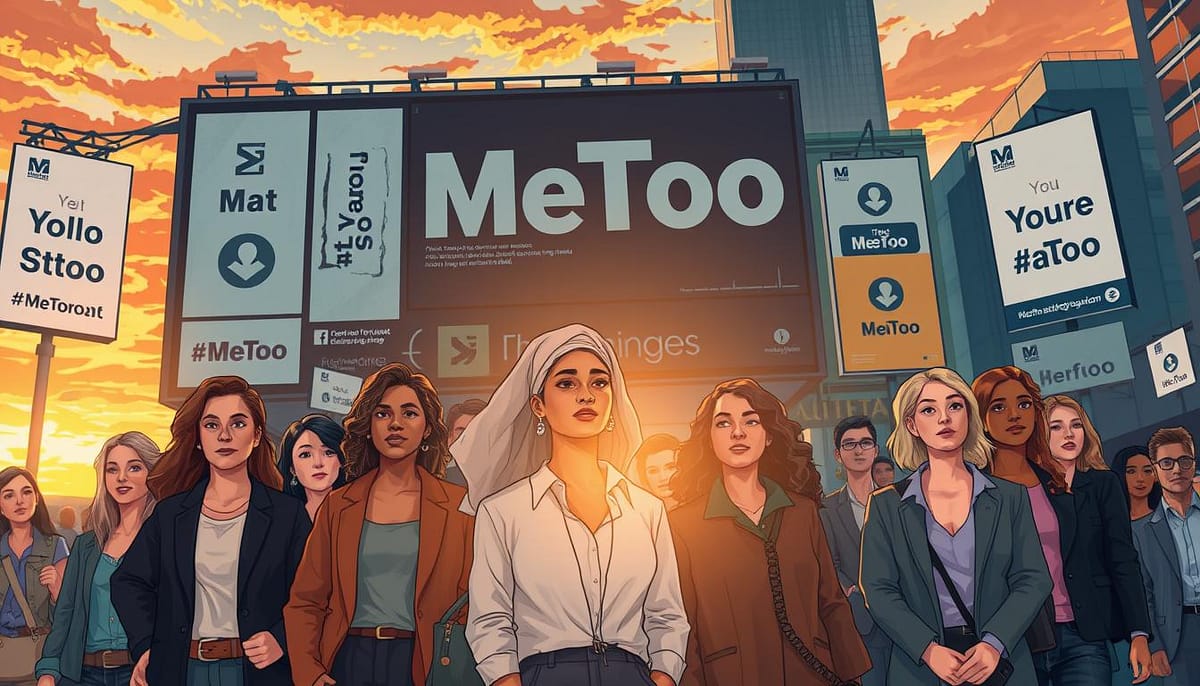
Do you remember 2017? Your social feeds were filled with just two words. But the story began much earlier, on MySpace, not Twitter.
Before it became a worldwide call to action, the MeToo movement started quietly. In 2006, activist Tarana Burke created the “me too.” movement through Just Be Inc. Her goal was to empower young women of color through empathy.
This was the foundation of the movement. It was the first draft of a powerful message. Burke’s work laid the groundwork for the movement that would later go viral.
It’s the story we often overlook—the slow start that leads to big changes. This effort is why the movement grew from a simple idea to a global movement that changed the world.
MeToo
In the fall of 2017, a simple two-word tweet didn’t just go viral—it rewrote the rulebook for digital social justice. Years of whispered stories and private pain were set to explode. The Harvey Weinstein scandal was the spark, a Hollywood film noir plot unfolding live.
Alyssa Milano tweeted on October 15: “If you’ve been sexually harassed or assaulted write ‘me too’ as a reply to this tweet.” This wasn’t new. It was brilliant cultural curation. The phrase “Me Too” had been around for over a decade, thanks to activist Tarana Burke. Milano’s tweet lit a social media fire.
The numbers are mind-boggling. Her tweet got over 24,000 retweets. The hashtag #MeToo was used half a million times in 12 hours. It was used over 19 million times in total. Overnight, a whisper became a deafening, collective roar.
This was the moment. The MeToo movement went from a personal tool to a public weapon. The sheer volume was the point—a statistical tsunami to drown out doubt. Your boss, your aunt, your favorite celebrity: they were all part of the same damning data set. The movement became a global reckoning.
So, what changed in that instant? The table below breaks down the seismic shift.
| Aspect | Pre-October 2017 | Post-October 2017 |
|---|---|---|
| Primary Use | A private, community-based phrase of empathy and solidarity, mainly in marginalized communities. | A public, global hashtag for mass disclosure and an accusation against systemic power. |
| Scale | Localized, interpersonal support networks. | International, mainstream phenomenon involving millions across all demographics. |
| Platform | Grassroots organizing and word-of-mouth. | Dominant social media platforms (Twitter, Facebook, Instagram) as the primary megaphone. |
| Public Perception | Largely unknown to the mainstream; a tool for survivors. | A disruptive, unavoidable force in media, politics, and corporate culture. |
Milano’s tweet was the detonator. It showed that a movement could use daily communication tools for deep social justice impact. The genie was out, and it was telling its story to everyone.
Key Figures & Events
Social justice movements are like plays, with key figures as the main actors. MeToo’s story is not just about one person. It’s a story of many, where the drama behind the scenes was just as important.
Tarana Burke was the visionary architect of MeToo. She started building the movement over a decade ago. Her work focused on young women of color, laying the groundwork for empathy and support.
Alyssa Milano was the one who opened the doors to the movement. Her 2017 tweet invited millions to share their stories. But, the media often left out Tarana Burke, a Black woman, from her own story.

Harvey Weinstein became the villain of the story. His downfall was a symbol of the abuse the movement fought against. It showed the power of challenging corrupt systems.
Other actors played important roles too. Campaigns like #YesAllWomen and #EverydaySexism helped pave the way. They showed how the internet could amplify marginalized voices.
The movement faced challenges, like Burke’s role being erased. This showed how even in social justice, marginalized creators can be overlooked. It was a key lesson in the politics of recognition.
In digital activism, who you are matters as much as what you say. The founder, the catalyst, and the event are all part of the message. Being true to oneself and giving credit where it’s due is essential for a movement’s strength and impact in the fight for social justice.
How to Use the MeToo Movement for Digital Activism
The MeToo movement has become a powerful tool for digital activism. By harnessing the power of social media, individuals can raise awareness, mobilize support, and create change. Here are some ways you can use the MeToo movement for digital activism:
1. Share Your Story
One of the most impactful ways to contribute to the MeToo movement is by sharing your own story of sexual harassment or assault. Your voice matters, and by speaking out, you can help create a culture of accountability and support. Use social media platforms to share your story, and encourage others to do the same.
2. Amplify the Voices of Others
While sharing your own story is important, it’s equally important to amplify the voices of others who have been affected by sexual harassment or assault. Use your social media platforms to share and support the stories of those who have bravely come forward. By amplifying their voices, you can help create a sense of solidarity and community.
3. Support Organizations Fighting for Change
There are many organizations dedicated to fighting against sexual harassment and assault. By supporting these organizations through donations, volunteering, or spreading the word about their work, you can contribute to creating a safer and more just society. Use your social media platforms to raise awareness about these organizations and encourage others to get involved.
4. Engage in Online Discussions
Engaging in online discussions about the MeToo movement can help raise awareness and spark important conversations. Share your thoughts, opinions, and insights on social media platforms, and engage with others who may have different perspectives. By fostering open and respectful dialogue, you can contribute to a more informed and empathetic community.
5. Organize Online Campaigns
Organizing online campaigns can be a powerful way to bring attention to specific issues within the MeToo movement. Use social media platforms to create awareness, mobilize support, and encourage action. Whether it’s a hashtag campaign, a petition, or a fundraising drive, your online activism can make a real difference.
By using the MeToo movement for digital activism, you can contribute to creating a safer and more just society. Remember, every voice matters, and together, we can create lasting change.
| Benefits of Using the MeToo Movement for Digital Activism |
|---|
| 1. Raises awareness about sexual harassment and assault |
| 2. Mobilizes support and creates a sense of community |
| 3. Encourages individuals to speak out and share their stories |
| 4. Supports organizations working towards change |
| 5. Fosters important conversations and promotes empathy |
Tactics that Went Viral
What does a social justice movement look like when it’s designed to spread like a meme? The MeToo movement showed us. It used a simple, replicable hashtag to share personal stories. This wasn’t just posting; it was a powerful way to speak out.
The instruction was simple: “write ‘me too.'” This made sharing your story easy. It turned silence into a choice, not a default. The hashtag brought together countless stories into one strong voice.
But viral awareness is just the start. The movement’s growth is fascinating. It evolved with platforms like “me too. Act Too,” which make doing good fun. It’s like Duolingo for being kind.
This phase focuses on action, not just awareness. “me too. Act Too” offers actions like learning about consent. Each action earns points. It uses blockchain to keep track of your efforts. This shows digital activism growing into a lasting effort.
| Tactic Phase | Core Mechanism | Participation Barrier | Lasting Impact |
|---|---|---|---|
| Hashtag Virality (#MeToo) | Public, collective sharing of personal testimony | Extremely low (type two words) | Unprecedented global awareness; shattered culture of silence |
| Platform Evolution (Act Too) | Gamified learning modules & verified action tracking | Low but structured (complete specific tasks) | Builds habits of engagement; creates a tangible record for social justice participation |
The table shows the movement’s growth. The MeToo wave was powerful because it was simple and emotional. Its evolution is about turning that emotion into lasting change. It’s the difference between a flash mob and a choir.
This shift shows a key principle for organizers today. Movements need both the spark of virality and the structure for ongoing action. Creating share-worthy content is the first step. Building systems for sustained action is the final, important step.
Impact & Criticism
MeToo went from a viral hashtag to a law, showing both the power and challenges of digital activism. It changed the world and showed its flaws. Let’s look at both sides.
The good news is huge. The U.S. Congress passed the “Me Too Congress Act” to fight harassment. Companies updated their HR rules fast. Famous people in media, entertainment, and politics faced new consequences. The movement spread worldwide, starting France’s #BalanceTonPorc and others.
But, there were blind spots. The early focus was on cis-gendered, workplace harassment. Where were the voices of queer, disabled, or undocumented survivors? This was not just a mistake—it was a failure to see all angles.
The backlash was strong. Critics said MeToo was a “digital mob” that shamed too much. French thinkers called it “Puritanical,” missing its real point. There were real debates about when comments cross the line into assault.
| Area | The Impact | The Criticism |
|---|---|---|
| Policy & Law | New legislation (Me Too Congress Act), revised workplace policies, mandatory training. | Laws reactive, not preventive; focus on high-profile cases over systemic change. |
| Cultural Conversation | Global spread (#BalanceTonPorc), shattered silence, shifted power dynamics. | Risk of reducing complex trauma to a trending topic; “clicktivism” vs. sustained action. |
| Inclusivity | Raised awareness of workplace harassment broadly. | Initial exclusion of LGBTQ+, disabled, undocumented voices; lack of intersectional lens. |
| Methods | Leveraged digital activism for unprecedented reach and speed. | Perceived as “public shaming”; debates over fairness and due process. |
Was it a success? As a cultural shock, undeniable. But as a precise law, messier. The biggest challenge was having a detailed conversation in a big space. Yet, it changed the cost of staying silent. For future activism, MeToo teaches us: grow big, but include everyone from the start. Social justice keeps moving forward, louder and with a clearer path.
Lessons for Activists
The key lesson from MeToo is not just about shouting loud. It’s about creating a lasting echo. Virality is great for getting attention, but it’s not enough. The movement teaches us to focus on building a strong foundation, not just a flash in the pan.
First, forget the myth of becoming famous overnight. Tarana Burke worked for ten years before the movement took off. She laid the groundwork with a message of “empowerment through empathy.” This shows that lasting change comes from steady work, not just a quick burst of fame.
Second, giving credit is powerful, even in the digital age. Burke’s work was ignored at first, showing a flaw in the movement. A movement needs to know who started it, to honor its roots. This is key, as it shows respect for those who started the movement, often from the margins.
Third, focus on the edges, not the center. MeToo started with famous, often white, people. But it grew when it included the most vulnerable. A strong movement supports those with the least power, not just the most visible.
Empathy is important, but it needs action to move forward. The shift from “#MeToo” to “Act Too” shows this. Awareness is just the start. The real work is in making changes, like policy and legal reforms. Viral sympathy fades, but clear actions create lasting change.

To apply these lessons, think about building a movement that can grow with its success. The table below is a guide to move from a quick spark to a lasting system.
| Focus Area | Viral Moment Trap | Sustainable Movement Strategy | Key Takeaway |
|---|---|---|---|
| Foundation | Rides the wave of a scandal or trend; no pre-existing structure. | Invests in long-term community building and ideological groundwork before the spotlight hits. | Burke’s work provided the bedrock. Your movement needs its own anchor. |
| Credit & Origin | Focuses on the most visible amplifiers; original creators are often erased. | Centers and credits the founders, specially those from marginalized communities, from day one. | Know your history. Credit is a form of power and integrity. |
| Inclusion | Appeals to the mainstream, often leaving the most vulnerable behind. | Intentionally designs platforms, messaging, and goals for those at the margins. | If it works for the most vulnerable, it works for everyone. |
| Action Pathway | Stops at raising awareness; creates a cathartic but directionless energy. | Builds clear “on-ramps” from awareness to concrete action (e.g., voting, donating, lobbying). | Transform empathy into engine. “Act Too” is the necessary sequel. |
| Structure | Relies on decentralized, organic organization; collapses when attention fades. | Develops formal and informal structures (funds, legal teams, local chapters) to outlast the news cycle. | Build an institution, not just a hashtag. |
The real advice for activists is not just to start a fire. It’s to keep it burning, to make sure it warms people long after it’s gone. The lasting lesson of digital activism is that empathy must be channeled into action. Without this, the fire of change will burn out.
Next Steps for Movements
The hashtag hangover is real. The global roar of #MeToo has settled into a determined hum. What comes after the viral moment? The answer is institutionalization—the unsexy, essential work of building something that lasts.
The “me too.” organization, now led by its first CEO Dani Ayers, is constructing that infrastructure. Think of it as moving from the protest sign to the policy memo. One of their smartest plays? A blockchain archive. It makes the history of this activism immutable. Power often tries to erase dissent; this move ensures the story of MeToo can’t be rewritten.
The focus has turned granular and local. This is where social justice gets built. It’s consent education for kids. It’s bystander training that actually changes behavior. It’s workplace policies with real teeth, designed to prevent harm before it happens.
The goal is no less than rewriting the social contract. The conversation started with a tweet. The change happens in school board meetings, HR departments, and quiet conversations. The next step for the movement isn’t another viral hashtag. It’s a lifetime of stubborn, local work to ensure a future free of sexual violence. The real legacy of MeToo will be measured in healed survivors and rewritten rules.