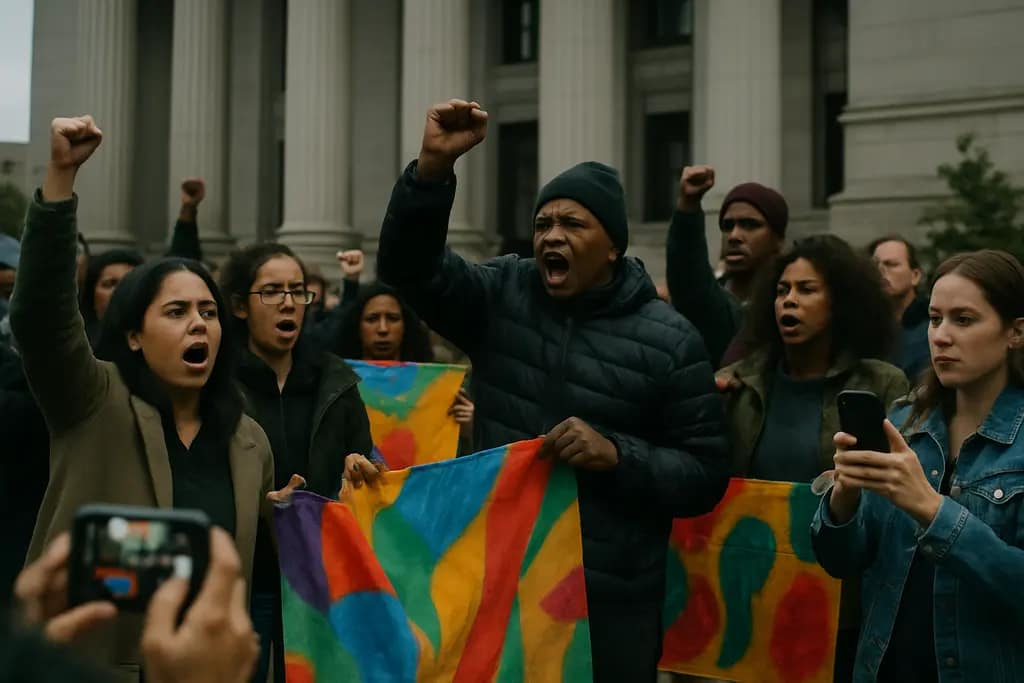
Minneapolis ICE activism became a national case study after federal immigration enforcement, street-level observation, digital alert networks, and alleged surveillance collided during Operation Metro Surge. The record available as of August 20, 2026, contains confirmed events, reported claims from court filings, and unresolved legal questions. That distinction matters: some facts are documented by national news reports and prosecutors, while other claims remain allegations or descriptions in filings that have not been fully tested in court.
The Minneapolis case is not only about protest. It is about how grassroots groups use phones, chat groups, livestreams, license-plate notes, neighborhood lookouts, and legal-observer training to make state power visible. It is also about how federal agencies allegedly responded with undercover activity, data collection, and criminal charges. For similar discussions and contextual insights, readers can explore the analysis provided by The US Report.
Minneapolis ICE Activism And The Watch Network
What Minneapolis ICE Activism Meant On The Ground
At street level, ICE watching usually means observing federal immigration activity, recording arrests from public vantage points, alerting nearby residents, and helping community members identify where enforcement appears to be taking place. The tactic depends on speed and trust. A message in one group chat can move people toward a courthouse, church, apartment complex, or workplace; a video can document what happened before competing accounts harden.
As a case study, Minneapolis ICE activism shows how grassroots communication can function as both documentation and deterrence. Participants are not public officials, and they do not have the legal authority of courts, city councils, or oversight agencies. Their power comes from presence, repetition, and record-building. The research record describes large-scale training for “constitutional observers,” with a Human Rights Watch report dated June 18, 2026, saying nearly 30,000 Minnesotans had been trained by early February 2026. That figure should be read as the report’s finding, not as an official count from a government agency.
The Deaths That Changed The Frame
The human stakes became clearer in January 2026, when Alex Pretti, 37, a VA ICU nurse, and Renée Good, 37, a mother of three, were reported shot and killed by federal agents while taking part in ICE watching in Minneapolis, according to The Washington Post. That reporting placed the tactic inside a much sharper public debate: whether observation of enforcement actions was being treated as protected civic monitoring, operational interference, or something between those categories.
For movement strategy, the deaths shifted the narrative from visibility to risk. Activists could still argue that cameras, observers, and alerts were essential checks on federal power. Federal authorities could still argue that certain conduct crossed legal lines if it blocked officers or endangered operations. The contested zone lies between those claims. Public filming and protest are not the same as obstruction, but each encounter can depend on specific facts: distance, conduct, warnings, physical barriers, and whether people complied with lawful orders.
Surveillance Claims And The Public Record
Reported Undercover Operations
The research record describes August 2026 court filings that reportedly disclosed undercover surveillance operations named “Operation Puppet Master,” with related references to “Whipple Shield” and “Project Keyhole.” According to those descriptions, federal personnel allegedly monitored activist meetings, unions, churches, libraries, chat groups, license plates, and public gatherings. The same research also says the filings referenced facial recognition tools, including Clearview AI.
These claims require careful treatment. Court filings can reveal investigative activity, but they do not automatically resolve whether each tactic was lawful, proportionate, or accurately described by all parties. Without a final judicial ruling in the supplied record, the most precise framing is that the surveillance activity was reported in filings and remains subject to legal and public scrutiny. That caution does not make the claims trivial. It means the analysis should separate disclosure from adjudication.
Data Collection As A Movement Pressure Point
The reported surveillance claims also point to a larger strategic problem for grassroots groups: participation data can become a pressure point. The research notes say agents obtained three years of financial records from organizations including the Sunrise Movement, SEIU, the Communications Workers of America, and other progressive nonprofit or labor groups, while noting that those organizations had not been charged with crimes in the supplied record. The notes also describe personal dossiers on attendees at gatherings in churches and other public places, including names, addresses, vehicle registrations, and employment information.
If accurate, those practices would affect organizing even before any prosecution. People may avoid meetings, decline rides, leave group chats, or stop filming if they believe routine participation will be cataloged. That is why surveillance is not only a privacy issue; it is a communication issue. It changes who speaks, who documents, who shows up, and how organizers design channels. Earlier site analysis of digital advocacy law is relevant here because legal uncertainty can reshape volunteer behavior as much as formal bans do.
Criminal Charges And Strategic Risk

What Prosecutors Alleged In June 2026
On the prosecution side, the clearest confirmed development in the supplied record came in June 2026, when federal prosecutors charged 15 people with conspiring to impede federal immigration enforcement during Metro Surge. The indictment alleged tactics including blockades, throwing ice chunks, and stalking agents, and the Associated Press reported that Direct Action Minnesota was among the groups discussed in the case according to AP.
Those charges are allegations, not convictions. The research record provided here does not include trial outcomes, plea agreements, acquittals, dismissals, or sentencing information as of August 20, 2026. For readers assessing the movement, that legal status is central. A charge can shape public opinion and organizing capacity, but it is not the same as a judicial finding that the alleged conduct occurred or that each defendant committed a crime.
Confirmed, Reported, And Unresolved
A disciplined reading of the Minneapolis record separates three categories:
- Confirmed in cited reporting: Two ICE watchers were reported shot and killed in January 2026, and 15 people were federally charged in June 2026.
- Reported in the research record: Large-scale observer training, alleged undercover operations, financial-record collection, facial-recognition use, and license-plate tracking were described in reports or court materials summarized in the supplied research.
- Unresolved in the supplied record: The legality of each surveillance tactic, the final outcome of the federal charges, and the full scope of agency conduct remain unsettled based on the material provided.
This structure helps avoid two errors. One error is to treat every activist claim as proven. The other is to treat every government allegation as fact. Grassroots movements and federal agencies both produce narratives under pressure. Evidence, filings, dates, named institutions, and legal outcomes are the checks on those narratives.
What Minneapolis ICE Activism Shows About Grassroots Power
Lessons For Digital Organizing Under Watch
Minneapolis ICE activism shows that digital organizing does not sit apart from physical risk. A phone video, a group chat, or a license-plate note can mobilize witnesses, but it can also create records that agencies may seek. A meeting in a church or library may feel community-based, but the research record suggests such spaces can still become points of observation. For organizers, the lesson is not to abandon documentation. It is to understand that documentation systems need clear roles, retention practices, consent norms, and legal review from qualified counsel when risk rises.
The case also shows the limits of leader-centered analysis. Much of the power in ICE watching appears to come from distributed participation: people who show up, film, send alerts, stand nearby, or train others. That structure can make a movement harder to silence, but it can also expose many participants to attention from law enforcement. The more distributed the network, the more important it becomes to communicate what is confirmed, what is alleged, and what participants should not assume.
For public institutions, the Minneapolis case raises a different test: how to enforce immigration law without chilling lawful observation, protest, journalism, or community support. For activists, it raises the matching test: how to monitor state action without crossing into conduct that prosecutors can frame as obstruction. The record as of August 20, 2026, does not settle every dispute. It does show that the struggle over immigration enforcement in Minneapolis was also a struggle over visibility, data, fear, and the public meaning of watching power at close range.