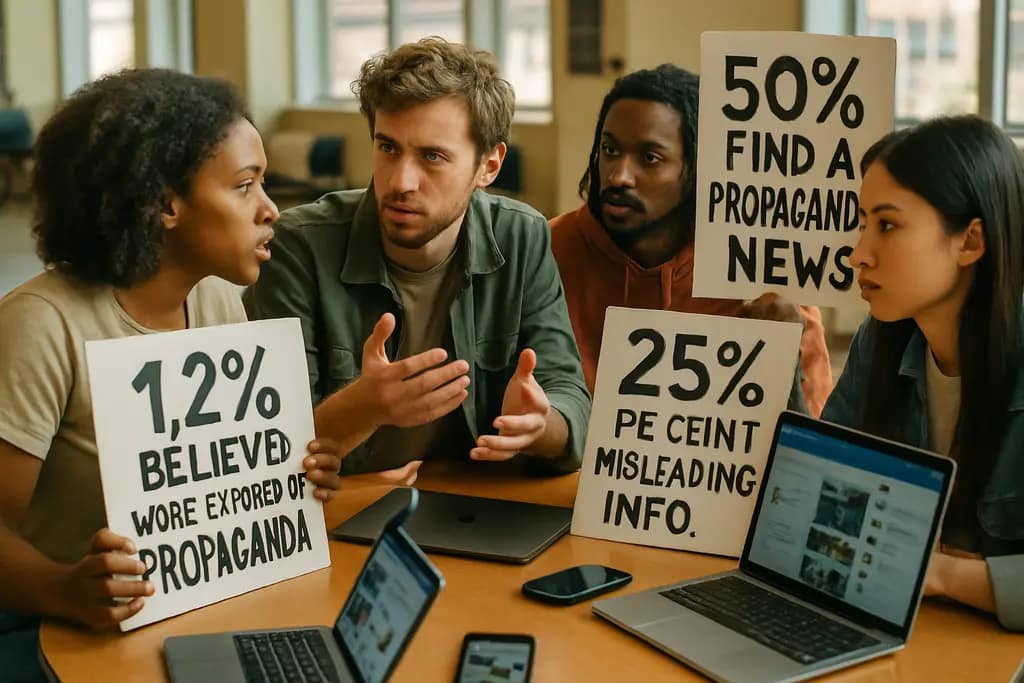
Social media advocacy against foreign propaganda now requires more than fast rebuttals and viral counter-posts. Campaign teams, civil society groups, and civic communicators face a hard task: respond to coordinated manipulation without weakening the same rights and trust they are trying to protect. The evidence available from recent research points to two core pressures. First, propaganda networks can gain very large reach quickly. Second, interventions such as labels can change user behavior, which makes accuracy and restraint central to any ethical strategy.
The issue is not only whether a post is false. It is also whether a response is transparent, proportionate, and accountable. A grassroots campaign that flags content, asks platforms to act, or publishes counter-messaging can affect public debate. That makes the campaign’s own standards part of the public record. For social movements, the safest path is to build response systems that can be explained before, during, and after a high-pressure information event.
Why Social Media Advocacy Needs Evidence Rules
Social Media Advocacy Starts With Verifiable Claims
The strongest ethical safeguard is a clear rule: do not call content foreign propaganda unless the evidence supports that label. In April 2026, the Institute for Strategic Dialogue reported that two pro-Iran networks on X amassed more than 1 billion views in one month through false, misleading, and AI-generated war content, with manipulated accounts, bought verification badges, and algorithmic amplification through the platform’s recommendation feed according to ISD. That finding shows the scale of the problem, but it also shows why language matters. “Pro-Iran network” is not the same as a fully documented command chain from a state office to every account.
Advocacy teams should separate what is confirmed from what is inferred. Confirmed facts may include the platform, visible content, posting patterns, public engagement, or a named research finding. Less certain claims may include who directed the activity, whether every account acted knowingly, or whether a government actor controlled the network. Ethical social media advocacy depends on making those distinctions visible rather than compressing them into a single accusation.
Labels Can Help, But They Carry Power
Research on labels suggests that small design choices can affect public behavior. A 2025 randomized controlled trial with 1,187 participants reported that adding “propaganda technique” labels to social media posts reduced users’ sharing intent by 2.4 times in the ICWSM study. That is meaningful evidence for campaign designers who want to slow harmful sharing without demanding removal.
Yet the same finding creates an ethical duty. If a label can reduce sharing, a wrong label can unfairly damage legitimate speech. Social media advocacy programs should treat labels as claims that require documentation, not as rhetorical tools. A label should identify the technique when evidence supports it, such as manipulated context or coordinated amplification, rather than branding a speaker as disloyal or suspect. The aim should be reader understanding, not public shaming.
Ethical Boundaries For Counter-Propaganda Campaigns
Keep The Response Proportionate
Counter-propaganda work often happens during conflict, crisis, or domestic political stress. Those conditions create pressure to move quickly. Speed matters, but disproportionate action can chill ordinary debate, especially when people are discussing foreign policy, war, identity, or government conduct. A cautious social media advocacy plan should set thresholds before an incident occurs.
Those thresholds can include the type of evidence needed before public attribution, the approval process for escalation to a platform, and the difference between counter-speech and a removal request. For example, a campaign may decide that a misleading viral post can be answered with sourced public context, while a suspected coordinated network requires outside review before public naming. The distinction helps protect dissenting voices while still allowing a campaign to respond to harmful manipulation.
Protect Volunteers From Becoming Informal Enforcers
Grassroots campaigns often rely on volunteers to monitor platforms, gather examples, and draft responses. That can be effective, but it can also blur roles. Volunteers should not be asked to make high-stakes attribution calls without training and review. They also should not be encouraged to mass-report content simply because they disagree with it.
A sound program gives volunteers narrow tasks: preserve public evidence, record URLs and dates, note observable behavior, and escalate uncertain cases. Campaign leaders or qualified partners should then assess whether the material meets the campaign’s standard for public response. This structure reduces the risk of harassment, mislabeling, or political retaliation framed as anti-propaganda work.
- Use plain categories such as “unverified,” “misleading context,” or “coordinated pattern observed” only when evidence supports them.
- Keep screenshots, timestamps, and source notes in a secure internal record before publishing claims.
- Separate counter-speech from platform enforcement requests, and explain the basis for each action.
- Review labels after new evidence appears, and correct public materials when needed.
Platform Power And Campaign Accountability
Algorithms Can Spread Harm Before Review Catches Up
The ISD findings from April 2026 matter because they describe not only content creation, but distribution. The reported use of bought verification badges and recommendation feeds points to a central problem for social media advocacy: propaganda can appear credible and popular before a human reader has time to evaluate it. If a platform’s design rewards conflict, speed, or sensational imagery, advocacy responses arrive after the first wave of attention has already passed.
Campaigns cannot control platform ranking systems, but they can choose not to copy the same incentives. A rebuttal that repeats inflammatory claims without context may spread the original message further. A more careful approach quotes only what is necessary, links to verified context, and explains why a claim is being challenged. Readers interested in related civic communication work may also compare these questions with CA Views, a related site within the same publishing network focusing on public affairs and digital debate.
Transparency Builds Trust During Disputes
Trust is most fragile when an advocacy campaign says a post, page, or account is part of a foreign propaganda effort. The accused speaker may deny it. Supporters may see the claim as censorship. Opponents may demand removal before the evidence is tested. That is why the campaign’s process should be public enough to be evaluated.
Transparency does not require exposing private data or operational security details. It does require explaining what standard was used, what evidence was reviewed, and what action was taken. A campaign might publish a short evidence note that says it identified a cluster of accounts sharing the same false claim, that it has not confirmed who directed the activity, and that it is responding with counter-speech rather than asking for removal. That kind of care is slower than a slogan, but it is better aligned with democratic advocacy.
Practical Standards For Advocacy Teams

Build A Pre-Publication Checklist
Ethical social media advocacy benefits from a checklist that campaign staff can use under pressure. The checklist should ask whether the claim is accurate, whether the evidence is public or private, whether the response could identify ordinary users, and whether the language distinguishes confirmed findings from reasonable uncertainty. It should also ask whether the campaign is adding context or amplifying the harmful claim.
For organizations that already work on online harms, the same discipline applies across issue areas. A related discussion of ethical digital advocacy sets out similar concerns around trained volunteers, evidence handling, and platform accountability. The overlap is significant: both anti-hate work and counter-propaganda work require clear goals, careful records, and respect for lawful expression.
Measure Success Without Rewarding Overreach
Campaigns often track reach, shares, reports, takedowns, or media mentions. Those measures can be useful, but they can also reward aggressive behavior. A better evaluation plan includes accuracy, correction speed, audience comprehension, and the number of cases where the team chose not to escalate because evidence was insufficient. Restraint should count as a positive outcome when restraint protects legitimate speech.
Teams should also record errors. If a campaign labels content incorrectly, the correction should be at least as visible as the original claim whenever possible. That practice is not only fair to the affected speaker; it protects the credibility of future warnings. In counter-propaganda work, credibility is a limited resource. Once a campaign appears careless with labels, its later warnings become easier to dismiss.
Ethical Social Media Advocacy Against Foreign Propaganda
Foreign propaganda presents real risks for public understanding, especially when coordinated networks use emotional content, false claims, or artificial amplification. The evidence from 2025 and 2026 indicates that labels can reduce sharing intent and that large pro-Iran networks have achieved very high reach on X. Those facts support serious countermeasures, but they do not justify careless attribution or broad suppression of contested political speech.
The best model for social media advocacy is evidence-led, rights-aware, and open to correction. It treats readers as citizens capable of judgment, not as targets to be steered by another set of opaque tactics. For grassroots groups, that means documenting claims, using narrow labels, training volunteers, setting escalation rules, and correcting mistakes in public. Countering propaganda is not only a fight over content. It is a test of whether democratic movements can defend truthful communication without adopting methods that weaken the trust they need.