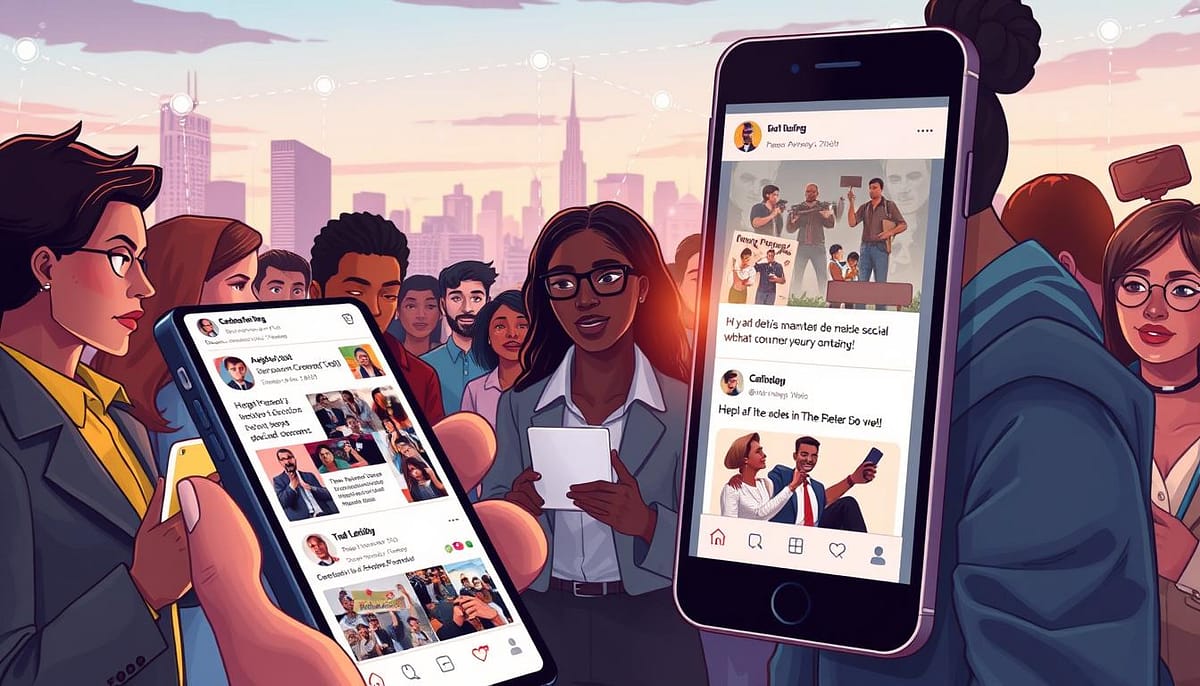
Remember when protests were all about crowded squares and handmade signs? What if the square was closed, but the screen was open?
In 2011, the Arab Spring showed us a new way. It wasn’t just news; it was a live test of online protests. Facebook, Twitter, and YouTube became more than apps. They became tools for planning, organizing, and global messaging.
Smartphones turned into portable megaphones. The old ways of organizing were thrown out. Instead, we saw a shift to screen-based mobilization.
But, regimes quickly caught on. They didn’t hesitate to act. We saw internet blackouts in Egypt in 2011 and Sudan in 2019. Governments also passed cybercrime laws and used digital repression kits.
This was the start of something new and messy. The rules of protest changed from the streets to the screens.
Social Media Amplification Tactics
Digital organizing is more than just using hashtags. It’s a strategic game of attention. You have a cause and a way to share it online. But, starting a hashtag without a plan is like sending a boat into a storm. It might look good for a moment, but it won’t last.
What makes a hashtag like #SaveSheikhJarrah go viral? It has a clear message and strong visuals. It also comes at the right time. And, it has a plan for what happens next.
Platforms are tricky partners. They offer global reach but can also block your content. Remember when Syrian war crime videos disappeared? Or when Palestinian content was censored? Your digital organizing plan must be ready for these challenges.
Another challenge is the echo chamber. Your message might only reach people who already agree with you. Algorithms make this worse by showing us more of what we like. To break out, you need to reach different groups and share ideas that can travel far.
Using symbols and satire can be powerful. A Yemeni protester wearing a bread helmet is both funny and serious. Memes and satirical videos can share complex ideas in a simple way. They hit our emotions and can be shared easily.
Look at #BlackLivesMatter and #MeToo. They didn’t just trend because of a hashtag. They were fueled by powerful videos and personal stories. These campaigns showed the power of digital organizing in different ways.
To go beyond just raising awareness, you need to turn clicks into actions. A hashtag should lead to a petition, a fundraiser, or a real event. The goal is to make a difference, not just to be seen.
For a campaign to work, it needs a clear goal and a specific ask. It should give people ways to get involved and be ready for censorship. This turns a viral moment into a lasting movement.
In the end, digital organizing is about using online tools wisely. They are powerful but flawed. Use them carefully and strategically. Your cause deserves more than just a hashtag. It needs a winning strategy.
Technology & Platform Selection
Forget choosing between Facebook and Twitter; the real game is played on encrypted apps and AI-driven tools. Picking your platform isn’t a casual scroll-through. It’s a tactical decision with real-world stakes. Is your rally happening on Twitter, or in the encrypted shadows of Telegram? This evolution from mainstream social media to secure, alternative spaces defines modern digital strategy.
The Kenya 2024 protests were a masterclass in this digital arsenal. Gen-Z activists didn’t just post. They engineered. When the government clamped down on traditional channels, the conversation didn’t die. It migrated. First from Facebook to Twitter. Then, when that got hairy, to dating apps and encrypted channels like Telegram and Signal. This constant cat-and-mouse game with censorship isn’t a bug; it’s the core feature of resilient virtual events.
But the innovation went far beyond hiding. It was about creating. Activists used AI to compose protest anthems—songs generated by algorithms that captured a generation’s fury. They built specialized GPTs to explain the complex Finance Bill in simple, shareable terms. Think about that: a chatbot as a revolutionary pamphlet.

The logistics were just as clever. Crowdfunding platforms bankrolled protest materials and legal aid, turning online sympathy into offline action. Hackers targeted government websites, and “wall of shame” sites publicly documented police brutality. Every smartphone became a broadcast unit, documenting and streaming in real time. This wasn’t just a protest; it was a distributed, tech-enabled operation.
So, what’s the tech spec for your revolution? Your choice of tools determines what you can build—and how hard it is to delete. A successful virtual campaign event now requires a layered approach:
- Coordination Layer: Encrypted apps for secure, core organizing.
- Broadcast Layer: Mainstream and alternative social platforms for amplification.
- Innovation Layer: AI tools for content creation, education, and engagement.
- Logistics Layer: Digital crowdfunding and real-time documentation via mobile networks.
This isn’t about being the flashiest. It’s about being the most adaptable. The Kenyan example shows that the most powerful virtual events aren’t the ones with the biggest budgets. They’re the ones with the smartest tool selection. They use technology not as a megaphone, but as a Swiss Army knife—each blade serving a precise purpose in the larger mission. Your platform choice is your first and most important move. Choose wisely, or you’ll be shouting into a void that’s already been censored.
Tactics for Mobilizing Online/Offline Actions
If your online outrage doesn’t lead to action, it’s pointless. The goal of activism today isn’t just getting likes. It’s about getting people to take action in the real world.
This approach combines digital talk with real-world action. A meme can inspire people to take action. A tweet can be a call to meet up.
A digital campaign turns into a rally strategy when it leads to real action. Mohamed Ali, an Egyptian contractor, showed this in 2019. His YouTube videos exposed military corruption and sparked protests in Egypt.
In Lebanon, a tax on WhatsApp calls led to massive protests in 2019. The anger on social media turned into real action. This was a powerful example of how digital platforms can unite people.
In 2024, Kenya saw young organizers use TikTok and X to explain finance bills. This led to a nationwide strike. The goal was to turn online anger into immediate action.
The shift to headless movements is key. These movements are decentralized and hard to stop. They’re like a digital hydra, with many heads.
The tactic is to make it easy to go from feeling angry online to taking action offline. A viral post should clearly say where, when, and why to act. It should be specific, like “Meet at the parliament steps, 3 PM, bring your phone and a whistle.”
The power of this model is its ability to force change. Governments can’t ignore a large number of people demanding action. This is how online anger turns into real-world demands. It’s the heart of a successful rally strategy.
Cross-Platform Event Coordination
If a tree falls in a forest and it’s only posted on Facebook, does it make a sound? Today’s activists make sure it’s heard everywhere. They use Twitter, TikTok, GoFundMe, and global marches to spread their message. This is cross-platform coordination at work, creating a strong digital solidarity network.
Imagine a global symphony of dissent. Each platform is like an instrument. Twitter blasts out news and starts trends. Telegram and Signal keep plans secret. Instagram and TikTok share powerful visuals. GoFundMe or Bitcoin help fund the cause. When they all play together, it’s unstoppable.

In 2019, Sudan and Algeria protesters connected online. They shared slogans and memes, showing solidarity. A Sudanese flag in Algiers and an Algerian chant in Khartoum showed a united front against their regimes.
The #SaveSheikhJarrah campaign showed the power of coordination. It started with tweets from East Jerusalem and grew worldwide. Influencers, NGOs, and media helped spread the word. Protests in Sydney to New York showed the campaign’s reach.
This coordination breaks down barriers. It creates a global arena for struggle. Livestreams, tweets, and Telegram plans unite people worldwide. The world feels the impact instantly.
This strategy gives activists a big advantage. Opponents face challenges on many fronts. Shutting down the internet in one place won’t stop the global movement. Arrests can’t stop the media storm sparked by a hashtag.
| Platform | Primary Role in Coordination | Real-World Example |
|---|---|---|
| Twitter / X | Hashtag amplification & real-time news breaking | #SaveSheikhJarrah trending worldwide |
| Telegram / Signal | Secure organizing & tactical communication | Diaspora groups planning simultaneous global protests |
| Instagram / TikTok | Visual storytelling & meme warfare | Sudanese & Algerian protesters exchanging symbolic imagery |
| GoFundMe / Crypto | Rapid, borderless resource mobilization | Funding legal aid and supplies for protesters internationally |
To build this, start with a strong narrative. It should work across cultures and platforms. Assign roles for each platform. Then, plan the big moments together for maximum impact.
The aim is to be heard globally, not just locally. True cross-platform coordination turns a protest into a worldwide event.
Measuring Impact & Engagement
So the hashtag trended. The videos went viral. Did any of it actually matter?
This is where we look beyond just numbers. Impact measurement means checking if real change happened. Like when Kenya’s Gen-Z pushed for changes in the Finance Bill.
It’s about freeing prisoners, starting important discussions, or holding governments accountable. Like the evidence against the Syrian regime in European courts.
The “slacktivism” critique is valid. Digital echo chambers and government surveillance are real issues. Making lasting change is tough.
Smart activism analytics focus on what really matters. It’s not just about being loud. It’s about creating lasting effects.
Does a campaign fade away, or does it lead to more action? The goal is to make a real difference, not just make noise.
The screen isn’t replacing the street. The most effective movements are a mix of online and offline actions. They use digital tools to spread the word, but real change happens in the real world.